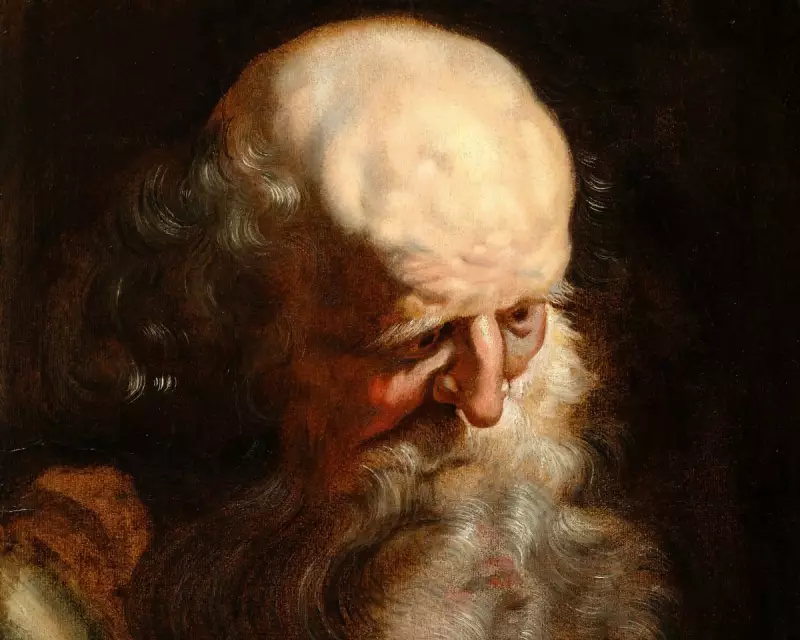
A remarkable art historical discovery has emerged from a simple online auction purchase, confirming a long-lost study by the Flemish Baroque master, Peter Paul Rubens. The work, acquired for a modest sum, astonishingly contains two separate portraits in one.
The Auction Gamble That Paid Off
Three years ago, Brussels-based art dealer and Rubens enthusiast Klaas Muller took a chance on an online auction listing. The piece was catalogued merely as an undated study on paper by an anonymous master of the Flemish school. Acting on instinct, Muller secured it for what he describes as a reasonable price of less than 100,000 euros.
"I wasn't sure it was a Rubens, I just knew it was very Rubens-esque, so it was still a gamble," Muller admitted. His deep knowledge of the artist, built from a personal library he consults most evenings, gave him the confidence to proceed. Upon delivery, despite a layer of dirt, the high quality of the work beneath the protective varnish was immediately apparent.
Authentication and the Hidden Portrait
The crucial verification came after several months of analysis last year by esteemed art historian Ben van Beneden, former director of the Rubens House in Antwerp. Van Beneden's examination pointed strongly towards the work's authenticity, praising its outstanding craftsmanship and lifelike quality.
The study depicts a bearded old man, a model who features repeatedly in Rubens's major works. He appears as Saint Amandus in The Raising of the Cross in Antwerp Cathedral, as King Melchior in The Adoration of the Magi in Madrid's Prado Museum, and as a Pharisee in The Tribute Money in San Francisco.
Intriguingly, technical examination revealed this was a two-for-one find. The paper had been reused. Beneath the old man's beard lies the earlier painted silhouette of a young woman with flowing hair and braids. This was not an intentional optical illusion but a practical reuse of material by the artist, who traced the new study over the old.
A Significant Prototype for a Master's Work
This discovery carries substantial art historical weight. Rubens, inspired by Italian practices, assembled a catalogue of facial studies for use in his large-scale compositions. Art historians knew he had created a prototype study of this particular elderly model's head, but it was considered lost. Van Beneden suggests that Muller may have found that very prototype.
The find underscores the significant value of such studies. In recent years, comparable works by Rubens have fetched between £500,000 and £1 million or more at auction, making Muller's acquisition a spectacularly astute investment.
The double-portrait will be unveiled to the public at the Brafa art fair in Brussels on 25 January. Currently hanging in Muller's home, the dealer expresses a hope that a museum will agree to a long-term loan, believing this exceptional piece of working material from a master's studio deserves the widest possible audience.