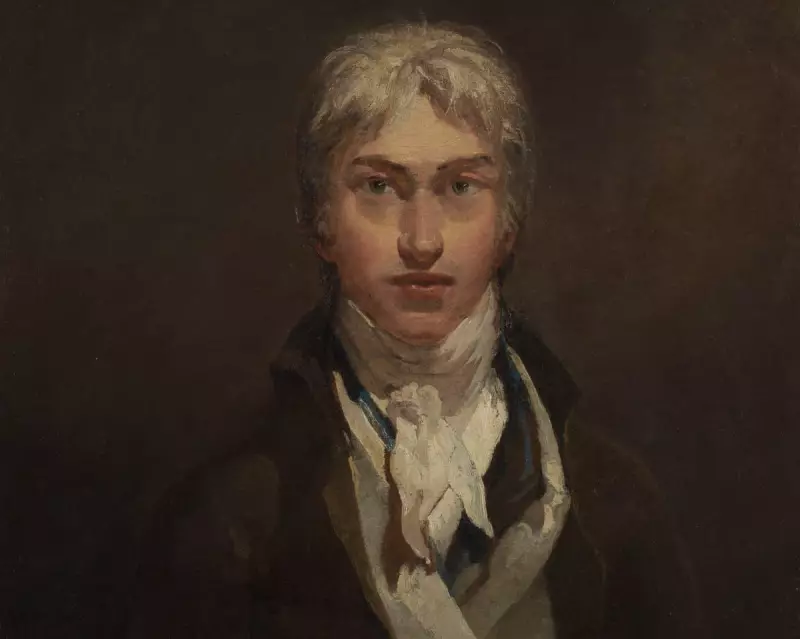
A groundbreaking BBC documentary has lifted the veil on one of British art's most enigmatic figures, revealing startling new dimensions to JMW Turner through his previously unseen private sketchbooks.
The Secret Archive Unveiled
Turner: The Secret Sketchbooks examines the astonishing collection of approximately 37,000 drawings left behind by the celebrated painter when he died. Many of these sketches have rarely been seen by the public and have never been filmed before, offering unprecedented access to the artist's private world.
The documentary takes an innovative approach by featuring both art specialists and unexpected celebrity contributors. Alongside traditional art historians and contemporary British artists like Tracey Emin, the programme includes Timothy Spall, who portrayed Turner in Mike Leigh's biographical film Mr Turner, naturalist Chris Packham, and even Rolling Stones guitarist Ronnie Wood.
Early Trauma and Emerging Genius
The film delves into Turner's challenging early life in Georgian London, marked by significant personal tragedies. At just eight years old, Turner experienced the devastating loss of his younger sister. This was followed by his mother's mental health struggles, which eventually led to her confinement in a nightmarish asylum where she died when Turner was still a teenager.
These early hardships appear to have shaped the young artist profoundly. His initial sketches demonstrate an obsessive attention to architectural detail that caught the attention of contributor Chris Packham. The naturalist, who is autistic himself, described Turner as "hyperfocused" in a manner that "maybe speaks to his potential neurodiversity".
Despite his working-class background in an era when, as Tracey Emin notes, "art was for the wealthy", Turner flourished at the Royal Academy. The documentary suggests that trauma continued to influence his work, with clinical psychologist Orna Guralnik interpreting Turner's painting of Dolbadarn Castle as potentially representing the artist as the small figure and the institution housing his mother as the distant castle.
The Pornographic Revelations
The most shocking revelation from the sketchbooks comes from Turner's explicit private drawings. The documentary reveals that during his wild, unhappy youth, Turner produced a substantial collection of pencilled pornography featuring sexual organs in startling detail, with other elements rendered as hastily sketched blurs.
Later in life, when Turner found happiness with Margate landlady Sophia Booth, his erotic drawings evolved significantly. The explicit content remained, but the depictions became more tender, with naked figures appearing as fully rounded humans rather than merely sexual forms.
This intimate glimpse into Turner's personal development provides insights completely absent from his famous public works like The Fighting Temeraire, no matter how closely one studies them.
The sketchbooks also reveal Turner's practical concerns, showing how the artist from working-class roots used his notebooks not just for drawing but for financial planning, including strategies for reducing prices of unsold paintings—a concern wealthier, establishment artists wouldn't have shared.
Contemporary Relevance and Environmental Awareness
The documentary identifies striking contemporary relevance in Turner's later work, particularly his understanding of human impact on the environment. While he didn't conceptualise climate change as we do today, Turner recognised that the Industrial Revolution represented a human-made force powerful enough to taint nature's sublime beauty.
Chris Packham, emerging as the documentary's standout contributor, observes: "This is where we start to brutalise nature... what was his final mission with those paintings? Was he saying, progress at your peril?"
Though some celebrity contributions prove less enlightening—Ronnie Wood's commentary on Turner's 1806 masterpiece Fall of the Rhine at Schaffhausen as "the epitome of drama. It's very dramatic" likely won't see the Tate commissioning him for exhibition pamphlets—the inclusion of diverse voices adds valuable perspectives.
Packham's enthusiasm for how Turner's Alpine travels transformed his perception of nature proves particularly illuminating: "He's enthralled by that rawness of nature, its uncontrollability, its supreme power, and before it our imperceptible nothingness. This defined the sublime for him."
The documentary successfully balances accessibility with analytical depth, serving both Turner novices and experts while potentially inspiring viewers to visit Turner exhibitions with fresh eyes.
Turner: The Secret Sketchbooks aired on BBC Two and is currently available on BBC iPlayer.