Tracey Emin's Tate Modern Retrospective: Raw, Real and Radical Art
When Damien Hirst's major retrospective arrived at Tate Modern in 2012, it came with a sense of triumphant celebration. The multi-millionaire artist who helped put British art back on the international map returned with a bold exhibition showcasing his greatest hits. The iconic shark, the signature polka dots, and the centerpiece diamond-encrusted skull titled For the Love of God dominated the Turbine Hall with confident swagger.
Fellow Young British Artist Tracey Emin's retrospective, A Second Life, presents a strikingly different experience. This exhibition feels quieter and more reverential, with her tapestries, paintings, and bronze works spotlighted against deep blue walls. One wonders whether there were discussions about placing Emin's equally iconic work My Bed in the prominent Turbine Hall space.
A Retrospective of the Artist, Not Just the Art
Emin's body of work, much of it intimately concerned with her physical body and personal experiences, feels less like a traditional art retrospective and more like a retrospective of the artist herself. Arranged in roughly chronological order, the exhibition begins with her 1995 short film Why I Never Became a Dancer, which recalls her teenage years ditching school at age thirteen, drinking cider on Margate beach, and engaging in relationships with significantly older men.
Visitors encounter framed, diary-like notes detailing her mother's sexually inappropriate boyfriend, her desperate desire to escape the confines and traumas of Margate, and her eventual liberation through moving to London. The journey continues into what one curator described as the "abortion rooms", filled with art created following a pregnancy termination whose complications nearly proved fatal. Emin notes she experienced two abortions, one that almost killed her and one that saved her life.
Confronting Trauma and Illness
This section features a giant tapestry offering practical advice about unwanted pregnancies, including how to find a 24-hour chemist. Sketches depict Emin spreadeagled on a hospital bed, while a painstaking recreation shows the small box-room where she isolated herself for three weeks to overcome post-pregnancy nausea triggered by the smell of turpentine and oil paints. Working naked and sleeping on a camp bed during this period, she created some of her most striking paintings.
The exhibition's title, A Second Life, references Emin's illness years following bladder cancer diagnosis and subsequent cystectomy and hysterectomy. A corridor displays extremely graphic photographs of her recovery, showing blood dripping from abdominal wounds, bloodied tissues, and internal organs exposed. Opposite these hang previously unseen Polaroids of a younger Emin, featuring sexy selfies with flashes of hips and breasts, creating a powerful juxtaposition about how quickly life circumstances can change.
My Bed and Mortality Confrontations
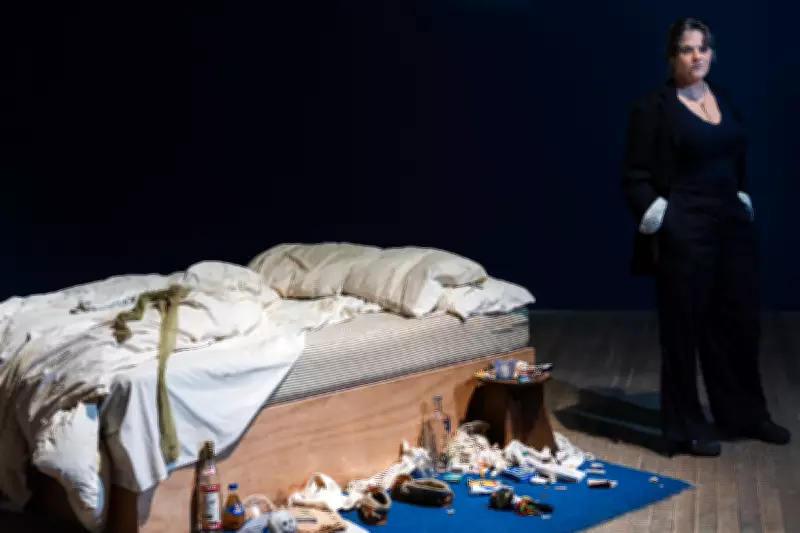
Her most famous work, My Bed, feels somewhat adrift chronologically within this exhibition, possibly due to logistical rather than artistic decisions. This installation has been so frequently discussed, parodied, and imitated over the years that some of its original power has diminished. The stained mattress, half-drunk bottle of Stoli vodka, and discarded condoms have become shorthand for Emin's work, celebrated or criticized depending on one's perspective.
More compelling is the subsequent room where Emin directly confronts mortality. Here, visitors find a series of large-scale paintings representing her most technically accomplished work to date, grappling with themes of death and loss. One piece shows a black figure standing over a prone nude woman, while another depicts Emin carrying her mother's ashes. At the room's center sits a bronze death mask of the artist's face, on loan from the National Portrait Gallery, appearing tiny and vulnerable within the vast gallery space.
Defying Criticism and Embracing Humanity
This arrangement creates the impression of viewing Emin's complete oeuvre after her death, presenting interconnected works exploring what it means to inhabit a human body that desires and is desired while slowly, inevitably dying. Exhibitions of Emin's work inevitably attract misogyny-tinged criticism from armchair commentators claiming their teenage son, toddler, or even cat could create similar work.
Yet those critics' relatives and pets did not produce some of the most recognizable, confrontational, and important artwork of the past four decades. Tracey Emin did. While this exhibition carries the reverential atmosphere of gallery curation, beneath the surface lies the snarling tenacity of a woman who refuses to be shamed for her trauma and declines to apologize for her humanity.
Emin's retrospective offers a raw, unfiltered journey through personal pain, medical crisis, and existential contemplation that challenges viewers to engage with art as lived experience rather than detached aesthetic object.