Sydney Biennale 2026 Embraces 'Rememory' with Nuanced Political Depth
The Sydney Biennale 2026, under the theme 'Rememory', has opened its doors, inviting artists to revisit and reassemble histories with a focus on subtlety and heart. This 25th edition, led by Emirati artistic director Hoor Al Qasimi—the first Arab to hold this role in the festival's 53-year history—was initially met with controversy, with critics fearing it might become a platform for anti-Israel sentiments. However, the biennale, running from March 14 to June 14 across key venues including the Art Gallery of New South Wales, Campbelltown Arts Centre, and White Bay Power Station, defies these expectations by presenting a complex, nuanced exploration of politics through art.
A Polyphony of Voices Over Political Spectacle
Rather than descending into loud slogans or spectacle, the biennale features over 80 artists from 37 countries, creating a polyphony of voices that sing their own songs. The theme, inspired by Toni Morrison's novel Beloved, encourages works that look to the past to address present dilemmas and envision better futures. Al Qasimi, though absent from the vernissage, has curated an event that emphasizes quiet power over political chants, weaving the wisdom of ancestors and ancient cultures throughout the exhibitions.
Highlight Installations and Indigenous Contributions
Among the standout pieces is US artist Nikesha Breeze's immersive installation, Living Histories, located deep within White Bay Power Station in Rozelle. This monumental work includes a baobab tree crafted from 2,000 meters of white cotton cheesecloth, a replica slave cabin from reclaimed wood, and a maze of archival portraits. Drawing from the Born in Slavery archive, Breeze's creation reanimates the experiences of African American ancestors, with details like the scent of cloves—used historically for pain relief—adding layers of meaning. Breeze describes the tree as "holding the wound; creating sanctuary."
Indigenous artists play a pivotal role in the biennale, infusing it with a sense of generosity and purpose. At Penrith Regional Gallery, Yindjibarndi elder Wendy Hubert presents paintings and a garden that distill principles of living in harmony with Country. Similarly, at the Art Gallery of NSW, Maya artist Sandra Monterroso showcases quilted hangings embroidered with herbal remedies, dyed with botanical pigments. These works speak softly but reward attentive engagement, reflecting the biennale's broader tone of quiet power.
Political Undercurrents and Artistic Responses
Politics permeates the biennale in understated ways. At the Chau Chak Wing Museum, Palestinian artist Khalil Rabah stages a protest through an embroidered tunic based on the Shellal Mosaic, removed from Gaza and housed in Canberra. Abdul Abdullah's triptych at the Art Gallery of NSW critiques the 2005 Cronulla riots by depicting young men in streetwear, offering a stinging appraisal of racial tensions.
A particularly powerful collaborative project involves Kurdish Iranian journalist Behrouz Boochani, Iranian Australian artist Hoda Afshar, and Indigenous artist Vernon Ah Kee, focusing on Indigenous youth in detention. Their installation, Code Black/Riot, at Campbelltown Arts Centre, combines harrowing testimonials with poetic imagery, such as slow-motion footage of young people on trampolines, to highlight both humanity and systemic inhumanity.
Beauty with a Political Edge
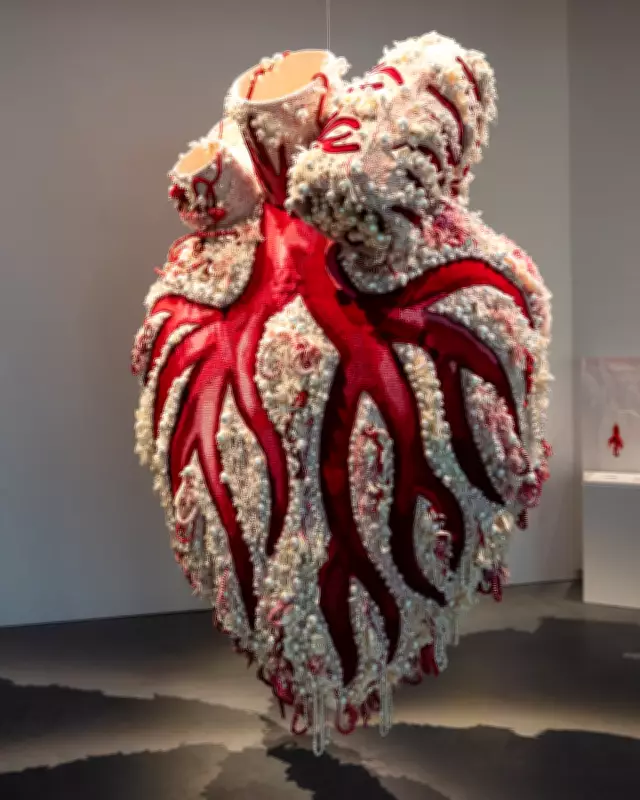
Even when embracing beauty, the biennale remains politically charged. Japanese Australian artist Ema Shin's Hearts of Absent Women (Tree of Family) is a massive textile heart adorned with beads and ribbon, responding to the erasure of women in her family records. Canadian artist Kapwani Kiwanga's Flowers For Africa uses floral displays to chart Africa's transition from colonial rule, designed to wither over time. Additionally, the Ngurrara Canvas II, painted by 40 elders, asserts native title claims through cultural expression.
In the spirit of Morrison's Rememory, this biennale reminds us that amidst trauma and loss, the tools for a better world are already at hand. By focusing on nuanced narratives and diverse voices, it offers a profound reflection on history, identity, and resilience.