National Gallery's Stubbs Exhibition: A Brief Yet Magnificent Tribute to Equine Art
In 2026, the National Gallery in London presents a new exhibition titled "Stubbs: Portrait of a Horse," dedicated to George Stubbs, the 18th-century British painter renowned for his anatomical studies and animal portraits. However, this showcase is confined to a single room, sparking debate among art enthusiasts who believe Stubbs deserves a more extensive survey, comparable to masters like Constable and Turner.
A Beautiful but Limited Display
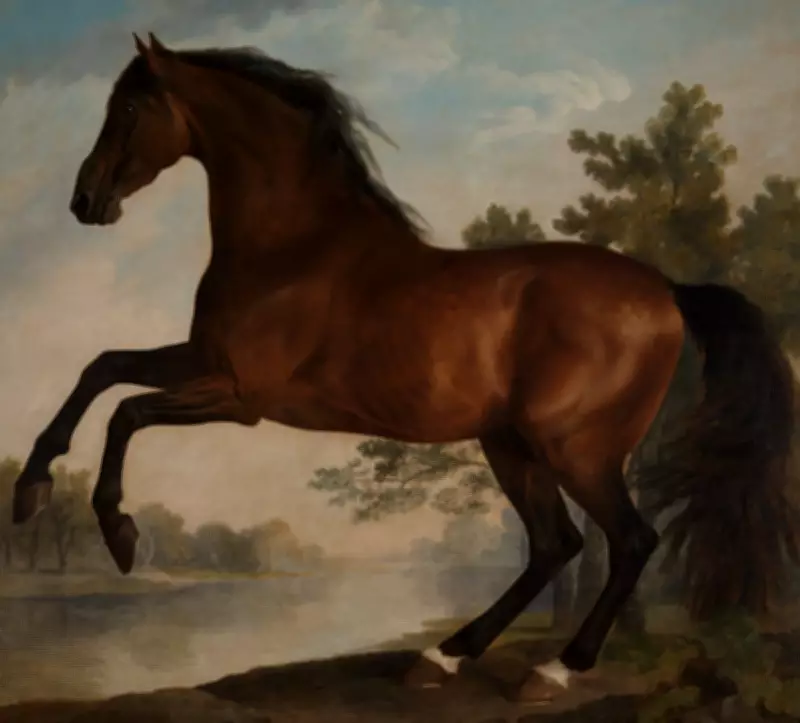
The exhibition centers on a spectacular painting of Scrub, a bay horse belonging to the Marquess of Rockingham, created around 1762. This towering work depicts a riderless, rearing horse with chestnut flanks, where Stubbs's meticulous attention to anatomy reveals a network of veins and a ribcage that seems to materialize like an X-ray. Alongside this masterpiece, the room features stunning anatomical drawings from Stubbs's 1766 book, The Anatomy of the Horse, which he produced by dissecting horses in a Lincolnshire cottage. These flayed and dissected bodies possess a mysterious dignity, highlighting Stubbs's scientific approach to art.
Additional pieces include a couple of later horse portraits and an interloping sheep, but the overall experience is brief, even for passionate fans. Critics note that the exhibition feels simplified and shallow, lacking the depth of a comprehensive survey that would explore Stubbs's broader oeuvre, including portraits of other animals like zebras, kangaroos, and rhinoceroses.
Historical Context and Artistic Significance
Stubbs's work is deeply rooted in 18th-century Britain, with themes of power, control, and freedom. Born in Liverpool, the son of a tanner, he grew up surrounded by the stench of slaughtered animals and the human oppression of a slaving port. His paintings often question how we treat other species and humans, portraying horses as sensitive beings with souls finer than their masters. In portraits like Scrub and Whistlejacket, Stubbs sets these animals free, drawing parallels to Jonathan Swift's satirical horses in Gulliver's Travels.
The exhibition briefly touches on the historical link between Scrub and Whistlejacket, both thoroughbreds owned by the 2nd Marquess of Rockingham, a gambler and Whig politician. However, it fails to dig deeply into the era's contradictions, such as the Enlightenment, Romanticism, and the shadow of the slave trade. This lack of context is seen as a missed opportunity to fully appreciate Stubbs's radical vision.
Comparison to Other Works and Artists
One odd aspect of the exhibition is its focus on Scrub when Stubbs's greatest horse portrait, Whistlejacket, is permanently displayed elsewhere in the National Gallery. Whistlejacket is celebrated for its conceptual emptiness, with the horse set against an olive-toned void, making it an icon of modern art. In contrast, Scrub is placed in a romantic wooded landscape that feels cursory and unnatural, making it a less perfect painting.
Stubbs is compared to artists like Rembrandt, whose The Anatomy Lesson of Dr Nicolaes Tulp similarly explores inner mystery through anatomy, and William Blake, though Stubbs is argued to be a better artist. Despite his significance, Stubbs is often dismissed as a "sporting artist" or seen as a stooge of the aristocracy, limiting his recognition in the art world.
Critique and Call for More
The exhibition shares a tiptoeing, delicate quality with the National Gallery's concurrent show on Joseph Wright of Derby, another 18th-century radical artist. Both Stubbs and Wright were entranced by new science and the Enlightenment gaze, yet their displays feel less than fully committed. Critics argue that Stubbs deserves as many exhibitions as Constable and Turner, and more than Blake, to highlight his transformative potential in changing how we see the world.
While the room is beautiful and the artworks magnificent, the exhibition leaves visitors wanting more. It runs from 12 March to 31 May, offering a glimpse into Stubbs's genius but ultimately falling short of a thorough exploration that could elevate his status in British art history.