Space Journal: A Visual Chronicle of Cosmic Exploration and Spacesuit Evolution
As the Artemis II astronauts return from their lunar mission, a new book titled Space Journal: The Art and Science of Cosmic Exploration offers a vibrant celebration of humanity's journey into space. Published by Thames and Hudson, this visual compendium weaves together archive memorabilia, revolutionary experiments, and spectacular scenes to map both real and potential encounters in our celestial backyard.
The Art and Science of Spacesuits
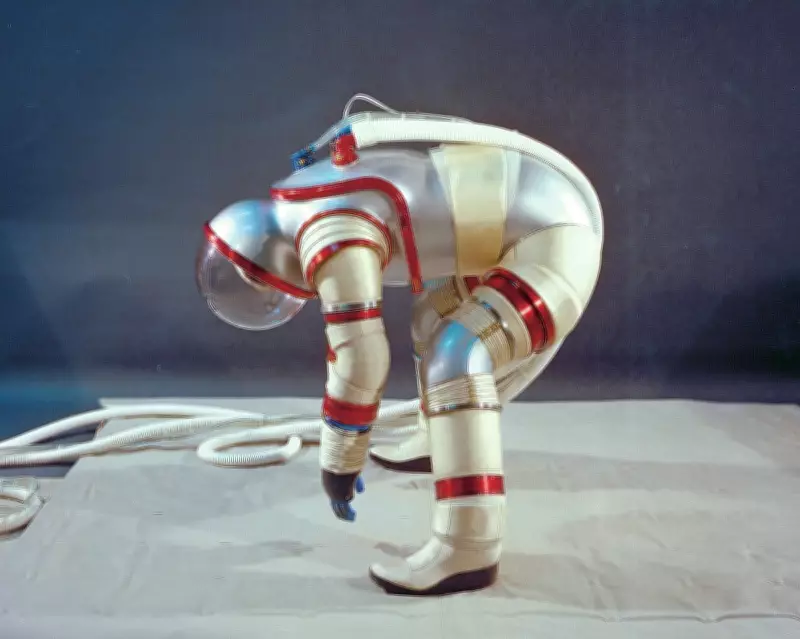
One of the book's highlights is its focus on spacesuits, described as 'wearable spacecraft of the smallest possible dimensions.' These suits must provide oxygen, regulate extreme temperatures, and protect against micrometeoroids in the vacuum of space. For instance, designer Hubert 'Vic' Vykukal models the AX-3 spacesuit at NASA's Ames Research Center in 1977, showcasing early innovations. Similarly, American artist Ryan Nagata, inspired by the film Apollo 13 at age 14, creates high-fidelity replicas, such as aviator Wiley Post's 1934 pressure suit and an Apollo A7LB spacesuit, emphasizing the intricate design challenges.
Historical Milestones in Space Exploration
Space Journal delves into key historical moments, from Dr. Robert H. Goddard's 1919 paper A Method of Reaching Extreme Altitudes, which proposed rockets could reach beyond the sky, to the Apollo 11 liftoff in 1969, watched by former US president Lyndon B. Johnson. The book also corrects past misconceptions, noting how The New York Times initially doubted Goddard's claims but later apologized after the moon landing. Additionally, it features Jocelyn Bell Burnell, who helped detect pulsars with a radio telescope array at Cambridge, highlighting contributions from diverse fields.
Cosmic Imagery and Artistic Influences
The book includes stunning visuals, such as Lucien Rudaux's 1937 illustrations from Sur Les Autres Mondes, which influenced artists like Chesley Bonestell. Bonestell's 1944 Life magazine artworks depicted Saturn's views from its moons, blending science with art. Modern advancements are represented by NASA's James Webb Space Telescope, with its tennis court-sized sunshield and 18 primary mirror segments, engineered by figures like Ernie Wright. The Voyager Golden Records, carrying human greetings and sounds into interstellar space, symbolize our enduring quest to connect with the cosmos.
From Possibility to Profitability
While the 20th century proved space travel was possible, the 21st century shows it might be profitable. Space Journal notes our current dependence on space activities for communication, navigation, Earth observation, and defense. This shift underscores the evolving spirit of endeavor, from early experiments to today's commercial ventures, making the book a timely tribute to the science, suits, and stories that have propelled us beyond Earth.