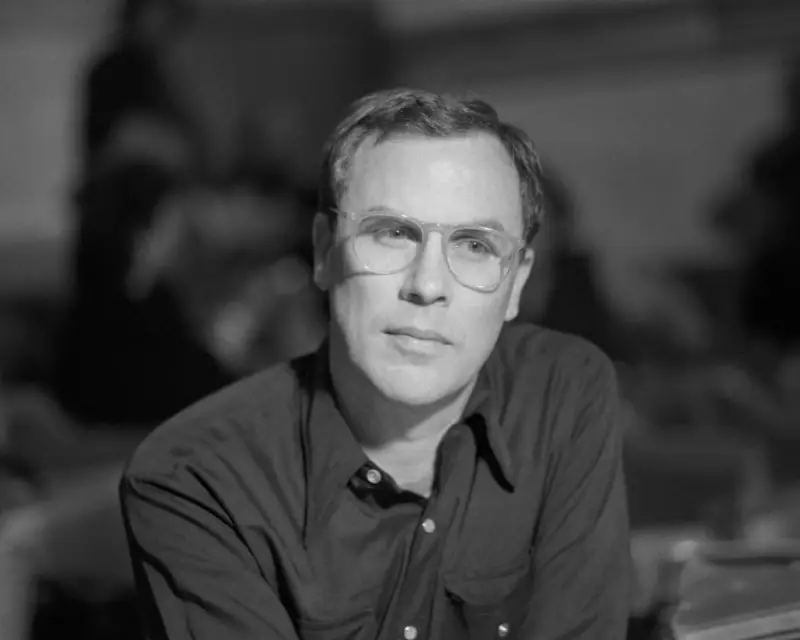
The visionary theatre director and artist Robert Wilson, whose work transcended conventional performance, created one of his most memorable installations not in a traditional theatre, but deep beneath the streets of London. In 1995, to mark the centenary of H.G. Wells's seminal science fiction novella The Time Machine, Wilson and sound artist Hans Peter Kuhn unveiled HG in the historic Clink Street Vaults in Bankside.
A Journey Through Millennia in London's Vaults
Commissioned by the pioneering organisation Artangel, HG was a vast, immersive experience. Visitors did not merely observe; they walked through a meticulously crafted series of tableaux. Each scene was a masterclass in Wilson's signature style: stunningly lit, accompanied by subtle soundscapes from Kuhn, and rich with theatrical silence. The installation allowed people to travel through epochs at their own pace, from a stark wartime hospital to a medieval castle besieged by a frozen rain of arrows.
Interspersed were intimate, curated rooms that felt like abandoned studies or laboratories, spaces where medicines might have been mixed or small, personal discoveries made. The power of the piece lay in its stillness. Nothing 'happened' in a conventional narrative sense, yet everything was charged with potential and memory. Time itself felt sculpted by light and shadow, structure and sound.
The Lasting Impact of a Theatrical Vision
The collision of historical imagination and pure theatrical vision was profoundly haunting. Wilson's work in the Clink Street Vaults was not a retelling of Wells's story but an evocation of its core themes: progress, decay, and the human condition across centuries. It demonstrated his unique ability to transform any space into a portal for contemplation.
This London installation remains a testament to Wilson's influence on performance art and experiential theatre. By removing the live actor and placing the audience at the centre of the journey, he created a personal and collective memory that, for those who witnessed it, continues to resonate. His legacy is one of bold visual poetry and an unwavering commitment to the power of a slow, deliberate gaze.