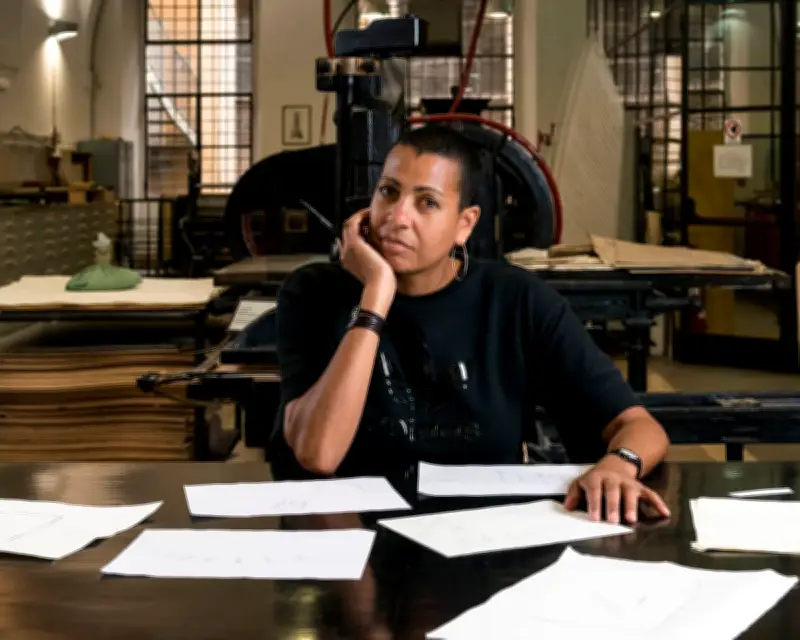
The National Portrait Gallery in London has removed an artwork by Helen Cammock that referenced Winston Churchill and the Bengal famine, following a campaign by Churchill supporters. The piece, titled 'The Long Note,' was part of a display in the gallery's contemporary collection and included text linking Churchill's policies to the 1943 famine in Bengal, which caused millions of deaths.
Artwork Removed After Campaign
The gallery confirmed that the artwork was taken down on Monday after receiving complaints from individuals and groups who argued that the depiction was unfair to Churchill. A spokesperson for the National Portrait Gallery said: 'We have removed the work temporarily while we review the context and presentation, to ensure it meets our standards for historical accuracy and sensitivity.' The decision has sparked debate about the role of art in addressing historical controversies.
Helen Cammock's Response
Helen Cammock, a Turner Prize-winning artist, expressed disappointment at the removal. According to a statement released by her studio, she said: 'My work aims to open up dialogue about difficult histories, not to shut it down. Removing the piece silences a perspective that is crucial to understanding the full impact of colonial policies.' The artwork was part of a series exploring themes of memory and power.
Historical Context of the Bengal Famine
The Bengal famine of 1943 is estimated to have killed between 1.5 and 4 million people in British India. Historians have debated the extent to which Churchill's wartime policies, including the diversion of food supplies to Europe, contributed to the disaster. The artwork included a quote from Churchill's private secretary noting his indifference to the famine, which critics say oversimplifies a complex event.
Reactions and Future of the Display
The gallery's decision has drawn both praise and criticism. Some visitors supported the removal, arguing that the gallery should not host works that vilify national figures. Others, including historians and artists, condemned it as censorship. The National Portrait Gallery has stated that the artwork may be reinstalled with additional contextual information. A review is expected to be completed within a month.