Police Confiscate Controversial Art Posters from Canberra Bar
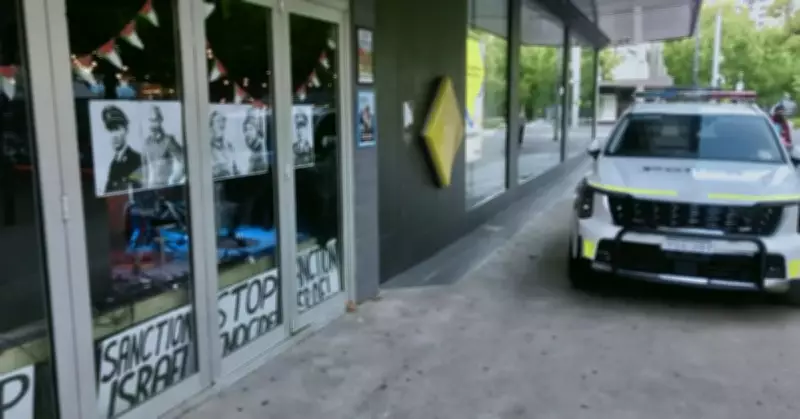
In a recent incident that has ignited discussions on artistic freedom and political expression, Australian police have seized a series of art posters from a bar in Canberra. The posters depicted former US President Donald Trump, Russian President Vladimir Putin, and Israeli Prime Minister Benjamin Netanyahu dressed in Nazi uniforms, a provocative portrayal that has drawn both criticism and support from various quarters.
Details of the Seizure
The seizure occurred at a bar located in the heart of Canberra, where the posters were displayed as part of an art installation. Authorities acted on complaints received from patrons and members of the public who found the imagery offensive and potentially inflammatory. Police officials confirmed that the posters were removed under laws pertaining to hate speech and public decency, though no arrests were made at the scene.
The bar owner, who has chosen to remain anonymous, stated that the installation was intended as a satirical commentary on global politics and the rise of authoritarianism. "Art should challenge and provoke thought, even if it makes people uncomfortable," the owner remarked, emphasizing the importance of free expression in a democratic society.
Reactions and Implications
The incident has sparked a broader debate in Australia about the limits of free speech and the role of art in political discourse. Supporters of the seizure argue that depicting world leaders in Nazi uniforms trivializes the horrors of the Holocaust and could incite hatred. "Such imagery crosses a line and has no place in public spaces," said a spokesperson for a local human rights group.
Conversely, free speech advocates and artists have condemned the police action as an overreach that stifles creative expression. They contend that satire is a protected form of speech and that the posters were a legitimate critique of contemporary political figures. "Censorship sets a dangerous precedent for artistic freedom," noted a representative from an Australian arts organization.
This event follows similar controversies globally where art has been targeted for its political content, highlighting ongoing tensions between freedom of expression and societal norms. In Canberra, the bar plans to challenge the seizure legally, arguing that the posters fall under artistic exemption clauses in Australian law.
Broader Context and Future Outlook
The seizure raises questions about how societies balance the protection of offensive speech with the prevention of harm. In Australia, laws vary by state and territory, with some offering stronger protections for artistic expression than others. Experts suggest that this case could set a precedent for future disputes involving political art and public displays.
As the legal proceedings unfold, the art community in Canberra and beyond is watching closely, concerned about potential chilling effects on creative works. The incident underscores the power of art to provoke and the complexities of regulating it in a multicultural democracy.
Ultimately, this episode serves as a reminder of the enduring debates over free speech, censorship, and the boundaries of acceptable public discourse in modern societies.