Reappraising Yoko Ono: From Maligned Figure to Avant-Garde Visionary
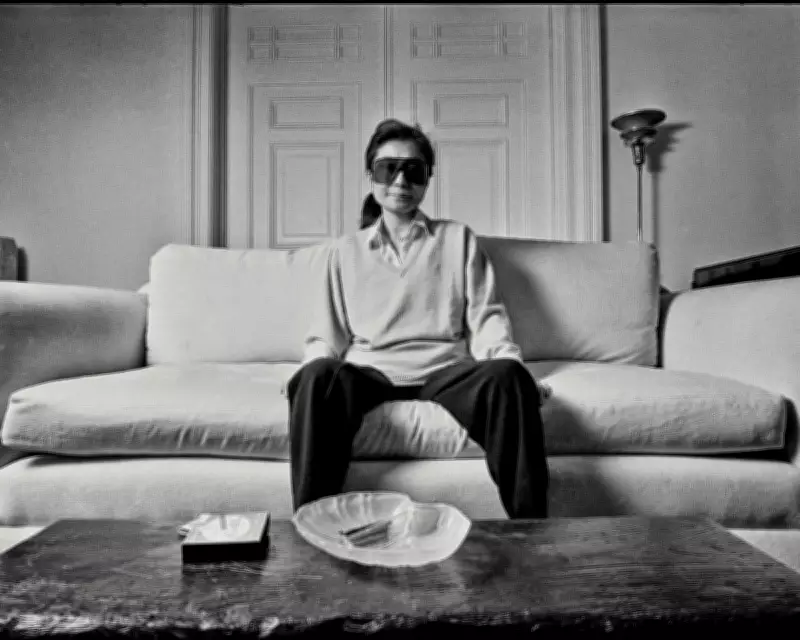
John Lennon once famously described Yoko Ono as "the world's most famous unknown artist. Everybody knows her name, but nobody knows what she does." This paradoxical statement captures the complex legacy of an artist who has been both viciously attacked and passionately defended throughout her career. Paul Morley's new biography, Love Magic Power Danger Bliss, offers a comprehensive reappraisal of Ono's life and work, focusing particularly on her formative years before meeting Lennon.
The Early Years: From Tokyo Firebombing to New York Avant-Garde
Born in 1933 into a wealthy Japanese banking family, Ono's early life was marked by dramatic contrasts. Her schoolmates included the sons of Emperor Hirohito, yet she would later survive the devastating firebombing of Tokyo during World War II. During this period of refuge in the countryside, she and her mother faced poverty and mockery from locals, experiences that would profoundly shape her artistic perspective.
Ono's academic journey was equally groundbreaking. She became the first woman accepted into the prestigious Gakushuin University philosophy department, though she left early, just as she would depart Sarah Lawrence College in upstate New York after just two terms. This pattern of early departures hinted at an artist who would consistently forge her own path rather than follow established routes.
The Fluxus Movement and Downtown New York
Morley's biography focuses extensively on Ono's immersion in the downtown New York art scene of the early 1960s. Here, she joined a ragtag community of dancers, musicians, and artists who were occupying abandoned industrial buildings to create work that mainstream galleries dismissed. This was the world of Fluxus, founded by Lithuanian artist George Maciunas, where artists like Korean-born Nam June Paik and German Joseph Beuys were creating radical, boundary-pushing work.
Morley positions Ono within this "avant-garde diaspora" of expats and exiles, all processing traumatic pasts through their art. The book explores how these artists used droning music, "event scores" that reframed everyday tasks as art, and antic physical performances to imagine new possibilities in the aftermath of war and displacement.
Groundbreaking Artistic Works
The biography provides excellent retellings of Ono's most significant works, particularly Cut Piece from 1964. In this performance, Ono invited audience members to approach her with scissors and cut away pieces of her clothing, creating a powerful exploration of vulnerability, consent, and social dynamics. Morley captures the work's enduring significance and its challenge to traditional power structures.
He also highlights Ono's distinctive dry humor, evident in projects like Bottoms (1966), an 80-minute film consisting entirely of closeups of people's backsides. Her casting call for the film read: "Intelligent-looking bottoms wanted for filming. Possessors of unintelligent-looking ones need not apply." This blend of conceptual rigor and playful wit characterizes much of Ono's output.
Critical Analysis and Omissions
Despite its subtitle's promise to explore "the Avant-Garde Diaspora," Morley's book doesn't fully develop this theme. Instead, it includes numerous lists, lengthy asides, and capsule summaries of various art movements that sometimes feel like padding rather than substantive analysis. The author acknowledges that "facts have their importance, but they can also be where a biography comes to grief," yet this approach leaves some readers wanting more concrete information about key periods in Ono's life.
Notably absent are detailed explorations of Ono's stay at a psychiatric hospital in Tokyo in the early 1960s or her custody battles with second husband Tony Cox. More surprisingly, given Morley's anger at the sexism that fueled much anti-Ono sentiment, the book fails to cite female scholars and critics who have championed her work over the years.
A Celebration of Artistic Vision
Most importantly, Morley's biography serves as a passionate defense and celebration of Ono's artistic philosophy. He argues that her work represents art that "especially when it is ephemeral, confounding and non-linear, fundamentally defines humanity." Her avant-gardism—characterized by tactile experiences, open-armed inclusivity, and rich reverie—stands as a rebuke to "the authoritarians, the controllers, the soulless, the digital rulers" of contemporary society.
To celebrate Yoko Ono, Morley suggests, is to celebrate "one of the last witnesses, one of the last survivors of a strange, innocent, elaborate fight for freedom." The biography positions her not as the family-wrecker or cultural vandal of popular mythology, but as a serious, innovative artist whose work continues to challenge and inspire.
Love Magic Power Danger Bliss: Yoko Ono and the Avant-Garde Diaspora by Paul Morley represents a significant contribution to understanding an artist whose complex legacy has often been overshadowed by celebrity and controversy. By focusing on her formative years and artistic development, Morley provides crucial context for appreciating Ono's enduring importance in contemporary art and culture.