National Gallery Confronts £8.2m Funding Deficit Amid Cultural Sector Struggles
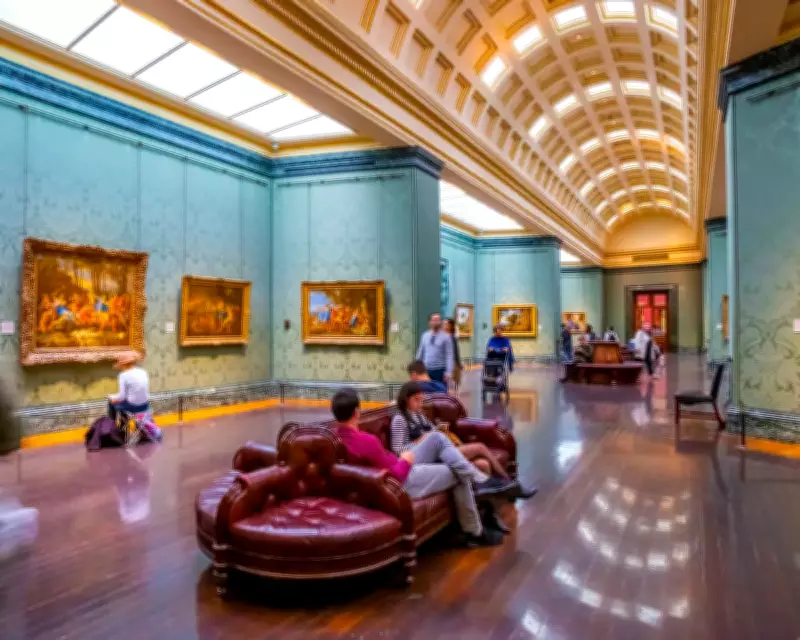
The National Gallery, one of the United Kingdom's most prestigious cultural institutions, is facing a severe financial crisis that threatens its foundational principle of free public access. Recent projections reveal an alarming £8.2 million deficit for the coming year, forcing the gallery to consider drastic measures including reduced free exhibitions, increased ticket prices, limited international borrowing, and potential job losses.
Record Success Followed by Financial Peril
Just months after celebrating remarkable achievements, the gallery now finds itself in precarious financial waters. The institution recently concluded a blockbuster Van Gogh exhibition that attracted a record-breaking 335,000 visitors before closing in January 2024. Its 200th anniversary celebrations, featuring the newly redesigned Sainsbury Wing and comprehensive rehang, generated a substantial 60% increase in visitor numbers since May.
"The National Gallery is doing a great job isn't it?" acclaimed artist David Hockney remarked in 2024. "Everything in the collection is good, every single picture is good." Despite this artistic triumph, the gallery's financial reality tells a different story, with visitor numbers declining from 6 million annually to just 3.8 million in the twelve months leading to September 2025.
A Broader Cultural Sector Crisis
The National Gallery's predicament reflects wider challenges across Britain's cultural landscape. Last year witnessed significant workforce reductions at major institutions, with the Tate eliminating 7% of its staff amid strike actions protesting "endemic low pay." London's prestigious Royal Academy has similarly implemented job cuts as cultural organizations grapple with reduced public funding, persistent inflation, and complex corporate sponsorship dilemmas.
Two substantial £150 million donations, while impressive, remain specifically allocated for constructing an ambitious new contemporary art wing rather than addressing daily operational expenses. This separation highlights the growing gap between capital projects and sustainable operational funding.
The Historical Foundation of Free Access
When the National Gallery first opened its doors on May 10, 1824, its founding principle mandated that the institution must be "free to anyone who applied at the door." Beginning with just 38 paintings acquired by the government following a financier collector's death, the collection has expanded dramatically to encompass 2,300 masterpieces.
In the 1850s, the gallery's inaugural director Charles Eastlake received a £10,000 annual purchase grant for continental acquisitions. Today, the institution operates with a £32 million government grant covering approximately half its operational costs, supplemented by exhibition fees, commercial revenue from shops and cafes, and philanthropic and corporate sponsorship.
The Twenty-Fifth Anniversary of Free Admission
This year marks the twenty-fifth anniversary of the United Kingdom's highly successful policy providing free admission to national museums and galleries. The National Gallery's current funding crisis has reignited vigorous debate about this policy's future sustainability. Amid competing demands for increased spending in areas like national defense and special educational needs, maintaining access to cultural treasures risks being deprioritized.
"In which other capital city can you wander in and find masterpieces by Leonardo da Vinci, Titian and Rembrandt for nothing?" This fundamental question underscores the gallery's unique position in London's cultural landscape. The institution houses some of Europe's most significant and beautiful paintings, representing a collective national heritage that belongs to the public.
The Human Connection in an Artificial Age
Playwright Alan Bennett eloquently captured the gallery's profound impact in his 1995 lecture "My National Gallery," describing the sense of recognition—what he termed "the evidence of humanity"—that viewing art provides: "it's as if a hand has come out and taken yours." In our current era characterized by artificial intelligence, social division, and widespread disinformation, maintaining this human connection through accessible cultural experiences becomes increasingly vital.
For years, cultural institutions across the United Kingdom, both national and regional, have pleaded for enhanced governmental support. Now one of the nation's oldest and most prestigious galleries is sounding an urgent alarm. As the National Gallery confronts its most significant financial challenge in recent memory, the government faces mounting pressure to address the broader funding crisis threatening Britain's cultural heritage and public access to artistic masterpieces.