Television Comedy Drama Leads to Recovery of Historic Napoleon III Artifacts
In a remarkable twist of fate, two priceless 19th-century altar cards stolen more than a decade ago from the crypt of Napoleon III have been recovered thanks to an antiques dealer's keen eye while watching a repeat of the BBC comedy drama Lovejoy.
Theft and Discovery
The wooden altar cards were taken during a burglary at St Michael's Abbey in Farnborough, Hampshire in February 2014. For twelve years, these historically significant artifacts were feared lost forever until Derbyshire antiques dealer Paul Gostelow made a crucial connection while viewing the television show.
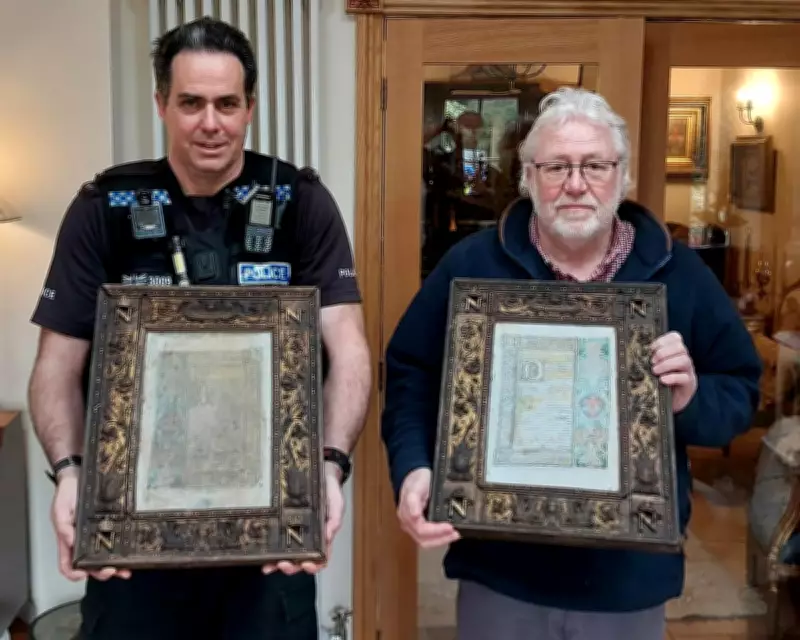
Gostelow recognized similar Napoleonic motifs on objects featured in the program and realized he had two of the three stolen cards in his possession. He immediately contacted Hampshire police earlier this month to report his discovery.
Historical Significance
Hampshire police described the recovered cards as "unique, historically important and priceless." The artifacts bear texts of handwritten prayers discovered on Prince Louis when he died in battle at age 23 in 1879. These cards were stolen from the crypt altar beneath the tomb of Empress Eugénie, wife of Napoleon III.
St Michael's Abbey was commissioned by Empress Eugénie after Napoleon III died in exile in England in 1873. The abbey crypt contains the bodies of Napoleon III, Empress Eugénie, and their son Prince Louis, creating a site of significant historical importance.
Condition and Recovery Efforts
A spokesperson for the abbey expressed gratitude for the recovery while noting the cards have returned in poor condition. "The abbot and community are, nonetheless delighted at their return, and are grateful to the member of the public whose diligence led their recovery," the spokesperson said. "It is hoped that the third card will be found and that those recovered can be restored."
Police confirmed they will continue efforts to locate the third missing plaque. Before their theft, the cards were used regularly by monks during mass at the abbey, where a small monastic community lives according to the Rule of St Benedict, maintaining traditional practices including sheep farming, beekeeping, and bookbinding.
Television's Unexpected Role
This unusual recovery highlights how popular culture can unexpectedly intersect with historical preservation. The Lovejoy series, which originally aired in the 1980s and 1990s featuring Ian McShane as a roguish antiques dealer, provided the crucial visual reference that enabled Gostelow to identify the stolen artifacts.
The case demonstrates that even decades-old television programming can serve as an educational resource, helping to preserve cultural heritage through unexpected means. The recovery represents a significant victory for historical preservation efforts and showcases the importance of public vigilance in protecting cultural artifacts.