Landmark Indigenous Art Exhibition Finally Opens Amidst Controversy and Legal Battle
After a tumultuous three-year delay marked by intense investigations and a staggering $4.4 million lawsuit, the National Gallery of Australia's highly anticipated exhibition, Ngura Puḻka – Epic Country, has finally opened its doors to the public in Canberra. This landmark showcase features 30 large-scale paintings by Indigenous artists from the Aṉangu Pitjantjatjara Yankunytjatjara (APY) Lands, yet its journey to display has been overshadowed by allegations and divisive public debate.
A Controversial Path to Exhibition
The exhibition's postponement stems from shocking allegations published in The Australian newspaper in 2023, which claimed that white studio assistants had interfered with artworks credited to Indigenous artists within the APY Arts Centre Collective (APYACC). Headlined "White hands on black art," the report included video footage showing a white arts worker applying paint to a canvas by acclaimed artist Yaritji Young, sparking widespread controversy and multiple investigations.
APYACC, an Aboriginal-owned collective representing over 500 Aṉangu artists, vehemently denied the allegations, stating that art assistants participating in the creative process at artists' direction was standard practice and did not compromise artistic integrity. Despite this defense, the allegations triggered an independent review by the National Gallery of Australia, as well as investigations by South Australian authorities and federal bodies including the Australian Competition and Consumer Commission (ACCC) and the Office of the Registrar of Indigenous Corporations (Oric).
Investigations and Consequences
The National Gallery's review ultimately determined that the 28 paintings originally destined for Ngura Puḻka met the gallery's provenance standards, confirming that the attributed artists had exercised effective creative control. However, three paintings were withdrawn from the exhibition—two for personal reasons and one due to a conflict of interest involving artist Sally Scales, who now chairs the gallery's First Nations advisory group. Six new paintings have been added to the current display.
While the ACCC found no breach of consumer laws and Oric concluded its investigation with no further action, the Indigenous Art Code revoked APYACC's membership, and state and federal funding totaling $380,000 was suspended. Although state funding was reinstated in 2023, the collective reports that their expulsion from the code has adversely affected federal funding applications, contributing to significant financial losses.
The Art and Its Significance
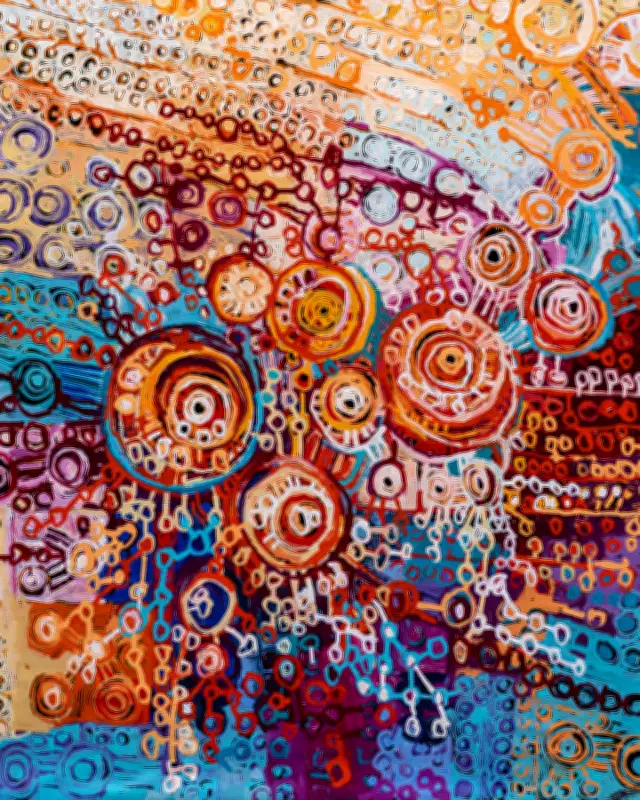
Walking through the gallery spaces, visitors encounter an exhibition that, on its surface, appears entirely uncontroversial. The paintings depict aerial views of the APY Lands, showcasing waterholes, riverbeds, spinifex, and other flora, alongside representations of tjukurpa—ancestral stories and cultural law. Key narratives include the story of the Seven Sisters and spirits like the mischievous "mamu," with works such as Margaret Richards' 2021 piece "Ngayuku Ngura (My Country)" highlighting the deep connection to country.
Tina Baum, head curator of First Nations art at the National Gallery, describes herself as a "curatorial assistant" to the Aṉangu artists, emphasizing that the exhibition represents their vision and dream. Senior artist Sandra Pumani explains that the artists aim to share their stories about country, upbringing, and cultural heritage, expressing happiness in painting these narratives. The APY Lands region has become a powerhouse in Australian art, with artists frequently winning awards in prestigious competitions like the National Aboriginal and Torres Strait Islander Art Awards (Natsiaas) and the Wynne Prize.
Financial and Legal Repercussions
The controversy has had tangible financial impacts on APYACC. The collective estimates losses including a downturn in sales and the missed opportunity to sell the 28 original paintings to the National Gallery, which had initially intended to acquire them. In response, APYACC has filed a $4.4 million defamation lawsuit against Nationwide News, publisher of The Australian, seeking compensation for these losses and estimated federal funding shortfalls.
Artist and APYACC board member George Cooley expresses frustration over the funding challenges, noting that despite four reviews with no adverse findings, federal funding remains elusive. Cooley, who began painting in his late 60s, highlights the collective's business model, which returns approximately 85% of sales income directly to artists and art centers, providing crucial economic opportunities for single mothers, grandparents, and young people in the community.
Artist Perspectives and Moving Forward
For the artists involved, the exhibition's opening is bittersweet. Nyunmiti Burton, whose painting of the Seven Sisters story is featured, emphasizes the importance of sharing this narrative about leadership and community care with a global audience. She also notes that painting provides essential income for supporting her family. Burton, who was featured in The Australian's reporting, has since retracted her statements, expressing regret and describing herself as unwell and emotional at the time.
Frank Young, an award-winning artist and APYACC board member, translates for his wife Yaritji Young, whose honey ant story painting is part of the exhibition. He describes the sadness felt by artists over the video footage and criticizes The Australian's narrative as misleading. Despite the challenges, both express pride and happiness in finally seeing their work displayed after three long years.
Ngura Puḻka stands as a testament to the resilience and creativity of Indigenous artists, even as it navigates the complexities of controversy and legal battles. The exhibition is now open at the National Gallery of Australia in Canberra until August, inviting visitors to experience the epic country and stories of the Aṉangu people.