The Enigmatic Portrait That Captivated a Nation
In the world of art, few paintings have stirred as much intrigue and controversy as Ivan Kramskoy's Portrait of an Unknown Woman. Created in 1883, this masterpiece initially caused a scandal in imperial Russia, only to later become a ubiquitous symbol in Soviet popular culture. Its journey from rejection to reverence is a tale of shifting societal values and artistic rebellion.
From Scandal to Staple: The Painting's Turbulent History
Kramskoy, a celebrated Russian portraitist, began his career humbly as a provincial retoucher before gaining admission to the Imperial Academy of Arts in St Petersburg. There, he led the Revolt of the Fourteen, a protest demanding the right for artists to choose their own subjects for competitions. This group evolved into the peredvizhniki, or Wanderers, who organized traveling exhibitions across the Russian empire.
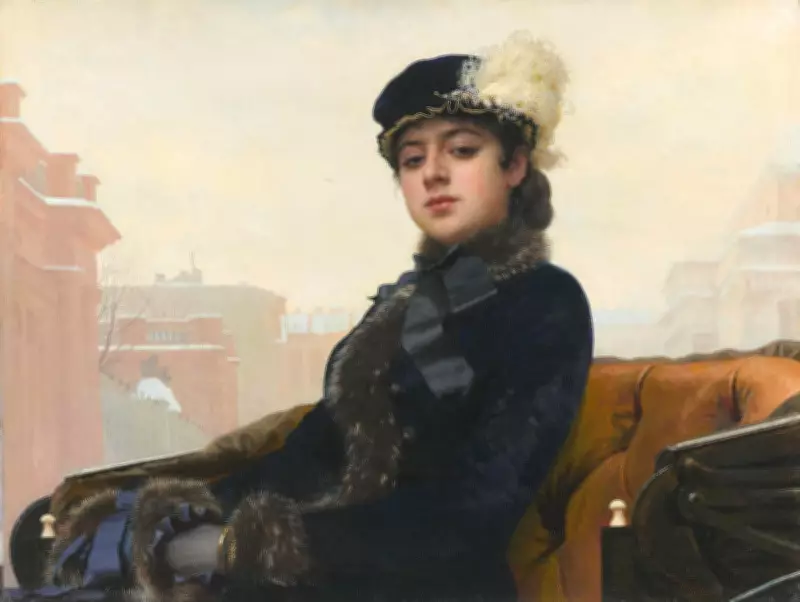
When Kramskoy painted Neizvestnaya (the Romanised Russian for Portrait of an Unknown Woman), he hoped it would be acquired by Pavel Tretyakov, founder of the Tretyakov Gallery and a patron of the Wanderers. However, the painting's depiction of a solitary, beautifully dressed woman in an open carriage, exuding an air of arrogance, was met with disdain. Critics labeled her "a cocotte in a carriage" and "a costly camellia," reflecting the era's conservative views on women's behavior and fashion.
Tretyakov, from a merchant background, rejected the painting. It eventually passed through private collections, including that of Ukrainian sugar magnate Pavel Kharitonenko, before being seized by the state after the revolution. Ironically, it ended up in the Tretyakov Gallery, contravening Tretyakov's wishes.
The Soviet Era: Mass Reproduction and Cultural Icon
After World War II, the Soviet state promoted cultural enrichment through cheap art reproductions. Portrait of an Unknown Woman became a runaway hit, adorning millions of homes. Its mystery and bourgeois elegance stood in stark contrast to the blunt symbolism of Soviet art, offering a touch of sensuality in a prudish culture. The painting even graced covers of Anna Karenina editions, cementing its status in popular imagination.
A Cinematic Discovery: Unraveling a Personal Tragedy
The painting's appearance in Joachim Trier's film Sentimental Value, which swept European awards and earned multiple Bafta and Oscar nominations, sparked a deeper investigation. In the film, the portrait is spotted in a corridor, hinting at hidden narratives. This led to uncovering a poignant connection to Norwegian artist Hedvig Broch.
Broch, a friend of the film's production designer Jørgen Stangebye Larsen, painted a loose copy of Kramskoy's portrait. Her version transformed the arrogant figure into a more melancholy and vulnerable one. Broch's life was marked by unfulfilled artistic dreams, as she was pressured into sociology studies and later forced to choose between art academy and marriage.
At age 50, she finally pursued painting seriously, creating her own Portrait of an Unknown Woman. Tragically, like characters in Trier's films Oslo, 31 August and Sentimental Value, Broch took her own life. Larsen chose to include her portrait in the film as a tribute, unaware of the deeper parallels until later.
Life Imitating Art: Unintentional Echoes
When asked about this connection, Trier expressed surprise, quoting Goethe's Faust: "man merkt die Absicht und man ist verstimmt" (you work out what their intention is and it breaks the spell). The unintentional resonance between Broch's life and the film's themes highlights how art and memory can intertwine in profound ways.
This story underscores the enduring power of Kramskoy's painting, which continues to inspire and evoke emotion across generations and borders. From imperial scandal to Soviet icon and cinematic symbol, Portrait of an Unknown Woman remains a testament to the complex interplay between art, culture, and personal tragedy.