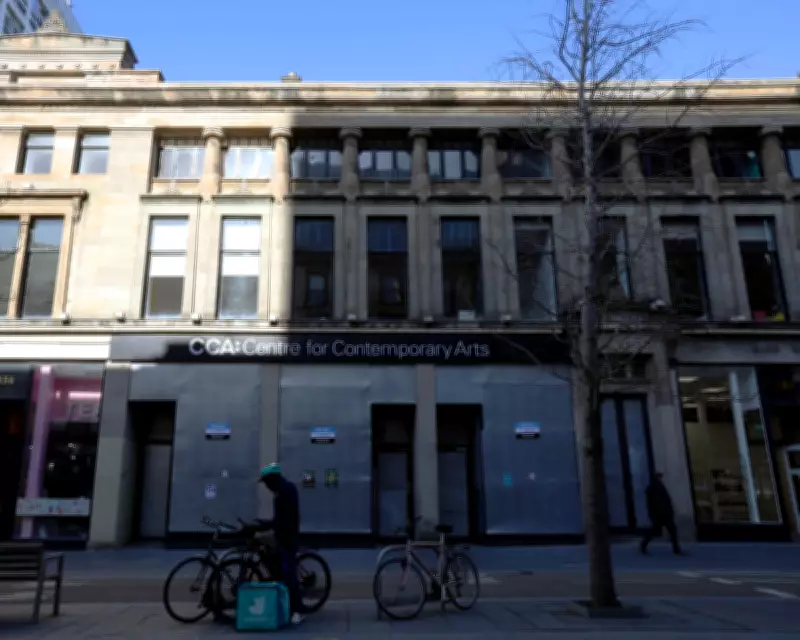
Glasgow's Arts Scene in Crisis as Key Venues Close, Threatening Cultural Legacy
The shuttered Glasgow Centre for Contemporary Arts, a cornerstone of the city's art scene since its founding as the Third Eye Centre in 1974, has left artists and community members reeling. This closure, coupled with eviction threats at another major arts hub, Trongate 103, has intensified fears that the spaces that fostered Glasgow's celebrated arts scene are disappearing, raising urgent questions about the city's cultural future.
Sudden Closure and Community Impact
When Daisy Mulholland, a Glaswegian artist known as Nänni-pää, received an email on January 30, she was organizing the launch event for her new art shop at the Centre for Contemporary Arts. The email announced the venue's immediate closure due to unsustainable finances, leaving her with 250 tickets sold and equipment locked inside. It took a month for Mulholland to reclaim her property, highlighting the broader financial and emotional toll on local businesses and the arts community.
Mulholland's experience is not isolated. The reverberations of the CCA's closure have been profound, with many artists and organizations losing significant investments and facing uncertainty. The situation worsened last week when tenants at Trongate 103, including the Glasgow Media Access Centre, Street Level Photoworks, and Glasgow Print Studio, reportedly faced eviction threats from their landlords.
Rent Hikes and Strategic Failures
Mark Langdon, chair of the GMAC board, revealed that the centre received a notice to quit on February 27, with City Property, the city council's arm's length body, proposing a rent increase of four times the current rate plus additional service charges. While City Property denies eviction intentions and claims to support organizations staying, the rent hikes stand, shifting the relationship from a partnership to a commercial tenancy.
Paul Sweeney, a Scottish Labour MSP for Glasgow, criticizes the city's SNP council for a lack of strategic leadership, arguing that venues like Trongate 103 were established to anchor regeneration, not for commercial profit. He points to a broader pattern of cultural infrastructure diminution, including the Glasgow School of Art's Mackintosh building remaining a burnt-out shell a decade after fire damage, the Lighthouse now in private hands, and the McLellan Galleries redeveloped as office space.
Historical Context and Current Challenges
Glasgow's arts scene, once a scrappy, DIY contender to Edinburgh and London, flourished after its tenure as European Capital of Culture in 1990, blending visual arts, music, and club culture around an art school that produced multiple Turner Prize winners. However, this success may have masked underlying issues, such as inadequate development funding and a lack of coherent strategy.
The CCA's closure followed years of turbulence, including staffing disputes, financial mismanagement concerns, and controversies over cultural boycotts. Creative Scotland, which owns the building, is exploring options to reopen it as a cultural resource. Meanwhile, Janos Lang of Ando Glaso, a Roma-led organization based at the CCA for nearly a decade, suggests the building could become Scotland's first multicultural arts centre, emphasizing its role in showcasing ethnic minority voices.
Alternative Models and Broader Implications
On the city's edge, SWG3 represents a successful entrepreneurial model, using commercial activities to fund arts programmes. Alison Fullerton, executive director of the Clydeside Initiative for Arts, notes that rising costs like rent and energy, coupled with stagnant artist earnings and reduced audience spending, are creating a growing gap for cultural organizations to fill.
Veronique AA Lapeyre, director of the Scottish Contemporary Art Network, warns that the squeeze on arts spaces could erode Glasgow's interconnected creative community, impacting mental wellbeing, community expression, and social inclusion. She highlights Glasgow's comparatively low funding compared to other European cities, despite the Scottish government's pledge to increase annual arts funding by £100 million by 2028-29.
Calls for Action and Future Outlook
Louise Oliver, programme director at GMAC, cautions that Glasgow risks becoming a hollow shadow of its former self, with young creatives likely to leave if nurturing spaces vanish. She stresses that the legacy of being the UK's first European City of Culture must be matched by meaningful support and real investment.
As Glasgow grapples with these closures, the broader question remains: what kind of city will it choose to become? Protecting cultural spaces and committing adequate budgets are essential to preserving the soul and vibrancy that once defined Glasgow's arts scene.