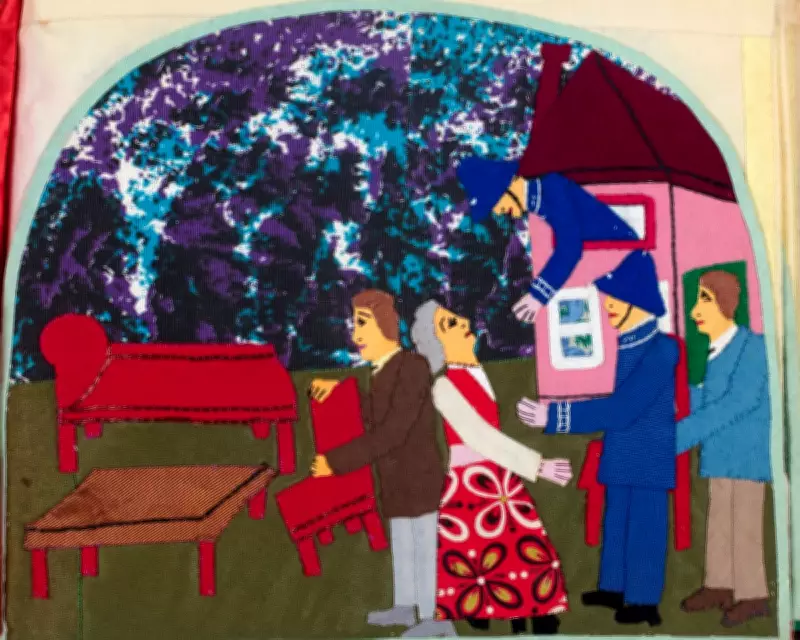
Elizabeth Allen: The Reclusive Textile Artist Rediscovered After Decades
Elizabeth Allen lived at the end of a steep, muddy track in a dilapidated hut in Biggin Hill, with a notice on the door that read: "Knock very loudly." In the winter of 1965, artist Patrick Heron did just that, and overnight, Allen, then in her 80s, was catapulted from total obscurity to lauded luminary of the art world. Exhibitions followed across Britain, as well as in New York, Los Angeles, and Barcelona. The Guardian praised her as "a remarkable colourist," noting that "Klee and Matisse would undoubtedly have been impressed."
A Life of Obscurity and Sudden Fame
Born in 1883 above a baker's shop in Tottenham, London, Allen was one of 17 children to a German father and an Irish mother, both tailors. From them, she learned to sew, a skill she devoted herself to, possibly due to being unable to participate in dances because of a disability—she was born with one leg shorter than the other. Her parents' workshop, filled with fabric offcuts, became her inspiration and palette. Late in life, she remarked: "A picture dawns as soon as I see a lovely piece of cloth."
Much of her life story remains shrouded in mystery, but it is known that she was evicted from a Suffolk cottage in 1934, an event she depicted in her textile work Autobiraggraphy, now shown publicly for the first time at Compton Verney in Warwickshire. This piece vividly portrays helmeted police officers arriving to evict her, with Allen, known to her family as Queen, gazing up in despair while wearing a floral skirt and her orthopaedic footwear.
Artistic Themes and Global Connections
Despite her reclusive lifestyle in a shack outside Biggin Hill, where she lived alone creating patchwork pictures from old clothes, Allen stayed informed on current affairs through newspapers and radio. In 1966, she briefly owned a television but returned it, preferring the radio for easier sewing. Her works reflect this connection to the world, such as Lunar-Ticks Picnic from 1965, which playfully references the space race between the US and the Soviet Union, depicting peaceful creatures gathered around a campfire, suggesting the heavens should remain free from earthly conflicts.
One of her most powerful pieces is The Black Feet Are Kicking, created in response to African nations gaining independence from imperial powers in the 1950s and 60s. It features a procession of appliquéd black figures against a cream satin background, with a giant pair of black feet dominating the scene, symbolizing a transfer of power. Allen's relationship with religion was complex; though critical of the church, biblical themes inspired works like Jonah being swallowed by a whale and the "fallen woman of Babylon."
Rediscovery and Legacy
After her death in 1967, Allen's work faded into obscurity, but it has been unearthed anew for the exhibition Troublemakers and Prophets at Compton Verney. The show includes pieces hidden in storage or private homes for nearly half a century. Ila Colley, folk art curator at Compton Verney, notes that Allen, a working-class woman with no formal training, was marginalized by art history, partly due to her disability. "Allen also lived with disability," says Colley, "and that's a big part of what she is making art about."
The exhibition was sparked by the presence of Allen's work in Compton Verney's folk art collection and efforts by Bridget, a young art student who lived nearby and later helped Allen. Bridget's letters from the time have aided in piecing together Allen's story. Colley hopes this show will lead to more discoveries of Allen's works and a deeper understanding of her life, with plans for a larger exhibition in the future. Troublemakers and Prophets runs until 31 August, offering a rare glimpse into the dazzling creations of this forgotten artist.