Dóra Maurer: The Hungarian Avant-Garde Artist Who Thrived in Obscurity
In a 2019 interview with the Art Newspaper, Dóra Maurer made a striking assertion: her artistic practice benefited "from a lack of market." This statement might seem paradoxical for an artist who, at age 88, was preparing for her second exhibition at London's prestigious White Cube gallery. However, Maurer's career trajectory was anything but conventional, shaped profoundly by the historical constraints of communist Hungary.
A Life of Artistic Duality
Born in Budapest in 1937, Maurer's early life was marked by hardship. Her father, an officer in the Hungarian army, died before her birth, and her mother lost her widow's pension after the communist takeover. Despite these challenges, Maurer pursued art, studying at the Hungarian Academy of Fine Arts from 1956 to 1961. Under communist rule from 1949 to 1989, she lived what she described as an "artistic double life"—publicly toeing the official line as a teacher and graphic designer, while privately creating experimental works that pushed boundaries.
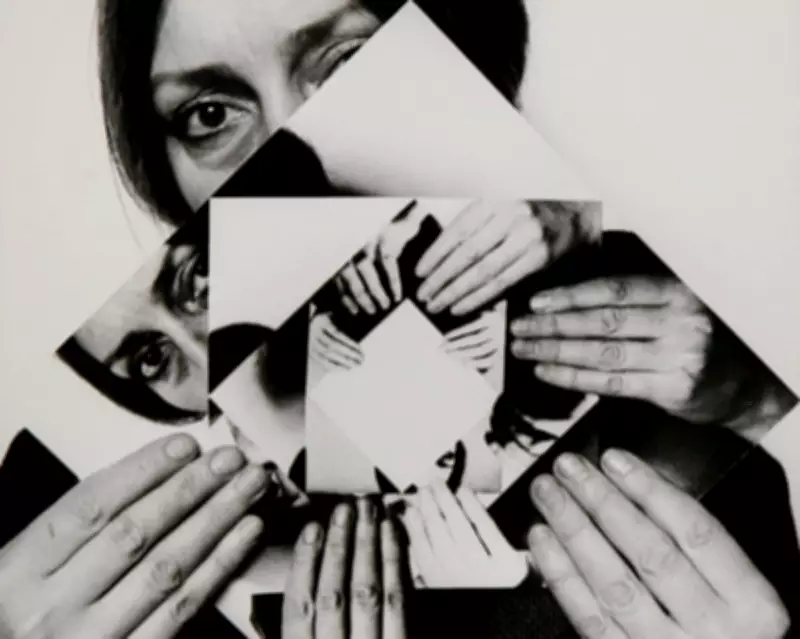
Her early career in the 1960s and 1970s involved producing avant-garde prints, such as Traces of a Circle (1974), which explored palimpsest-like layering. These works often went unseen in Hungary, reflecting the stifling cultural environment. Maurer also ventured into photography, creating her iconic piece Seven Twists in 1979, a surreal collage of folded self-portraits that blurred reality and image.
Late Recognition and International Acclaim
For decades, Maurer's work remained largely unknown outside niche circles. This changed dramatically in her later years. In 2016, as her White Cube exhibition opened, Tate Modern launched a year-long showcase of 35 pieces spanning her half-century career. Critics responded with "baffled admiration," noting how her oeuvre—from lens-based art to performance and neo-abstraction—traced the evolution of contemporary art with remarkable power.
Despite this recognition, her market value lagged; a painting sold at Sotheby's in 2013 fetched just £8,000, a modest sum for an artist of her stature. Maurer attributed this to Hungary's communist past, which limited public exposure and commercial opportunities until she was in her 50s.
Geometric Abstraction and Personal Influences
In the 1980s, Maurer shifted to painting, producing richly saturated, geometric abstract works like Stage II (2016). She cited Budapest's Danube River as a key inspiration, describing its "wide, peaceful river" as central to her aesthetic. Her paintings often conveyed a sense of flux, with forms transitioning between states—a metaphor, perhaps, for her own life under shifting political regimes.
Maurer resisted being labeled solely as a Hungarian artist, insisting her work was "European" in character. After marrying fellow artist Tibor Gáyor in 1968, she split time between Vienna and Budapest, engaging with independent artistic circles. Following a professorship at the Hungarian Academy of Applied Arts in 1987, she settled in Budapest, gaining prominence in the 2000s with shows at institutions like the Centre Pompidou and MoMA.
Legacy and Passing
Dóra Maurer passed away in 2026, leaving behind a legacy that challenges conventional art historical narratives. Her journey—from obscurity under communism to late-career acclaim—highlights the resilience of avant-garde creativity in repressive contexts. As Tate Modern's exhibition demonstrated, her work not only documented personal and political struggles but also contributed significantly to global contemporary art discourse.