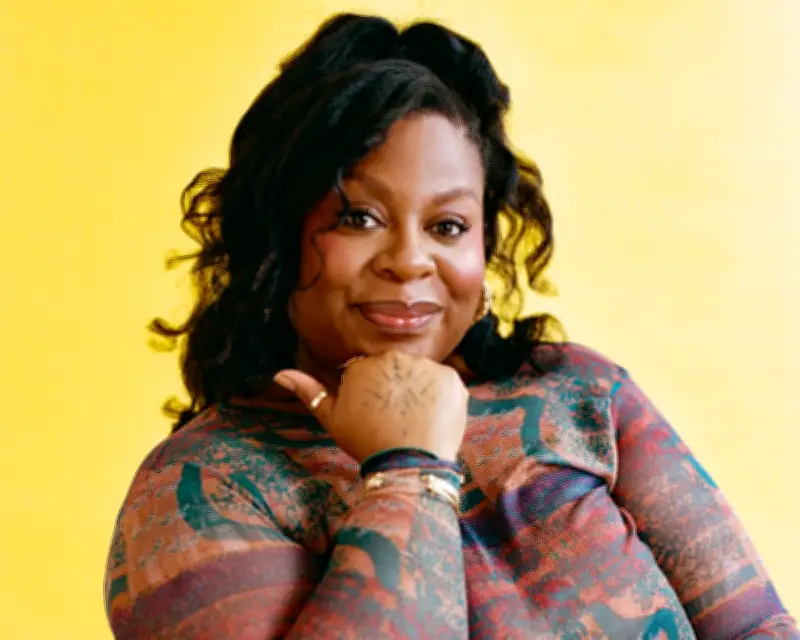
Candice Carty-Williams has spent years fielding the question of whether she is Queenie, the protagonist of her bestselling debut novel. The character, a twenty-something south London journalist navigating heartbreak, racism, and self-destruction, shares many traits with her creator: both are Black, south London-born, and work in media. But Carty-Williams, now 36, dismisses the comparison. "I find Queenie quite annoying actually," she laughs. "I think a lot of people do. But I quite like that."
Queenie's Success and the Sequel
Released in 2019, Queenie became a phenomenon, selling over half a million copies and winning Book of the Year at the British Book Awards in 2020, making Carty-Williams the first Black writer to achieve that honour. The novel was adapted for television by Channel 4. Now, nine years after signing her book deal, Carty-Williams returns with a sequel, Queenie Is Working on It, published on 2 July by Trapeze. The new novel finds Queenie in her early 30s, trapped in a situationship with a man she calls "TFL man" and investigating Black maternal healthcare, uncovering troubling information about her own fertility. Carty-Williams resisted writing a sequel initially, opting instead for People Person (2022), but found the right story to "blow her life up again."
TV Adaptation: A Painful Experience
The Channel 4 adaptation of Queenie in 2024 was, according to Carty-Williams, "probably the worst professional experience of my life." She tried to quit three times. "I guess what I thought development would be … did not come to fruition," she says. She felt the novel was second-guessed and the Black experience reduced to stereotypes. At one meeting, someone suggested opening with a white character using the N-word within the first five minutes "to really grab people." Carty-Williams refused: "That's not the story I'm telling." The process made her physically sick and paranoid, but she stayed because "there were so many people's jobs on the line." She now says she never wants to develop anything for screen again. The adaptation received mixed reviews; a Guardian review described it as "strangely preoccupied with whiteness." Carty-Williams says she was not happy with the finished result.
Diversity in Publishing: Then and Now
The publishing landscape after Queenie's success and the 2020 racial reckoning saw publishers scrambling to acquire Black writers. "People were literally pitching books by saying: 'We're going to market this like Queenie,'" she recalls. But that enthusiasm has faded. "All the diversity schemes disappeared," she says, "because organisations realised people would get annoyed about them." In the sequel, Queenie encounters corporate diversity language that Carty-Williams found absurd, such as "We need an urban injection" or "something Black-facing." She says, "What does that even mean?"
Black Maternal Healthcare and Personal Reflections
The sequel tackles Black maternal healthcare, inspired by Carty-Williams's research and personal experience. She notes that Black women in the UK were five times more likely to die during pregnancy, childbirth, or the postnatal period than white women, according to 2019 statistics from the campaign group Five X More. The gap has narrowed but remains nearly threefold. In the book, Queenie encounters women whose pain is dismissed due to racial stereotypes. "When Queenie's researching in the book, that's basically my research," Carty-Williams says. "I put it in almost verbatim because I was so astounded."
Personal Life and Future Plans
Carty-Williams grew up in south London, moving frequently. Her mother is of Jamaican-Indian heritage; her Jamaican father worked as a taxi driver and had three other children. Books were scarce at home, but she read voraciously at school. She achieved two As and a B at A-level despite teachers predicting three Cs. After an internship in publishing, she created the 4thWrite prize for unpublished Black, Asian, and minority ethnic writers. "The prize is one of my babies," she says. She bought a house after Queenie's success and says her biggest expenditure is therapy. She has little interest in literary celebrity: "I like a quiet life." Future projects include a book of essays in her 40s and a novel about parasocial relationships. She also wants to return to publishing as an editor. As for Queenie, she says, "Yeah, I have to [return to her]. I don't know when that will be."