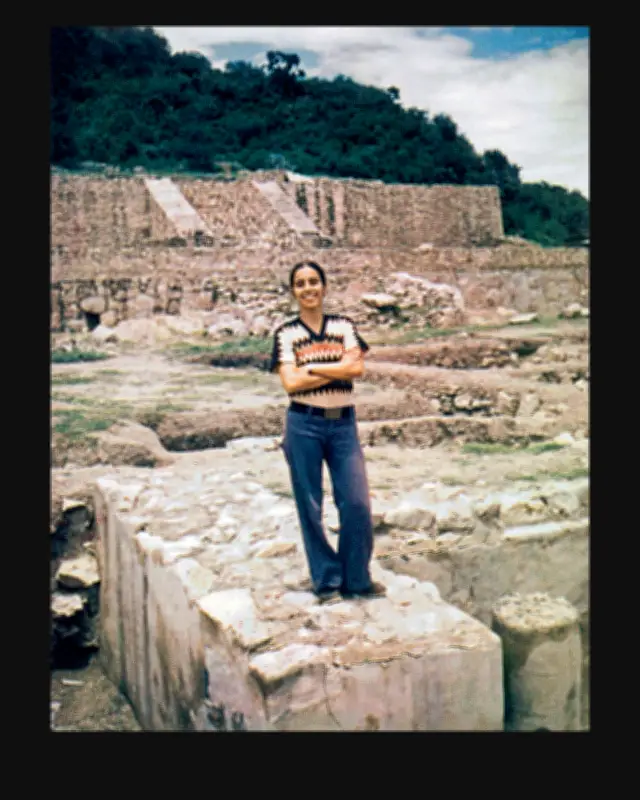
Ana Mendieta, a Cuban American artist known for her shocking performances and stunning images, is the subject of a major exhibition at Tate Modern starting 15 July. The exhibition comes 40 years after her death in 1985, when she fell from a 33rd-floor apartment in New York, and her husband, minimalist artist Carl Andre, was charged with murder. Mendieta's friends and family continue to seek answers, while her estate focuses on her artistic legacy.
A Rising Star Cut Short
In the summer of 1985, Mendieta was working in Rome on a commission for MacArthur Park in Los Angeles, using gunpowder and chainsaws to create a totem grove of trees. She had won the Prix de Rome and was known for her Silueta series, which involved imprinting her silhouette into landscapes using natural materials like flowers, feathers, and mud. Her friend B Ruby Rich, a film critic, recalls Mendieta mailing her a newspaper clipping of a pro-choice demonstration in Rome, saying, 'Look, they're not like American women. They're showing women butchered and dead from botched abortions. Look how much fiercer they are.'
Mendieta's work often explored themes of the body, decay, exile, and nature. In pieces like Sweating Blood (1973) and Blood Writing (1974), she used cow's blood to create visceral images. Her friend Marsha Pels, a sculptor, remembers Mendieta's generosity: 'When Ana was working with the trees, there was one I really liked, like a woman crossing her legs. I said, 'Can I have that?' and she said yes.'
The Night of the Fall
On 8 September 1985, Mendieta and Andre argued about his greater public exposure as an artist. In his 911 call, Andre said, 'My wife is an artist, and I'm an artist, and we had a quarrel about the fact that I was more, uh, exposed to the public than she was. And she went to the bedroom, and I went after her, and she went out the window.' Mendieta fell 33 storeys from Andre's apartment on Mercer Street. Evidence that she was planning to divorce him was ruled inadmissible in court. A doorman reported hearing a woman shout 'No, no, no!' followed by a sound 'like an explosion.'
Andre was acquitted after a bench trial in 1988. His lawyer portrayed Mendieta as a suicidal hot-headed Latina, citing her art as evidence. B Ruby Rich called the defense 'explicitly racist. Ana was a crazy Cuban drunk who flew out the window. It was completely nuts.' The trial split the art world, with Frank Stella paying Andre's $250,000 bail. Marsha Pels says Mendieta's death made her a feminist: 'I didn't want to identify with feminism until I saw the art world stand up with this murderer.'
Legacy and Exhibition
Mendieta's niece and estate manager, Raquel Cecilia Mendieta, is firm in her focus on the art: 'Having to speak for Ana all the time, it shocks me how much I have to say, 'Why are you sensationalising her? Would you do that with Rothko?'' The Tate Modern exhibition will include restored Super 8 films, such as Bird Run (1974), showing Mendieta covered in white feathers sprinting along a beach. Raquel Cecilia says, 'She wanted to make all the images lifesize, much bigger.'
Mendieta's friend Ida Panicelli, former curator of Italy's National Gallery of Modern Art, remembers her as 'a volcano – very energetic and fun, but with Andre often arguing.' The exhibition runs until 17 January 2027, offering a comprehensive look at Mendieta's brief but influential career. As Rich puts it, 'Ana was just getting started.'