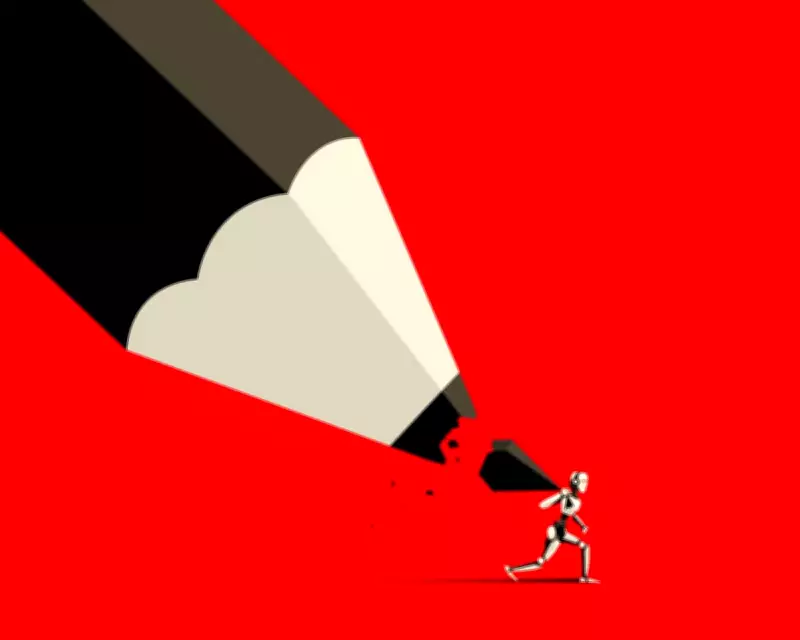
Is AI the Greatest Art Heist in History?
In 2026, the negative impacts of generative AI are glaringly obvious. The internet has labeled its outputs as "slop," while AI executives parade on stage like comic book villains, boasting about eliminating entire categories of human labor. These systems consume enormous amounts of the world's water to power their data centers, while chatbots spread dangerous misinformation and contribute to mental health crises among users. Who saw this coming? Artists did.
The Personal Impact on Creatives
As an artist myself, 2022 marked the year I first encountered knock-offs of my work. These weren't exact copies but strange, diluted versions—as if created by an untalented teenager on sedatives, with all my distinctive lines and textures reduced to mechanical repetition. The cause quickly became clear: AI image generators had scraped my entire portfolio from the internet and fed it to their algorithms without permission, credit, or compensation. This wasn't just happening to me; it was happening to artists everywhere. Billions of images have been harvested from the web in what I consider the largest art theft in human history.
The Tech Industry's Deliberate Strategy
Technology leaders knew exactly what they were doing. Back in 2023, venture capitalist Marc Andreessen argued that enforcing copyright laws would "kill" the AI industry. Tech companies followed their familiar playbook: move fast and break things. This time, what they're breaking are human creators and their livelihoods. Even more troubling was the public's initial reluctance to question this exploitation.
I recall the 2023 Perugia journalism festival, where industry leaders gather to network and discuss media trends. That year, the event was saturated with tech industry advocates who insisted newsrooms must adopt AI tools or risk becoming obsolete like horse-drawn carriage makers. During conference breaks, these same individuals privately admitted that AI would eliminate writing jobs regardless of writers' preferences—a truth they carefully omitted from their public presentations.
Organized Resistance Emerges
During my scheduled talk about using art to document war zones, I instead focused on the threat generative AI poses to creative professionals. I explained how these companies shame critics as backward and promote a narrative of technological inevitability to secure compliance. Human outcomes aren't inevitable; they're shaped by politics, money, and power. Even without financial resources, we still have political voice.
To challenge the tech industry's dominant narrative, journalist Marisa Mazria Katz and I launched an open letter demanding that newsrooms exclude AI-generated images. This petition gathered thousands of global signatures. Other artists pursued more direct action. In January 2023, three illustrators—Sarah Andersen, Kelly McKernan, and Karla Ortiz—filed a lawsuit against Midjourney and Stability AI after discovering the internet flooded with AI replicas of their work. Their complaint alleges these companies "violated the rights of millions of artists," and the legal battle continues today.
The Contempt of Tech Elites
Not only are creators having their work stolen, but it's being taken by some of the world's wealthiest individuals with open disdain. In 2024, OpenAI's chief technology officer Mira Murati suggested that creative jobs eliminated by her company's technology "maybe shouldn't have been there in the first place." Such statements reveal the profound anti-humanism within tech leadership—a class that avoids human interaction with its unpredictability, frustrations, and joys because they represent friction.
Artistic creation inherently involves friction, whether it's the resistance of pen on paper or the emotional complexity of human relationships. This friction forms the foundation of all meaningful pleasure and creativity. Three years after launching our open letter, AI has devastated the already fragile illustration industry. Many colleagues have lost work, and entry-level opportunities where young artists once developed their skills have vanished entirely.
The Broader Creative Destruction
This same destructive process is unfolding across countless creative fields. Humans are being replaced by digital homunculi trained on stolen creations. The quality of AI output remains questionable, but that hardly matters. Generative AI serves primarily as a tool to discipline and eventually eliminate human workers, with audiences expected to accept this as "progress." When tech advocates want to discredit resistance, they invoke the Luddites as primitive fools who destroyed machinery they couldn't comprehend.
Historical truth tells a different story. As documented in Brian Merchant's excellent work Blood in the Machine, Luddites were skilled artisans fighting to preserve their livelihoods against "satanic mills"—textile sweatshops powered by child labor. Denied unionization rights, they destroyed machinery as protest. They didn't lose to inevitable progress; they were crushed by military force, with many executed or exiled to Australian penal colonies.
The Stakes for Society
Today's artists are fighting for their way of life, and if we fail due to disorganization, everyone loses. The inappropriate data scraping that began with illustrators has expanded to encompass everything: billions in corporate spending, carbon emissions, rare minerals in computer chips, land for data centers, and ultimately our culture, education, mental health, and collective imagination. In exchange for consuming both human and natural resources, tech elites offer only dystopia—a future without meaningful work or genuine community, just machines communicating with each other while leaving nothing for humanity.