Southbank Centre's Brutalist Complex Finally Gains Protected Status
One of Britain's most contentious architectural debates has reached a decisive conclusion with the official Grade II listing of London's Southbank Centre. The brutalist ensemble comprising the Hayward Gallery, Purcell Room, Queen Elizabeth Hall and its celebrated skatepark undercroft has finally received heritage protection from the Department for Culture, Media and Sport.
A Thirty-Five Year Heritage Battle Concludes
This decision brings to an end what had become one of the longest-running disputes in British architectural conservation, spanning an unprecedented thirty-five years. Constructed between 1949 and 1968 in an uncompromisingly brutalist style, the Southbank Centre was once controversially voted Britain's ugliest building. Since 1991, both the Twentieth Century Society and Historic England had recommended listing on six separate occasions, only to have their advice rejected by successive secretaries of state.
Catherine Croft, director of the Twentieth Century Society, welcomed what she described as a "long overdue" decision. "The lack of listing had become a complete anomaly," she stated. "The Southbank Centre is admired as one of the best brutalist buildings in the world, so this decision is obviously very well deserved. The arts complex represents a highly sophisticated sculptural masterpiece, with enormous richness of form and detail both inside and out."

The Architectural Vision Behind the Concrete
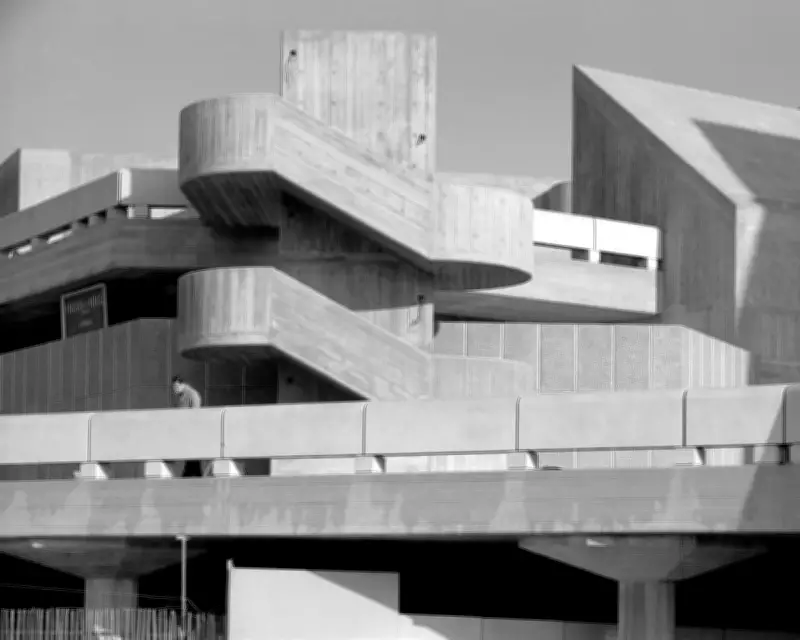
The Southbank Centre's distinctive aesthetic emerged from the vision of Norman Engleback, who led London County Council's youthful architectural team. Rejecting the more restrained Scandinavian-style modernism of the neighbouring Royal Festival Hall, Engleback and his colleagues created what has been described as a "droogs' paradise" featuring:
- Board-marked concrete walls and surfaces
- Elevated walkways and exterior spiral staircases
- Rooftop terraces offering panoramic views
- Distinctive concrete air conditioning ducts
- Pyramidal glazing elements
Ironically, the complex owes its existence partly to Winston Churchill's Conservative government, which cleared most of the old Festival of Britain site while preserving only the Royal Festival Hall, thereby creating space for new development along the Thames.
Decades of Redevelopment Proposals and Resistance
The path to listing was far from straightforward, marked by numerous attempts to alter or replace the buildings over four decades. Following the abolition of the Greater London Council in 1986, the newly created South Bank Board sought to generate additional income from the site, making the concrete structures obvious targets for redevelopment.
Several ambitious proposals emerged and faltered:
- Terry Farrell's 1989 postmodern scheme would have wrapped the buildings in a decorative shell but was abandoned by 1993
- Richard Rogers' 1994 "Wave" proposal featured a £70 million curved glass roof enclosure that was criticised for impracticality and excessive cost
- Rick Mather's 1999 masterplan for the entire South Bank was promoted as an antidote to what some perceived as the centre's "drab squalor"
- Feilden Clegg Bradley's 2013 Festival Wing proposal included a 60-metre glazed pavilion and commercial spaces in shipping containers
The latter scheme faced particularly vigorous opposition, notably from the skateboarders who frequent the Queen Elizabeth Hall undercroft. Their "Long Live the Southbank" campaign attracted over 80,000 supporters and received backing from the London Mayor, ultimately contributing to the proposal's abandonment.
Brutalism's Changing Cultural Status
Public and critical attitudes toward brutalism have undergone significant transformation since the style's mid-century emergence. Once widely condemned as ugly, aggressive and alienating, brutalist architecture has experienced a remarkable renaissance since the 2010s, attracting a new generation of admirers drawn to both its aesthetic qualities and what it represents in terms of postwar progressive social reconstruction.

This cultural shift is evident in the commercial realm, where brutalist motifs now appear on everything from ceramics to textiles. Yet as the Southbank Centre demonstrates, the style's true power remains in its actual buildings - structures of substantial heft, unexpected beauty and ambitious scale that are unlikely to be replicated in contemporary construction.
Following a £16.7 million grant from Arts Council England, Feilden Clegg Bradley led an exemplary conservation and restoration programme for the Hayward Gallery, Queen Elizabeth Hall and Purcell Room in 2018, demonstrating how these buildings can be sensitively maintained for contemporary use.
"The battle has been won and brutalism has finally come of age," concluded Catherine Croft. "This listing represents a victory over those who derided so-called 'concrete monstrosities' and shows a mature recognition of a distinctive architectural style where Britain genuinely led the way."
The Grade II designation ensures that future generations will continue to experience what Croft describes as the centre's "virtuoso spaces" - the elevated walkways, spiral staircases and concrete terraces that create an unparalleled environment for concert-goers and gallery visitors alike.