In the southern Indian village of Tholanur, a chance conversation led Megha Mohan to Palayil, her ancestral tharavad—a traditional Kerala house designed around women. Built since at least the 17th century, it was home to her great-grandmother, Palayil Sreedevi, the last woman in her line to live in one. The Nair community, a matrilineal caste, historically saw boys leave home at 12 for military training, often sleeping in outhouses upon return, while women ran the tharavad.
A pilgrimage to a lost home
Mohan, author of Herlands: Lessons from Societies Where Women Make the Rules, spent years researching women-built systems. When she finally sought Palayil in 2024, she found only a groundkeeper's house, a serpent shrine, and an old gate—the tharavad had been demolished over a decade ago as matrilineal laws were dismantled. But its design lives on in other surviving tharavads across Kerala.
Architecture built for women's bodies
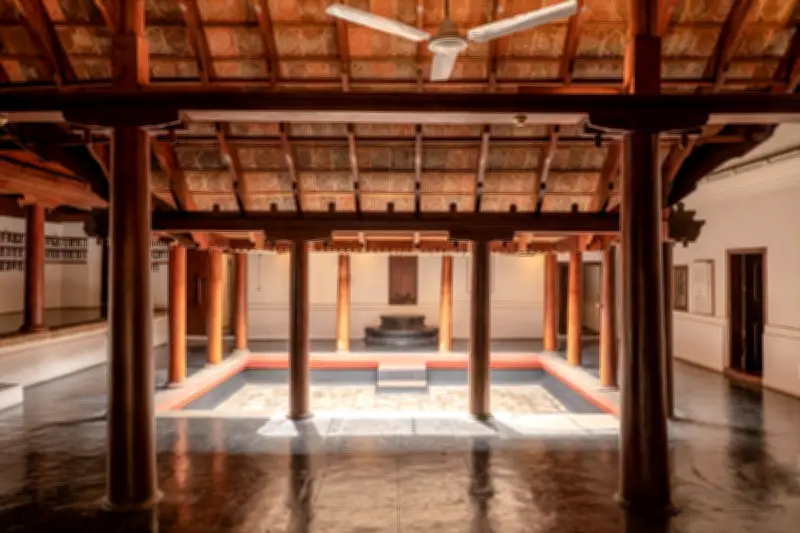
The tharavad, a nalukettu ("four corners"), is a rectangular structure of jackfruit wood and teak around a roofless central courtyard (nadumuttam). Male artisans built it, but women set the brief. At Kandath, a surviving tharavad, custodian Sudevan Bhagwaldas showed Mohan purathalams—raised platforms for lounging. Acoustically designed, no word spoken by women could be heard by men, protecting conversations.

The kitchen sat northeast, as monsoon winds from the southwest carried hot air away. Women's bedrooms on the west were spared heat, with adjacent rooms for childbirth and menstruation. Architect Benny Kuriakose, who restored several tharavads, noted that at the Muziris Heritage Project, a room is labelled "Corridor with rooms for menstruating women and pregnant ladies." Unlike the exile of chaupadi, these rooms offered rest and care, with women excused from chores.
Matrilineal inheritance and daily life
Women held power: Palayil Kalyani, Mohan's great-great-grandmother, held keys to the main gate and storage, and her blessing was needed for deals or marriages. Before WWI, she replaced the coconut-leaf roof with clay tiles. The house sheltered all women—widows, single women, cousins—and instilled financial independence in descendants.
The Nair practice of sambadhanam (equal union) allowed women to stay in their homes; husbands visited via a discreet chuttu veranda corridor. The birth of a girl was celebrated with bells, as she carried the lineage. Gender academic Lekha NB explained, "The birth of a girl child was more prized than a male child because of the role a woman has in physically carrying the progeny."
Selective generosity
Yet tharavads were caste structures. While Nair women read in courtyards, lower-caste women laboured in fields under semi-bonded conditions. Mohan notes her father's lower-caste family would not have been welcomed. The system ended in the early 20th century with laws dismantling female inheritance and banning sambadhanam. Palayil Kalyani built for her daughters; the walls fell, but the lesson endures: keep your shelter, keep your independence, keep the key.