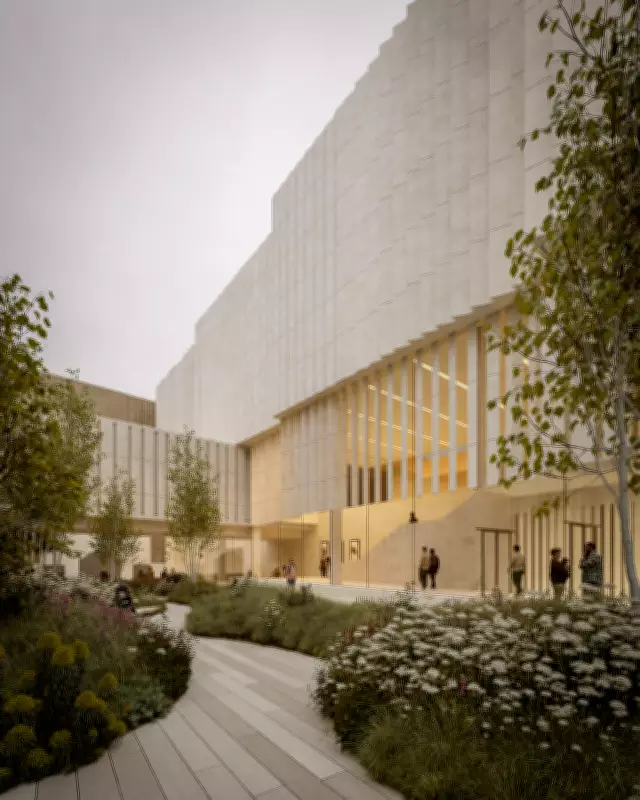
National Gallery Announces Kengo Kuma as Architect for Monumental New Wing Project
The National Gallery has revealed the winning design for its most ambitious architectural project in two centuries, selecting Japanese architect Kengo Kuma and his firm to create a transformative new wing. This decision comes after an intense international competition that saw 65 firms initially submit proposals, with six finalists including New York-based Selldorf Architects, who were ultimately passed over for the prestigious commission.
Project Domani: A £750 Million Transformation
The new wing forms the centerpiece of Project Domani, the gallery's comprehensive £750 million overhaul that represents the most significant transformation in the institution's 200-year history. This substantial investment will enable the National Gallery to dramatically expand its collection scope to include 20th and 21st century artworks, marking a historic departure from its traditional focus on pre-1900 paintings.
This expansion strategy has generated considerable discussion within the art world, as it potentially challenges a longstanding agreement with Tate that has traditionally divided collection responsibilities between the institutions. According to industry observers, this move could create significant tension between London's premier art museums, with some warning of potential conflict over collection boundaries and institutional relationships.

Architectural Vision and Design Features
Kengo Kuma, renowned for designing Tokyo's Olympic stadium and V&A Dundee, brings his distinctive architectural philosophy to the London project. The new building will occupy the site of St Vincent House, a property the museum has owned for nearly three decades that currently houses hotel and office facilities. The existing structure will be demolished to make way for Kuma's light-colored stone-clad design, which will be positioned just north of the Sainsbury Wing.
John Booth, chair of the National Gallery's trustees and competition jury, emphasized how the new building's exterior will "help to unite two of London's most important outdoor spaces – Leicester and Trafalgar Squares – by creating an enticing new public realm between them." This connective approach represents a thoughtful urban design strategy that enhances London's cultural landscape.
Interior Spaces and Exhibition Capabilities
The interior design incorporates vaults and arches on the main floor, which will be dedicated to public facilities and temporary exhibition galleries. The additional space created by the new wing will allow the National Gallery to mount significantly larger exhibitions or divide the area into multiple smaller shows. Street-level access means these exhibitions could potentially operate with extended hours compared to the permanent collection galleries.
Upper floors feature more geometric design elements and will display paintings from the late 19th century through contemporary works. Bridge connections will link the new wing to both the Sainsbury Wing and the Wilkins building, creating a more integrated museum complex. A highlight of the design includes a roof garden offering panoramic views of Leicester Square and north London's skyline.
Architectural Excellence and Collaborative Approach
National Gallery director Sir Gabriele Finaldi praised Kuma's designs for their "supremely beautiful handling of light and of materials," highlighting the architect's sensitivity to both aesthetic and functional considerations. The Tokyo-based firm will collaborate with UK design companies Building Design Partnership (BDP) and MICA on the project, which is expected to require at least four years to complete with an anticipated opening in the early 2030s.
This selection represents a significant architectural coup for London's cultural sector, bringing one of the world's most celebrated contemporary architects to reimagine one of Britain's most important cultural institutions. The project promises to redefine the National Gallery's physical presence while expanding its artistic mission into new chronological territories.