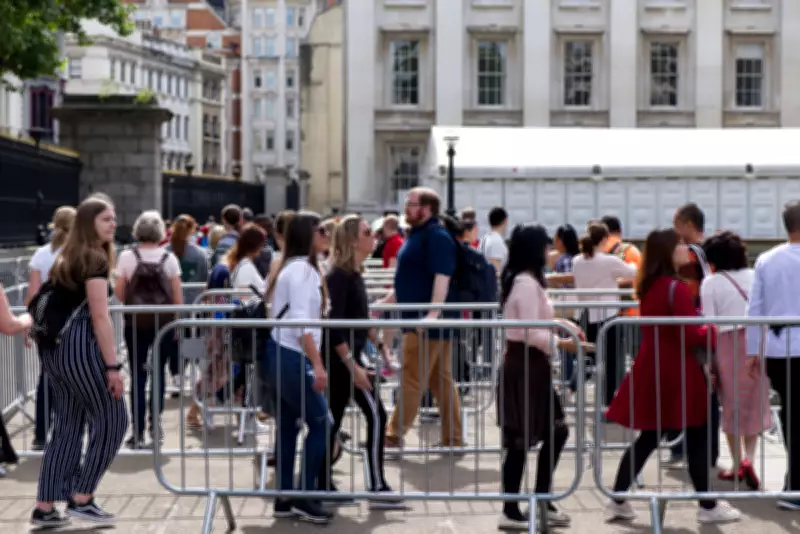
For the past decade, visitors to the British Museum have been greeted by an unexpected sight at its Great Russell Street entrance: a series of grubby, grey security tents that have become a familiar, if somewhat unsightly, feature of London's busiest cultural attraction. Since their installation in 2016, these temporary structures have often been surrounded by lengthy queues, creating a chaotic welcome that contrasts sharply with the grandeur of the museum's historic facade.
A New Vision for Visitor Security
Now, after ten years of service, these security tents are finally set to be removed. The British Museum has submitted detailed planning applications to Camden Council proposing a significant transformation of its entrance area. The current tents and barriers would be replaced by two sleek, modern pavilions that would turn the lawns along Great Russell Street into what the museum describes as a 'Mediterranean-style' garden space.
According to museum officials, this redevelopment forms part of a broader masterplan aimed at improving the visitor experience. The primary goals include reducing chaotic queuing patterns and creating a more aesthetically pleasing welcome area. The new pavilions will feature state-of-the-art security scanners that allow guests to be screened without having to empty their bags, eliminating the need for the temporary structures that have dominated the entrance for years.

Architectural Collaboration and Enhanced Accessibility
The proposed pavilions represent a collaborative effort between several prominent design firms, including Studio Weave, Wright & Wright Architects, Webb Yates Engineers, Tom Massey Studio, and Daisy Froud. Beyond their security functions, these structures are expected to provide improved accessibility features and incorporate interactive installations that enhance the visitor experience from the moment they approach the museum.
If planning permission is granted, construction could be completed later this year, marking a significant milestone in what the institution describes as the 'biggest transformation of any museum in the world'. This entrance redesign forms part of a broader multimillion-pound redevelopment that includes major work on areas like the Western Galleries.
Conservation Concerns and Heritage Objections
Despite the museum's enthusiasm for the project, not everyone welcomes these proposed changes. Several heritage bodies and conservation groups have raised serious objections to the design, warning that the new pavilions could disrupt the architectural integrity of one of London's most iconic buildings.
The Georgian Group, an organisation dedicated to preserving 18th and 19th century architecture, has formally objected to the proposal. In their submission to Camden Council, they argued that the pavilions would partially obscure views of the museum's southern elevation from Great Russell Street and within the forecourt itself. They expressed concern that this would disrupt the building's carefully planned symmetry and undermine its historic setting.
'While we recognise the operational challenges faced by the Museum and the desire to improve visitor management and access,' the Georgian Group stated, 'we consider that the proposals would cause an unacceptable level of harm to the significance of this internationally important site.'
Victorian Society Adds Its Voice to the Debate
The Victorian Society, a charity focused on preserving Victorian and Edwardian architecture, has also voiced concerns about the proposed design. Representatives have described the pavilions as 'too flashy' and suggested they resemble commercial structures more appropriate for 'a shop and wine bar' than a world-renowned cultural institution.
These objections carry particular weight given the British Museum's architectural significance. The museum first opened its doors in 1759, with the current Greek Revival structure designed by Sir Robert Smirke and completed in 1823. The building's symmetrical facade and classical proportions have made it one of London's most recognisable landmarks, representing an important chapter in British architectural history.

Planning Decision and Broader Context
The planning applications for this controversial revamp are expected to go before Camden Council's planning committee later this month. This decision will need to balance the museum's practical needs for improved security and visitor management against legitimate concerns about preserving the architectural heritage of a Grade I listed building.
This debate occurs against the backdrop of the museum's ambitious transformation programme, which seeks to modernise facilities while maintaining respect for the institution's historic character. The outcome of the planning process will set an important precedent for how London's cultural institutions navigate the complex relationship between modernisation and preservation in the 21st century.
As London continues to evolve, the British Museum's security tent replacement project highlights the ongoing tension between functional necessity and architectural conservation. The decision made by Camden Council will not only determine the future appearance of one of the world's great museums but also signal how heritage concerns are weighed against practical improvements in the capital's cultural landscape.