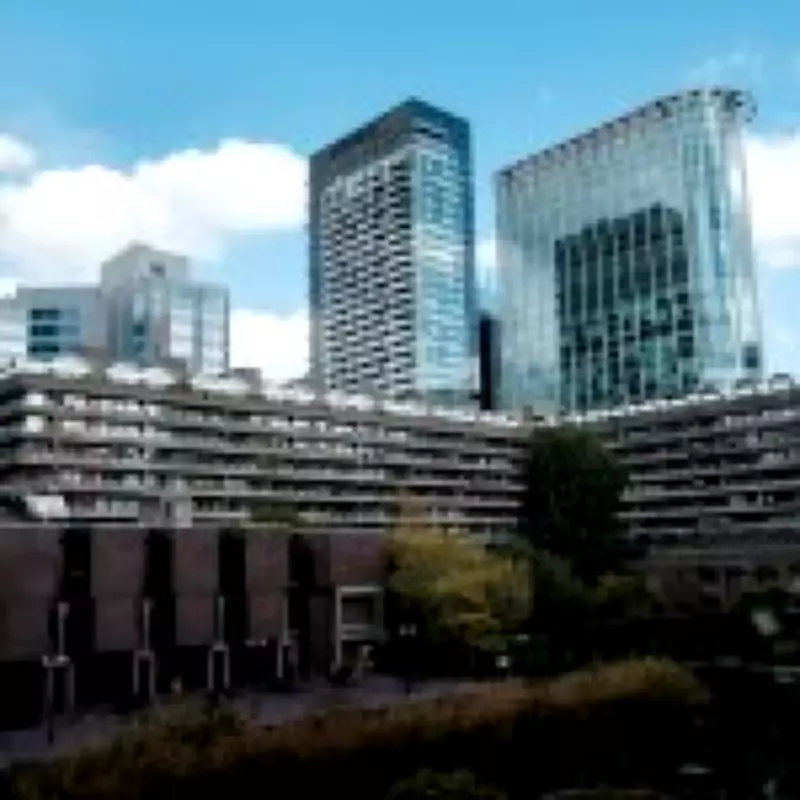
Inside London's Barbican: Residents Reveal Bleak Reality of Iconic Estate Life
Nestled within London's financial and cultural heart lies one of the capital's most distinctive residential developments: The Barbican Estate. Often described as a 'city within a city,' this brutalist architectural marvel houses approximately 4,000 residents who experience a unique blend of post-war design and self-contained community living. Over four decades since its completion, the estate remains both celebrated and controversial, embodying London's urban regeneration spirit while facing contemporary practical challenges.
The Barbican's Alluring Amenities and Community Spirit
Residents enjoy access to an extraordinary range of facilities rarely found in such a central London location. The estate boasts tranquil private gardens, tennis courts, arts venues including the renowned Barbican Centre, and its own cinema. On-site bars, schools, and concierge services reinforce the development's self-contained ethos, creating a strong residential focus within the bustling city.
TikTok user @barbicandolls has recently offered unprecedented glimpses into daily Barbican life, highlighting both the comforts and quirks of residence. The account reveals that 24/7 porters notify residents of deliveries and send packages directly to their flats via lift, ensuring no parcels are missed. Daily rubbish collection from outside flats and a genuine community atmosphere with regular social events contribute to the estate's appeal. Additional amenities include on-site restaurants, a theatre, hairdresser, and physiotherapy services.

Architectural Challenges and Practical Frustrations
Despite these advantages, living in the Barbican presents significant difficulties. While @barbicandolls emphasizes that residents 'do love living here,' the account candidly addresses the estate's practical shortcomings. Many flats suffer from inadequate natural light, with windowless bathrooms described as particularly 'bleak.'
The estate's original kitchen fittings, preserved from its construction era, frequently require repairs. Common complaints include broken hobs, malfunctioning cupboard doors, and undersized dishwashers ill-suited to modern household needs. Updating these kitchens proves complicated due to the Barbican's Grade II-listed status, which restricts extensive alterations and necessitates careful maintenance approaches.
Heating presents another persistent issue. The estate employs a sophisticated underfloor heating system centrally controlled by the City of London Corporation, eliminating individual resident control. Operating seasonally from November to May, this system leaves flats 'freezing' during cold September or October periods. Additional frustrations include lengthy lift wait times and peculiar architectural features like lift buttons that originally served as ashtrays and carpet extending partially up walls.
Historical Context and Architectural Significance
The Barbican Estate's origins trace to World War II's aftermath, when the Blitz devastated much of the City of London. Construction began in the 1960s under architects Peter 'Joe' Chamberlin, Geoffry Powell, and Christoph Bon, who envisioned creating a comprehensive 'city within a city.' After numerous delays, the project completed in 1982, with Queen Elizabeth II inaugurating the centre and describing it as 'one of the wonders of the modern world.'
This Grade II-listed brutalist masterpiece spans 40 acres across 19 blocks, containing over 2,000 flats. Its distinctive concrete façade, geometric lines, and elevated walkways represent a deliberate departure from London's traditional Victorian and Georgian architecture, earning recognition as a post-war modernist triumph.
Six decades later, the Barbican Estate stands as testament to visionary urban renewal and enduring community spirit amidst architectural innovation. For residents, it represents more than concrete and glass—it embodies a distinctive way of life that continues evolving through repairs, resident initiatives, and changing needs, reflecting both the possibilities and complexities of inhabiting London's most iconic 'city within a city.'