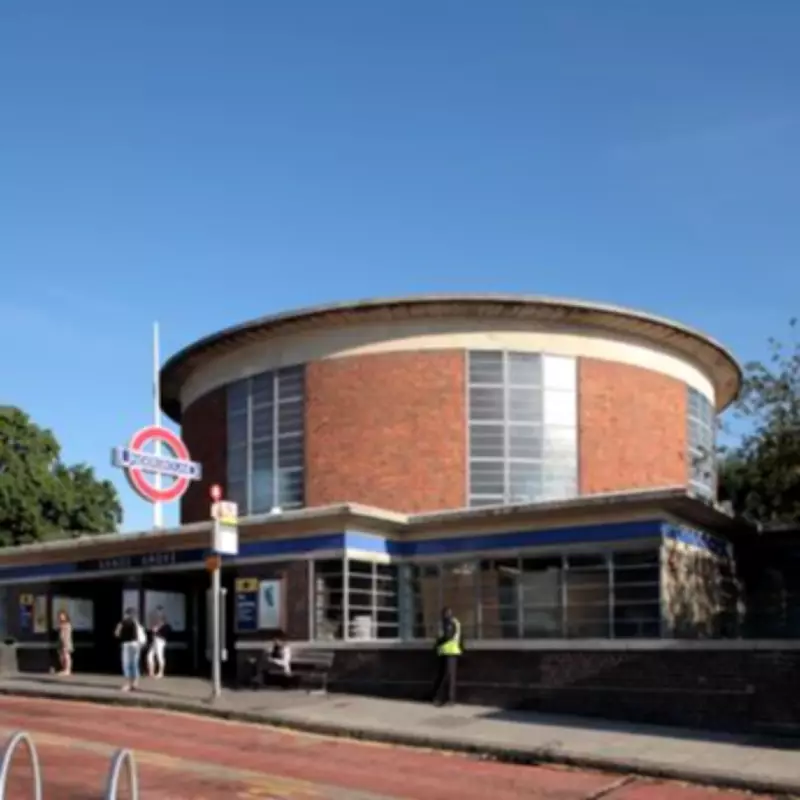
Arnos Grove: The London Underground Station Inspired by Swedish Architecture
One of London's most architecturally significant Underground stations has a surprising international inspiration. Arnos Grove station, located in Zone 4 on the Piccadilly Line between Bounds Green and Southgate in North London, was directly modeled after Stockholm City Library in Sweden.
A Historic Opening and Architectural Recognition
The station first welcomed passengers on September 19, 1932, serving as the northernmost station on the initial section of the Piccadilly line extension from Finsbury Park to Cockfosters. Its architectural excellence has been formally recognized through heritage protection status. In 1971, Arnos Grove received Grade II listed designation, acknowledging its national importance. This status was elevated to Grade II* (Grade Two Star) in 2011, reflecting its exceptional architectural and historical significance.
The Vision of Architect Charles Holden
Renowned architect Charles Holden, who left his mark across London with designs including Colliers Wood, Warren Street, and Wanstead stations, created Arnos Grove in a distinctive modern European style. The station features innovative use of brick, glass, and reinforced concrete, materials that were progressive for early 1930s construction.

The most striking element is the circular drum-like ticket hall, constructed from brick and glass panels that rise from a low single-storey base. This distinctive structure is crowned by a flat concrete slab roof, creating a harmonious blend of geometric forms. Holden's design directly drew inspiration from Gunnar Asplund's Stockholm City Library, bringing Scandinavian architectural sensibility to North London.
Surviving Wartime Damage and Operational Incidents
Arnos Grove has endured significant challenges throughout its history. During the Blitz on October 13, 1940, a Nazi aircraft bombed homes north of Bounds Green station. The destruction caused the north end of the westbound platform tunnel at Arnos Grove to collapse, disrupting services between Wood Green and Cockfosters for two months.
Another incident occurred on August 11, 1948, when a train derailed after the front and rear bogies of a carriage took different routes at a set of points within the station. More recently, following the 7/7 bombings on July 7, 2005, services were disrupted between Hyde Park Corner and Arnos Grove until early August after a bomb detonated on a train between King's Cross St. Pancras and Russell Square.
Enduring Legacy and Contemporary Significance
Despite these challenges, Arnos Grove stands as a testament to thoughtful urban design and architectural adaptation. The station represents a fascinating intersection of British transport infrastructure and Scandinavian architectural influence. Its preservation as a Grade II* listed building ensures that future generations can appreciate this unique piece of London's architectural heritage.
The station continues to serve thousands of commuters daily while maintaining its distinctive character. Its survival through wartime damage and subsequent restoration demonstrates both the resilience of London's transport infrastructure and the enduring value of quality architectural design in public spaces.