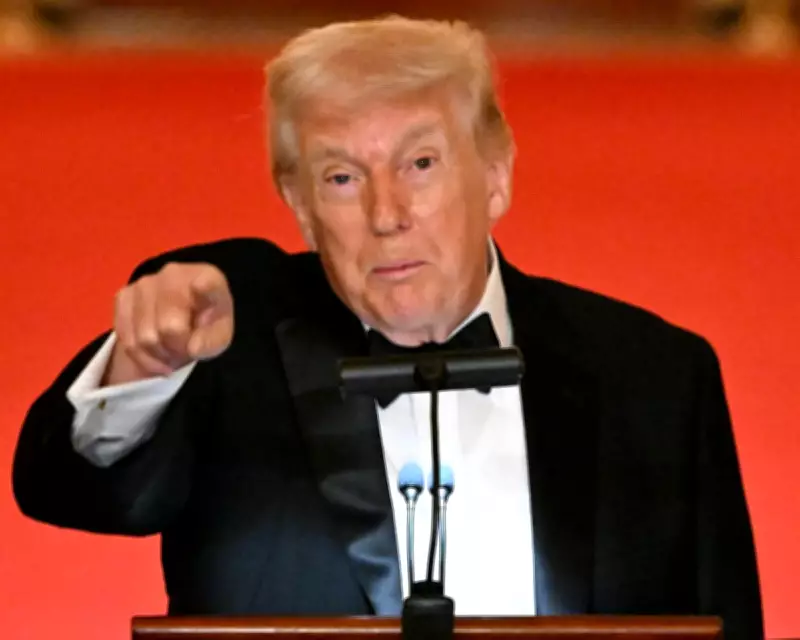
Trump's Trade War Escalation Poses Headache for Federal Reserve
The trade war, characterized by its strong encouragement for companies to manufacture products within the United States for their own benefit, stands as one of Donald Trump's most defining policies. This strategy aims to foster prosperity and long-term economic opportunities by attracting increased investment and innovation to the US, thereby boosting incomes.
Supreme Court Rejection Spurs Further Tariff Hikes
Following a recent rejection by the Supreme Court of his broad global tariffs, Trump has intensified his approach by announcing new global tariffs, initially set at 10% and subsequently increased to 15%. While this move may have improved the president's morale after a significant judicial setback, it carries the risk of backfiring on his ambitions for substantial interest rate reductions in the current year.
The logic behind the trade war is to generate economic growth through domestic production, but it also serves as a lucrative revenue stream. The tariffs previously struck down by the Supreme Court were estimated to have collected approximately $110 billion from importers of foreign goods.

Economic Calculations and Inflationary Pressures
According to analysis by the City consultancy Capital Economics, raising the global tariff to 15% ensures that the effective tariff rate will climb back to 14.5% over the next 150 days, slightly exceeding pre-court levels. This increase means American importers will face higher costs for overseas goods, leading to a knock-on effect on inflation.
Companies that have paid tariffs under the International Emergency Economic Powers Act are now pushing for refunds, which could act as a potential fiscal stimulus if granted. This situation creates a significant challenge for the US Federal Reserve and its incoming chair, Kevin Warsh, potentially complicating efforts to justify interest rate cuts.
Federal Reserve's Dilemma and Political Pressures
Trump has explicitly expressed his desire for Warsh to implement "very substantial" interest rate cuts. However, Warsh faces a complex scenario as the Fed appears divided; recent meeting minutes reveal that some officials contemplate potential rate hikes to control inflation, while others anticipate cuts.
A rate increase by the Fed would likely provoke a strong reaction from Trump, who has previously criticized market downturns following positive economic reports due to expectations of higher interest rates. This "good news is bad news" dynamic is crucial for maintaining healthy financial markets, as responsible central banks should adjust monetary policy to prevent economic overheating.
Historical Context and Current Economic Challenges
Historical precedents, such as Alan Greenspan's resistance to rate hikes during the 1990s tech boom, which led to cheap money and the dot-com crash, offer cautionary tales. Although the Trump administration may hope for Warsh to emulate Greenspan's tenure, the current global economic landscape differs significantly from three decades ago.
Experts like Dario Perkins of TS Lombard argue that recreating the bullish conditions of the 1990s is unlikely, citing factors such as tariffs, immigration restrictions, and inflated rhetoric about private sector investment. Recent data shows a rise in the Fed's preferred inflation measure, dampening deflationary hopes and reducing market expectations for a rate cut in March, though two cuts are anticipated by year-end.
Uncertainty and Future Implications
Warsh's views on the current economic situation remain unclear, as he and Trump did not hold a joint press conference after his appointment. In the past, Warsh has suggested that the Fed should reduce its vocal market guidance, a approach that risks leaving investors uncertain about monetary policy in an economy with slowing growth and limited job creation.
This policy uncertainty could undermine the US dollar and broader markets in the coming years. With Trump firmly committed to his trade war, Warsh may struggle to persuade the Fed's rate-setting committee to support cuts. Reflecting on Denis Healey's wisdom, mastering inflation is essential for achieving sustained full employment, highlighting the delicate balance central bankers must navigate in today's volatile economic environment.