Trump Announces Sweeping New Global Tariff Following Supreme Court Rebuke
President Donald Trump has declared a new comprehensive global tariff after the United States Supreme Court ruled that his previously imposed duties were unlawful. The decision represents a significant judicial setback for the administration's trade policy, prompting an immediate and defiant response from the White House.
Immediate Implementation of 10 Percent Levy
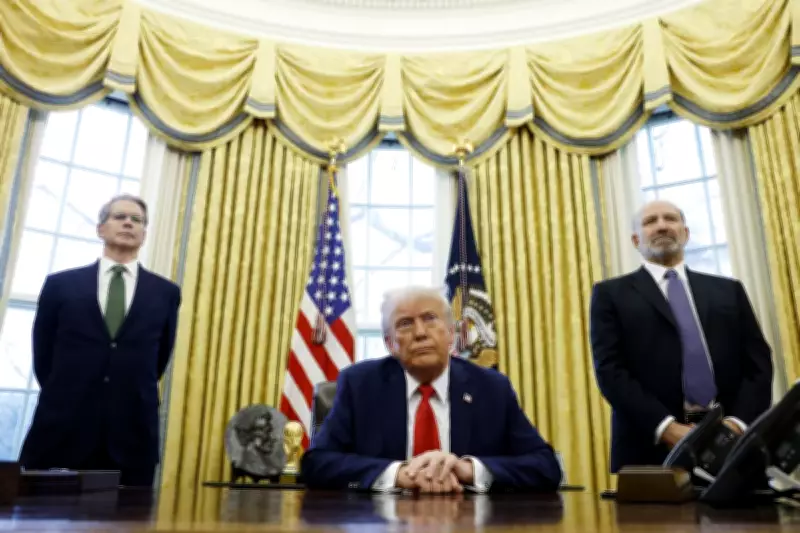
Trump imposed a 10 percent global tariff shortly following the court's ruling, which he characterized as "terrible." The import duty will apply to all nations and become effective "almost immediately," according to a post by Trump on his Truth Social platform. The president stated, "It is my Great Honor to have just signed, from the Oval Office, a Global 10 percent tariff on all Countries, which will be effective almost immediately. Thank you for your attention to this matter!"
The White House confirmed the levy would officially take effect on February 24, 2026, though it acknowledged the measure could face subsequent legal challenges. The legal authority Trump invoked, Section 122 of the 1974 Trade Act, caps such tariffs at 150 days to address "large and serious United States balance-of-payments deficits." When questioned about this temporal limit, Trump dismissed concerns, asserting, "we have a right to do pretty much what we want to do."

Presidential Fury at Supreme Court Decision
The president's announcement follows a decisive Supreme Court ruling where six of the nine justices, including three Republicans—two appointed during Trump's first term—voted to overturn his previous tariff policy. Trump expressed profound disappointment, stating he was "ashamed" of the six judges. He specifically criticized his own appointees, Neil Gorsuch and Amy Coney Barrett, labeling them "fools" and "an embarrassment to their families" for determining he lacked authority to utilize the emergency trade law.
Trump further alleged that the court had been "swayed by foreign interests" and claimed other nations were "dancing in the streets" following the ruling. He vowed his administration would now work aggressively to "take in even more money than we were taking in before" through the new tariff structure.
Concurrent Investigations and Legal Fallout
Alongside the blanket 10 percent tariff, Trump announced the initiation of investigations aimed at protecting the United States from perceived unfair trading practices. He elaborated, "We're going straight ahead with 10 percent straight across the board … and then during that period of about five months, we are doing the various investigations necessary to put fair tariffs, or tariffs period, on other countries."
The Supreme Court's ruling has also triggered a legal scramble for refunds by importers who paid an estimated $175 billion under the now-outlawed measures. When pressed about when the government would reimburse businesses compelled to pay these illegal duties, Trump indicated the matter would likely "get litigated for the next three years," suggesting a protracted legal battle ahead.
International Response and UK Implications
In the United Kingdom, government ministers indicated they anticipated the nation's "privileged trading position with the US" would persist despite the Supreme Court's decision. The UK had previously received the lowest tariff rate of 10 percent, with subsequent negotiations between Prime Minister Keir Starmer and President Trump securing additional exemptions for Britain's steel industry and automobile manufacturers.
Friday's judicial ruling raises questions about the continued validity of those bilateral agreements. However, British officials reportedly believe the impact on most UK-US trade—including sectors like steel, cars, and pharmaceuticals—will be minimal. A UK Government spokesperson stated, "This is a matter for the US to determine but we will continue to support UK businesses as further details are announced. Under any scenario, we expect our privileged trading position with the US to continue and will work with the administration to understand how the ruling will affect tariffs for the UK and the rest of the world."

Trump himself addressed the status of previously negotiated trade deals, noting, "Some of them stand. Many of them stand. Some of them won't, and they'll be replaced with the other tariffs," indicating a potential recalibration of international trade agreements in light of the new tariff regime.