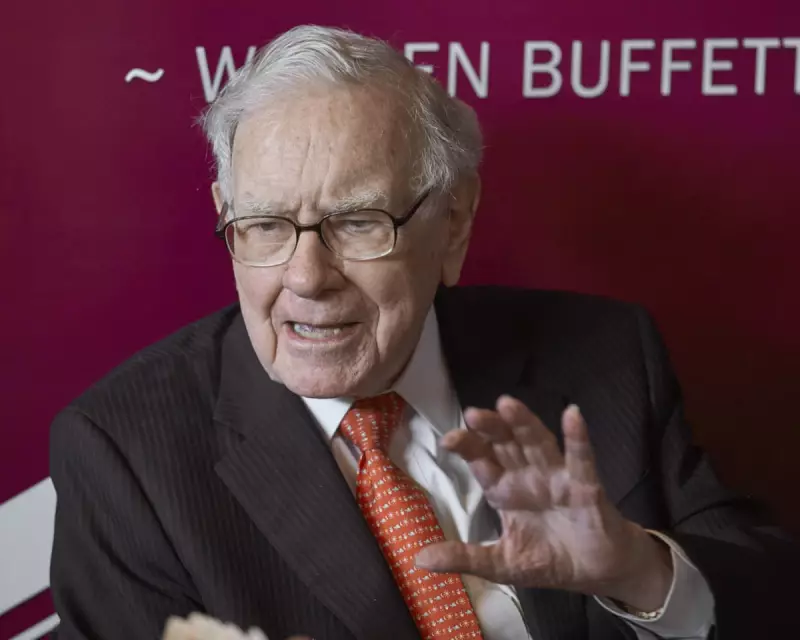
Warren Buffett, the legendary investor known as the Sage of Omaha, is set to retire at the end of 2025, concluding an extraordinary era at Berkshire Hathaway. Over decades, he transformed the conglomerate from a struggling textile firm into a financial behemoth valued at over $1 trillion.
Timeless Wisdom from the Oracle's Letters
Since 1965, Buffett's annual letters to shareholders have been a masterclass in investment philosophy, blending sharp insight with wit. As he prepares to step down, his most poignant lessons on capital allocation, market psychology, and corporate governance remain vital for any investor.
He famously described his initial purchase of Berkshire Hathaway itself as a mistake, noting the textile business was destined for failure. This early lesson underscored a core principle: the world of capital allocation was his oyster, limited only by his ability to understand a business's future.
Core Principles: Cash, Fear, and Greed
One hard-learned rule was to pay cash for acquisitions, not shares. The 1998 purchase of General Re for 272,000 Berkshire shares was later called a "terrible mistake," teaching him that issuing shares often meant giving away more than was received.
Perhaps his most quoted maxim, coined in 1986, advises investors to "be fearful when others are greedy and greedy only when others are fearful." He acknowledged that timing these epidemics of market emotion is difficult, but the discipline to act counter-cyclically is paramount.
Warnings on Deals and "Weapons of Mass Destruction"
Buffett consistently warned that most acquisitions harm the acquirer's shareholders. He attributed many bad deals to a CEO's "biological bias" driven by "animal spirits and ego," comparing the urge to merge to a teenage boy's enthusiasm for sex.
He was also famously prescient on derivatives, labelling them "financial weapons of mass destruction" in his 2002 letter. He warned of a "frightening web of mutual dependence" among institutions—a danger realised during the 2008 financial crisis.
His advice for weathering storms was vivid. After Hurricane Andrew caused massive insurance losses in 1992, he noted, "It's only when the tide goes out that you learn who's been swimming naked."
The Berkshire Model: Delegation and Succession
Buffett ran Berkshire with centralised financial control but extensive delegation, praising managers like the centenarian furniture magnate Rose Blumkin. On succession, he confirmed the board had identified candidates from 2005, joking he had discarded the idea of managing the portfolio after his death.
His ultimate goal was always to outperform the S&P 500, which meant keeping "dry powder" ready. He dreamed of the day dark economic clouds would "briefly rain gold," promising to rush outdoors with "washtubs, not teaspoons." For investors worldwide, that preparedness remains his sharpest lesson of all.