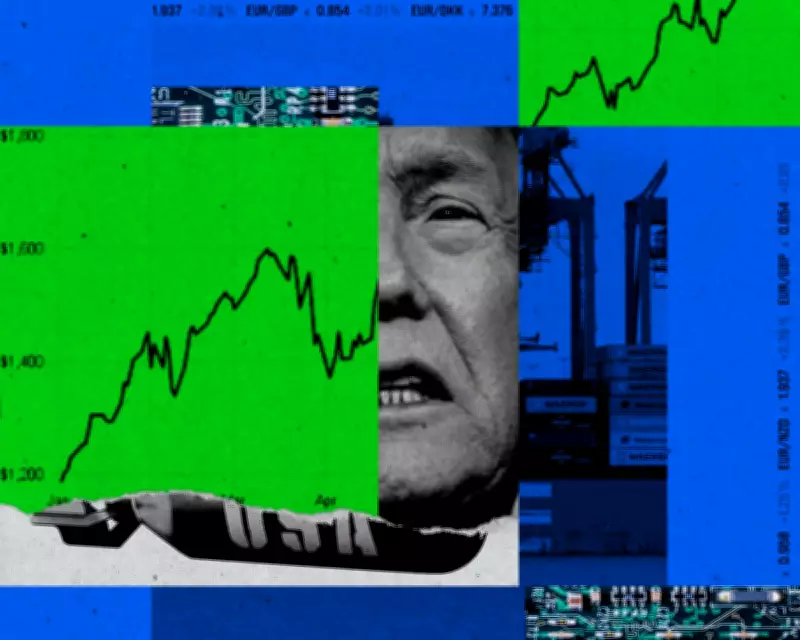
US stock markets have not just recovered from the losses they suffered, but are thriving. War, inflation, and Trump's tariffs have shaken the nation, yet Wall Street keeps climbing. Consumer confidence has dipped, but shares have soared.
Resilience Amid Instability
On a dark Friday in late March, the Dow and Nasdaq entered correction territory after a month of selloffs, falling more than 10% below their peak. Seven weeks later, the situation in Iran remained tense, with high oil prices and the Strait of Hormuz still closed. Peace talks appeared fragile. Yet stock markets have fully recovered and are now thriving.
Even before the war, the US stock market proved incredibly resilient to political and economic instability. It shrugged off the Covid-19 recession, generational-high inflation, Russia's invasion of Ukraine, and Trump's tariff spats. Everyday Americans struggle with an affordability crisis, but the markets keep rising.
The Taco Mindset
Some economists point to a mindset investors have embraced: Trump Always Chickens Out, or Taco. Backtracking threats has been a hallmark of Trump 2.0, especially on tariffs and Iran. When Trump announced "liberation day" tariffs, he delayed them hours later. He threatened a 25% tariff on eight EU countries over Greenland, but those were also called off.
Eswar Prasad, a former IMF official, notes that investor confidence predates Trump. "Investors now have a clear view that if there is significant trouble, the Fed and the US government will step in," he said. However, federal intervention can hide risks, especially as financial regulation weakens.
The K-Shaped Economy
Inflation has eased from its 40-year high but rose again in April to 3.8%. Higher prices typically reduce spending, but wealthier Americans continue to spend while lower-income Americans tighten budgets. A New York Fed report showed low-income Americans cut gas usage amid the Iran war, while high-income Americans did not change consumption.
Economists call this a "K-shaped" economy: the top 10% income percentile owns 87.2% of the stock market, while the bottom 50% owns just 1.1%. Continued spending by the wealthy keeps companies afloat. Delta Air Lines CEO Ed Bastian noted that premium revenue doubled over the last year as top-tier consumers prioritize travel.
AI Boom Drives Markets
The release of ChatGPT in 2022 kicked off a race to build AI systems and infrastructure. Tech companies are spending hundreds of billions on AI, with thousands of data centers under construction. This investment has been immune to geopolitical events.
Just seven companies carry 30% of the S&P 500's weight: Alphabet, Amazon, Apple, Meta, Microsoft, Nvidia, and Tesla. Nvidia, which produces AI microchips, was the first to reach a $5 trillion valuation, with its stock up 1,450% over five years.
AI spending outpaced consumer spending as a percentage of US economic growth in early 2025. Paul Kedrosky, an investor and MIT research fellow, called it "the largest private sector stimulus program in US history." The White House is all in on AI, with Trump's Fed chair pick Kevin Warsh arguing AI is "the most productivity-enhancing wave of our lifetimes."
Bubble Concerns
Former Fed chair Alan Greenspan warned of "irrational exuberance" in 1996, predicting the dot-com bubble. Despite his warning, the S&P 500 doubled after 1996, then crashed in 2000. Kedrosky believes the current AI boom could see a similar bust. Three AI startups—OpenAI, Anthropic, and SpaceX's xAI—are planning trillion-dollar IPOs this year. "Just three IPOs would be larger than the whole dot-com bubble," Kedrosky said. "That money has to come from somewhere."
Investors are placing all bets on AI. For Kedrosky, it's not a matter of if the AI bubble will pop, but when. "I would cheerfully be wrong," he said. "But history's on my side."