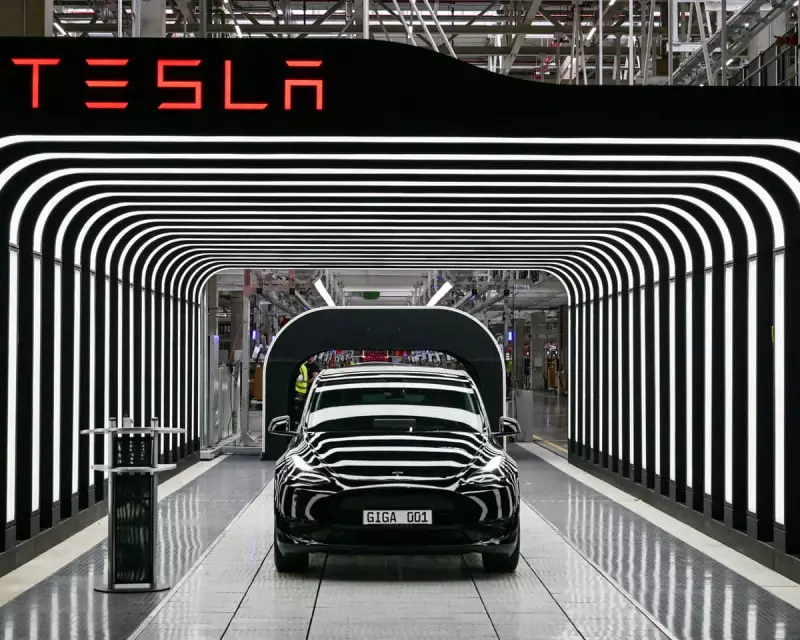
Tesla has issued an unexpected and sobering update for investors, publishing official forecasts that suggest its vehicle deliveries for 2025 will be lower than market expectations and significantly behind the ambitious targets set by its chief executive, Elon Musk.
Revised Forecasts Signal a Slowdown
The electric vehicle pioneer took the rare step of adding a new "consensus" section to its investor relations website this week. The figures indicate Tesla is projected to announce 423,000 deliveries for the fourth quarter of 2025. This would mark a substantial 16% decline compared to the final quarter of 2024.
For the full year 2025, the consensus points to total deliveries of approximately 1.64 million cars, down from the 1.79 million expected in 2024. The forecasts suggest a gradual recovery, with deliveries rising to 1.75 million in 2026 and finally reaching 3 million by 2029.
A Stark Contrast to Musk's Promises
These projections stand in stark contrast to the vision outlined by Elon Musk. At a shareholder meeting in November, Musk declared the company was aiming to produce 4 million cars annually by the end of 2027. The newly published estimates imply Tesla will not hit the 3 million mark until 2029, two years later than Musk's stated goal for 4 million.
Furthermore, the forecasts are lower than other industry compilations. An average of investment bank estimates gathered by Bloomberg had suggested Tesla would deliver around 440,907 vehicles in Q4 2025.
The High-Stakes Valuation Context
This sales reality check comes as Tesla maintains a colossal market valuation of $1.4 trillion (£1.04tn). This figure makes the company worth more than the next 30 largest carmakers combined, despite its output being less than a fifth of Toyota's. A significant portion of this valuation is predicated on investor belief that Musk will transform Tesla into the global leader in self-driving technology and robotics, rather than on its current car manufacturing metrics.
The company's sales have faced headwinds in 2024, partly attributed to consumer reactions to Musk's political activities. He was the largest donor to Donald Trump's election campaign and launched a government efficiency initiative. However, this alliance fractured, leading to the scrapping of key electric vehicle buyer subsidies and supportive regulations in the US.
In a high-reward move, Tesla shareholders approved a monumental $1 trillion compensation plan for Musk in November. The payout is partly contingent on Tesla delivering 20 million cars, with 10 million requiring active subscriptions for its "Full Self-Driving" software.
The divergence between Tesla's staggering market worth, driven by future technology hopes, and its more modest near-term delivery forecasts presents a critical narrative for investors watching the EV sector's evolution.