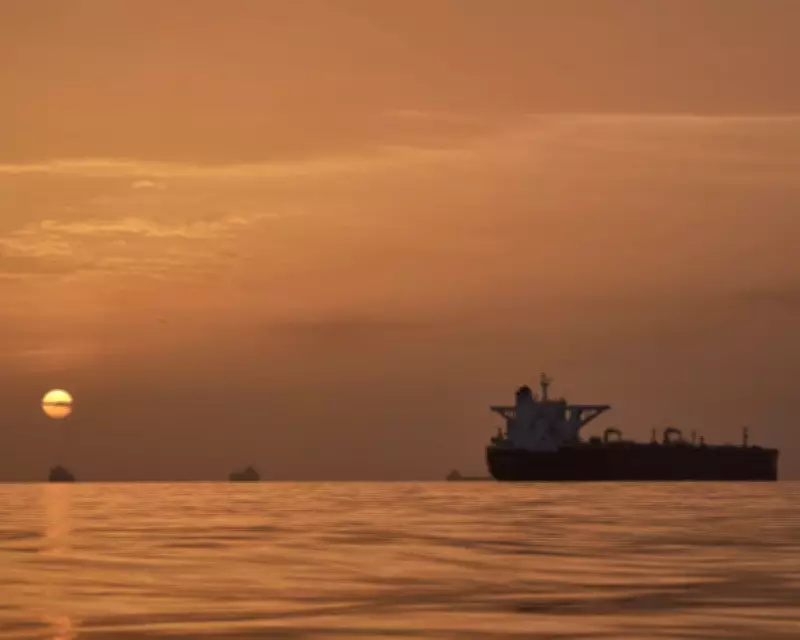
Oil Markets in Turmoil After US Seizure of Iranian Vessel
The global energy market experienced significant turbulence on Monday as oil prices surged and European stock markets fell sharply. This dramatic shift followed the United States' seizure of an Iranian cargo ship near the strategic Strait of Hormuz, dealing a severe blow to hopes for a peaceful resolution in the ongoing conflict.
Sharp Price Movements Across Markets
Brent crude, the international benchmark for oil prices, rose dramatically by 4.8% to reach $94.69 per barrel. This substantial increase reversed the previous Friday's 9% decline, which had occurred when Iran indicated it would reopen the vital shipping channel during the ceasefire period.
European stock markets mirrored the energy sector's volatility with significant declines. The UK's blue-chip FTSE 100 index dropped 0.7%, while major continental indices showed even steeper falls. The French Cac 40 and German Dax both decreased by approximately 1%, and the broader Stoxx Europe 600 index, tracking the continent's largest companies, fell 1.1%.
Transportation Sector Hit Hard
The aviation industry suffered particularly severe losses as investors grew concerned about potential disruptions to international travel and possible jet fuel shortages. IAG, the parent company of British Airways, saw its shares decline by 3%, while Wizz Air experienced a more substantial 5.4% drop. Ryanair, Europe's largest airline, fell 3%, and Rolls-Royce, the aircraft engine manufacturer, decreased by approximately 3%.
In contrast, energy giants BP and Shell emerged among the few gainers on the FTSE 100, with both companies' shares rising more than 2% as higher oil prices boosted their prospects.
Geopolitical Tensions Escalate
The market turmoil followed former President Donald Trump's announcement on Sunday regarding the seizure of an Iranian vessel attempting to bypass the US-enforced blockade near the Strait of Hormuz. Trump declared on social media that the United States had taken full custody of the ship and was examining its contents.
This incident has raised serious concerns about the viability of the ceasefire agreement, which negotiators had planned to continue discussing in Pakistan. The conflict, now entering its eighth week, has resulted in thousands of casualties and continues to destabilize global energy markets.
Critical Shipping Channel Disrupted
The Strait of Hormuz represents one of the world's most crucial maritime passages, typically handling about one-fifth of global oil and gas shipments. Current satellite analysis from SynMax and tracking data from Kpler reveal that shipping through this vital corridor has effectively ground to a standstill, with only three crossings recorded in a twelve-hour period.
Among the vessels navigating the troubled waters was the oil product tanker Nero, which is subject to British sanctions for Russian oil activities. A chemical tanker and a liquefied petroleum gas tanker, the latter under US sanctions for Iran trading activities, also transited the strait during this period.
Broader Economic Implications
Susannah Streeter, chief investment strategist at Wealth Club, noted that hopes for resumed trade, particularly energy shipments, have evaporated, creating what she described as "fresh jitters" throughout financial markets. "Deep reserves of patience are needed," Streeter observed, "but with some industries such as airlines staring at jet fuel shortages, these are tense times."
The United Kingdom faces particular energy security concerns, with wholesale gas market prices increasing by 5.8% to 102p per therm on Monday. Analysts from the Energy and Climate Intelligence Unit estimate that sustained oil prices of $100 per barrel could increase annual fuel costs by £140 for British motorists driving 8,000 miles yearly.
According to the British Oil Security Syndicate, drive-offs and payment failures at UK fuel stations have increased by 19% since the conflict began. Additionally, fears are mounting that the US blockade could trigger fertilizer shortages, posing significant risks to global food security as this vital commodity typically transits through the Strait of Hormuz.
Agricultural markets have already responded to these concerns, with Chicago wheat futures rising 1.3% to $6.07-1/4 per bushel on Monday, following a 5% increase the previous week.
Diplomatic Prospects Dim
Further complicating the situation, Tehran has announced it will not participate in a second round of negotiations that the United States had hoped to initiate before the ceasefire expires on Wednesday. This diplomatic setback, combined with reports that Iran's Revolutionary Guards fired upon commercial vessels over the weekend, suggests the conflict may intensify rather than subside in coming days.