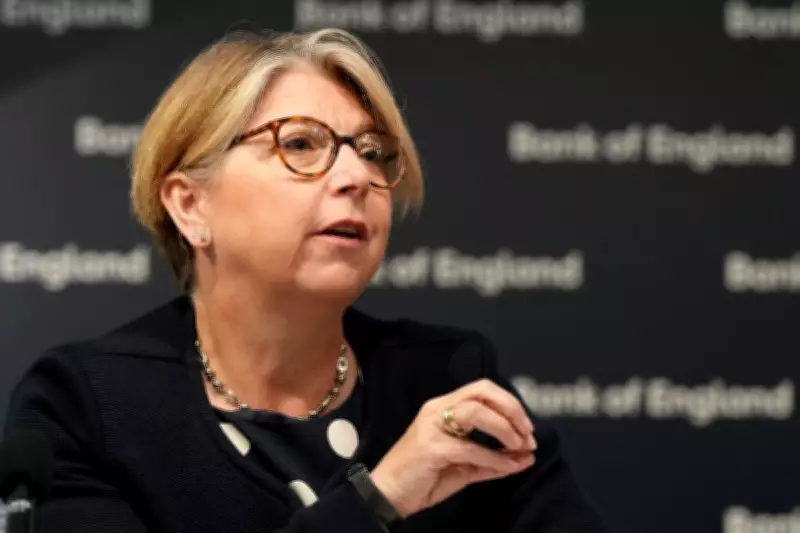
The Bank of England has issued a stark warning that global markets may experience further declines, as current share prices fail to account for the significant economic risks. Sarah Breeden, the Bank's deputy governor for financial stability, stated: “There’s a lot of risk out there and yet asset prices are at all-time highs. We expect there will be an adjustment at some point.”
Market Volatility and Geopolitical Tensions
Markets have already been shaken by the conflict in the Middle East, dropping over eight percent in a single month. The FTSE 100 briefly fell below the 10,000 mark during this period. However, Breeden emphasized that share prices have not yet reached their lowest point, given the ongoing economic pressures. Investor sentiment has remained sensitive to headline shocks throughout the conflict, though the return of Donald Trump's so-called TACO (Trump Always Chickens Out) agenda has helped stabilize markets from more severe losses in recent months.
AI Bubble and US Tech Stocks
The Bank of England has also raised alarms about “stretched equities” in the United States, driven by the expanding AI bubble. At the end of 2025, the Bank's Financial Policy Committee (FPC), which includes Breeden and Governor Andrew Bailey, cautioned that a crash in the soaring value of US technology giants could trigger repercussions overseas. The committee described the current situation as “comparable to the peak” of the dot com bubble, which began in 1995 and burst five years later, causing substantial investor losses.
Multiple Risks Keep Policymakers Concerned
Breeden noted that the potential for multiple risks to materialize simultaneously is what keeps her “awake at night.” She questioned: “A major macroeconomic shock, confidence in private credit goes, AI and other risky valuations readjust – what happens in that environment and are we prepared for it?” The FPC had earlier warned that the US-Iran war was “likely to interact with vulnerabilities” in the UK economy. While the financial system has remained resilient so far, the Bank stated that the shock would weigh on growth, increase inflation, and tighten financial conditions.
Impact on UK Households
Rising tensions in the Gulf region have emerged at a time when “global risks were already elevated,” according to the Bank. As a result, the committee estimated that approximately 1.3 million more UK households would face increased mortgage costs following the outbreak of war. This week, the Office for National Statistics reported that inflation surged to 3.3 percent in March, up from three percent in February, driven by soaring fuel prices. Motor fuel inflation rose by 8.7 percent, marking the largest increase since June 2022, shortly after the Russian invasion of Ukraine.