UK Government Accelerates Plans for Under-16 Social Media Ban
Prime Minister Sir Keir Starmer is actively considering a ban on social media access for children under the age of 16, with proposals expected to be introduced before the end of the year. This decisive move comes as ministers intensify efforts to regulate children's online activity in the wake of a concerning deepfake scandal involving Elon Musk's Grok chatbot.
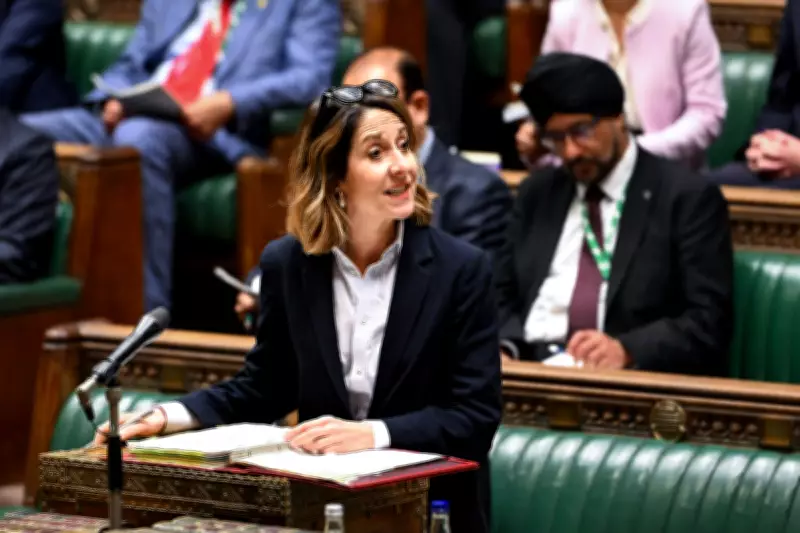
Immediate Action Promised by Tech Secretary
Tech Secretary Liz Kendall has confirmed that formal proposals will be brought forward before the summer, emphasizing that she does not want to wait "years" to implement protective measures. The government's consultation on tougher social media protections is scheduled to launch in March, signaling a rapid legislative timeline.
Prime Minister Starmer has firmly stated that "no platform gets a free pass" when it comes to child safety. He highlighted the necessity for legal frameworks to keep pace with technological advancements, declaring, "Technology is moving really fast, and the law has got to keep up. With my government, Britain will be a leader, not a follower, when it comes to online safety."

Comprehensive Restrictions Under Consideration
Beyond the proposed age prohibition, the government is examining a range of additional restrictions designed to safeguard young users. These include potential limits on addictive features such as 'infinite scrolling', controls on children's interactions with AI chatbots, and measures to prevent the use of virtual private networks (VPNs) to circumvent safety protocols.
The legislative push will utilize the Children's Wellbeing and Schools Bill to grant authorities expedited powers once the consultation concludes. Furthermore, amendments to the Crime and Policing Bill aim to close existing loopholes in the Online Safety Act, ensuring that AI chatbots are explicitly covered by regulatory duties.
International Precedents and Domestic Pressure
While no final decision has been made, UK ministers are closely monitoring Australia's enforcement of a similar ban, which began in December. The Australian law mandates that major platforms—including TikTok, YouTube, Instagram, Facebook, and X—prevent children under 16 from holding accounts, with non-compliance risking fines up to $49.5 million (£26.5 million).
Domestically, more than 60 Labour MPs have endorsed an open letter urging Starmer to implement a ban, criticizing successive governments for doing "too little to protect young people from unregulated, addictive social media platforms." Conservative peer Lord Nash has also advocated for immediate action, stating the government should "raise the age limit now" rather than delay further.
Catalysts for Regulatory Strengthening
The heightened focus on child safety follows significant controversy surrounding Elon Musk's Grok chatbot, which was exploited to generate non-consensual, explicit images of women and girls. Ofcom has initiated an investigation into the incident, prompting ministers to commit to strengthening legislation targeting AI-generated deepfakes.
Campaign group Jools' Law has additionally secured support for measures that would preserve children's online data in serious cases, further underscoring the urgency of regulatory enhancements.
Market Impact and Global Context
Analysts anticipate that the immediate economic impact of these restrictions will be modest. Daniela Hathorn, senior market analyst at Capital.com, noted, "Starmer's pledge to restrict addictive social media features is likely to have limited – if any – impact on markets. Tech giants like Meta and ByteDance derive only a fraction of their global revenue from the UK market."
Alex Brown, head of TMT at Simmons & Simmons, observed that the announcement "signals a clear hardening of approach to online safety," reflecting growing concerns that current regulatory models are struggling to keep pace with generative AI advancements. He highlighted that Australia, France, Spain, and Norway are all pursuing statutory age limits, with similar debates escalating in parts of the United States.

Shadow education secretary Laura Trott has characterized the latest announcement as "more smoke and mirrors" unless it culminates in concrete action, emphasizing the need for tangible outcomes in the government's regulatory efforts.