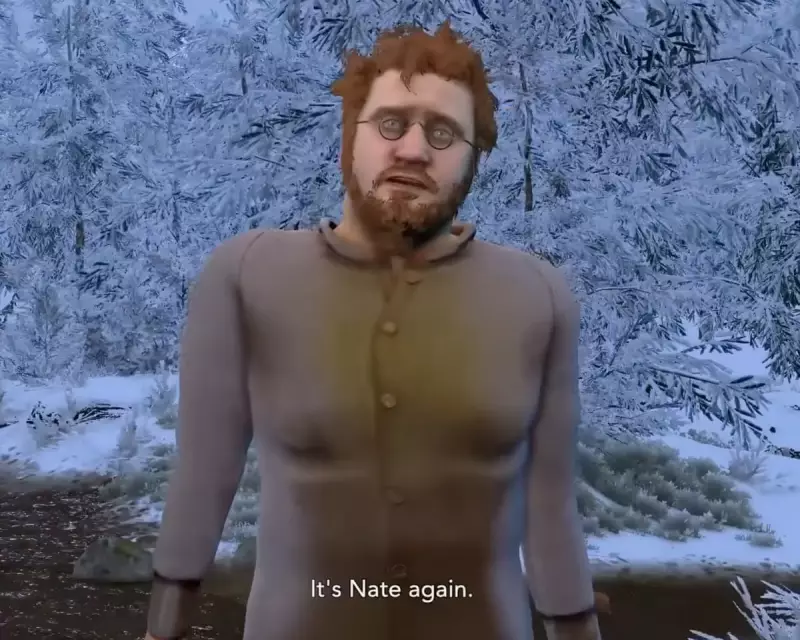
In the world of video games, heroes are typically muscular, confident, and capable. The protagonist of Baby Steps is none of these things. Nate is a 35-year-old man who lives in his parents' basement, wears a onesie, and is spectacularly ill-prepared for a hiking trip. Yet, this "impressively pathetic manbaby" is at the heart of one of the year's most profound and ridiculous comedy games.
From Stickman to 'Shy Urinator': The Birth of a Reluctant Hero
The game's developers, Bennett Foddy and Gabe Cuzzillo (alongside Maxi Boch), didn't set out to create a traditional likable character. Nate began life as a simple stickman with a block for a head during early prototyping. "We were looking for something with legs," Foddy notes, in a characteristically deadpan remark.
It took years of iteration for that blockman to become Nate: a large, bearded, socially awkward figure who is a self-confessed "shy urinator" and pathologically averse to help. Early in the game, another hiker offers him a map, which appears briefly before Nate stubbornly refuses it. "That's deep in who I am," admits Cuzzillo, who also provides Nate's voice. "If someone tries to help me, I run away screaming. Nate is one manifestation of my personality."
Foddy, known for games like Getting Over It that explore frustrating physical movement, saw the potential. The core philosophy was to start with a feeling that was "arduous and awkward and annoying and hostile," and then gradually bring the player around to find pleasure in it—a journey Nate himself undergoes.
A 'Loving Mockery' of Masculinity and Gaming Conventions
Baby Steps delivers a nuanced exploration of modern masculinity through its story and gameplay. Players unlock abstract flashbacks to Nate's childhood, revealing the humiliating experiences that shaped him. The game is filled with phallic imagery, yet its meditation on male insecurity is notable for its lack of female characters. "Men can have problems with masculinity just by themselves," Foddy states, offering a refreshing take in a landscape often crowded with misogynistic rhetoric.
The game is also a satire of streamlined gaming conventions. There are no easy assists or comforting guides. The player's suffering mirrors Nate's, creating a unique bond. During playtesting, the developers observed a "slightly obstinate vein of toxic masculine play" emerge in some friends, which further informed Nate's misplaced pride.
The Fruitful Climax: Why Players Come Around to Nate
Despite his many flaws, Nate has one pure love: fruit. Shiny pieces dangle in hard-to-reach places, and securing one triggers a ludicrous cutscene of Nate noisily devouring it before screaming its name. "It's funniest when you've tried hardest for it," Cuzzillo explains. The over-the-top reward is for Nate, not the player, letting you vicariously experience his joy.
This encapsulates the game's central joke. You might start by hating Nate, but if you're committing hours to clumsily walk him up a mountain, you share in his struggle. The true ending sees Nate finally learning to ask for help, a moment many find moving. However, the game famously lies, hinting there's nothing more to see while secretly hiding a final cutscene at the very peak for the truly persistent.
For Cuzzillo, the project has been cathartic. After his previous game, 2019's Ape Out, he felt ambivalent. With Baby Steps, he sees Nate as a "microcosm of the whole game, where it's both a piss-take and sincere at the same time." It's a loving mockery that, against all odds, teaches players—and its own creator—something about perseverance, acceptance, and the joy found in the struggle itself.