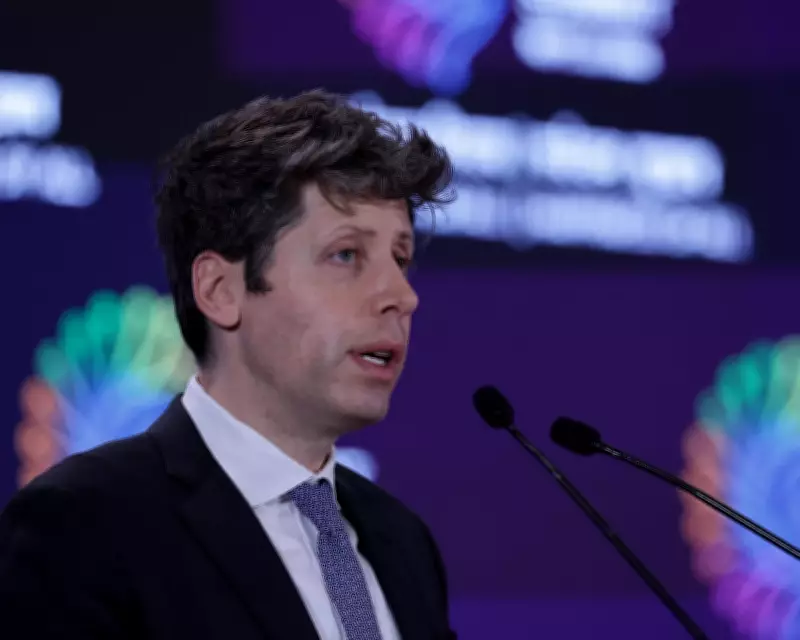
OpenAI CEO Sam Altman has openly acknowledged that his company possesses no authority to regulate or control how the United States Pentagon utilizes its artificial intelligence products in military operations. This admission was delivered directly to employees during an internal meeting on Tuesday, as reported by Bloomberg and CNBC, highlighting a significant gap between AI development and its ultimate military application.
Escalating Scrutiny on Military AI Deployment
The CEO's statements emerge against a backdrop of intensifying scrutiny regarding the ethical implications of AI in warfare. Recent weeks have witnessed heated debates within the AI industry, particularly as the Pentagon has pressured companies to remove safety guardrails from their models to enable a wider spectrum of military uses. AI-enabled systems are already reported to have played roles in U.S. military actions, including operations targeting Venezuela and Iran.
Rival Anthropic Takes a Stand
In a contrasting move, OpenAI's competitor Anthropic—creator of the Claude chatbot—declined a Pentagon deal last week due to ethical apprehensions. The company expressed fears that its technology could be exploited for domestic mass surveillance or the development of fully autonomous weapons. This refusal prompted U.S. Defense Secretary Pete Hegseth to label Anthropic a "supply-chain risk," a designation unprecedented for a U.S. firm and one that carries potential severe financial repercussions if formally implemented.
OpenAI's Controversial Pentagon Agreement
Simultaneously with Hegseth's announcement of punitive measures against Anthropic, the Pentagon revealed a new agreement with OpenAI, seemingly intended to supplant Claude in military applications. The timing of this deal, coupled with concerns that OpenAI had crossed ethical boundaries that Anthropic resisted, sparked both public criticism and internal employee backlash against Altman's company.
Damage Control and Internal Strife
In response to the controversy, Altman and OpenAI have attempted to assert that their technology will be employed legally, while concurrently engaging in damage control. Altman conceded that the Pentagon deal was hastily executed, making the company appear "opportunistic and sloppy." This admission underscores the precarious balance between commercial interests and ethical responsibilities in the rapidly evolving AI sector.
Anthropic CEO's Sharp Critique
Adding to the tension, Anthropic CEO Dario Amodei launched a scathing critique of Altman in a Wednesday memo to employees, obtained by The Information. Amodei accused Altman of being "mendacious" and giving "dictator-style praise to Trump." He emphasized that Anthropic maintained its ethical "red lines" with integrity, unlike what he characterized as OpenAI's collaboration with the Pentagon to create mere "safety theater" for employee appeasement.
Amodei further alleged that the Pentagon and the Trump administration's disapproval stemmed from Anthropic's lack of political donations, contrasting it with OpenAI President Greg Brockman's $25 million contribution to a pro-Trump political action committee. This allegation injects a political dimension into the ongoing ethical and commercial rivalry between the two leading AI firms.
The unfolding scenario illustrates a critical juncture for the AI industry, where technological advancement, military integration, ethical considerations, and corporate accountability are increasingly intertwined, prompting difficult questions about the future governance of artificial intelligence in sensitive applications.