Female-Led Startup Transforms London's Social Landscape Through Vulnerability
In a remarkable display of friendship and mission-driven entrepreneurship, three London women have created a cultural phenomenon that's literally saving lives through carefully curated gatherings. Mary, Christine, and Tamara—the founders of What Does Not—have built what they describe as a "culture agency" that prioritizes human connection over profit, creating spaces where strangers become community through shared vulnerability.
The Birth of RAW: Crossing London's Invisible Boundaries
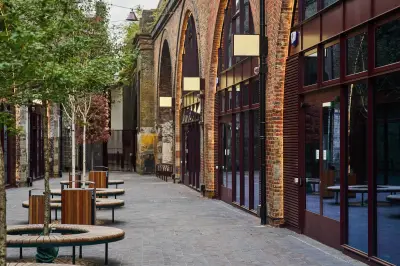
What began as a post-pandemic passion project in 2022 has evolved into a monthly event series called RAW that challenges London's geographical and social divides. "When I first moved to London," Christine explains, "I discovered countless people who had never ventured across the river. We wanted to create reasons for exploration—to give people purpose for traveling south, east, north, or west." This vision materialized as RAW events that rotate through exclusive venues across the capital, from The Old Sessions House in Clerkenwell to members-only spaces like Soho House.
Creating Safe Spaces in Unexpected Places
The founders employ what Christine calls a "Trojan Horse" strategy: they intentionally fill traditionally exclusive venues with people from diverse backgrounds who might normally feel excluded. "We transform these spaces," she notes, "into environments where wealth, education, and social status become irrelevant." For the first two years, the trio funded everything from their own pockets, keeping events entirely free while providing platforms for musicians and storytellers alike.
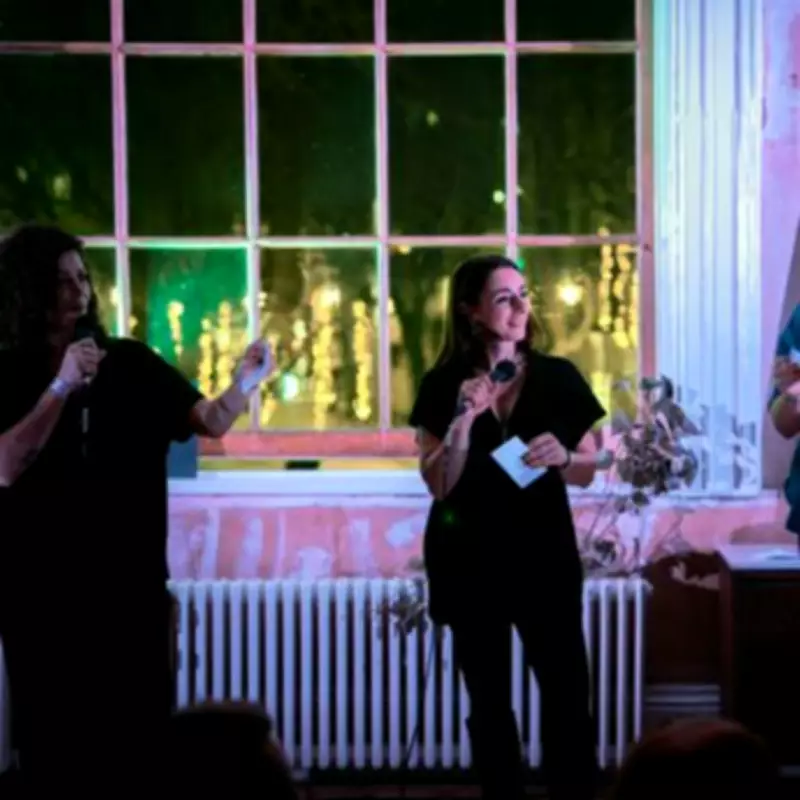
At each RAW gathering, up to 400 strangers gather in warm, inviting atmospheres where participants share deeply personal stories. Tamara recalls one particularly powerful moment: "We had a speaker who confessed he'd been writing goodbye letters to friends because he no longer wanted to live. After attending RAW, he told us it was the first time he felt truly seen and heard. He later returned to perform a song—it was incredibly powerful."
The Deliberate Anti-Marketing Strategy
What makes What Does Not particularly unique is its conscious rejection of traditional promotion. "We actively avoid overpromoting," Mary emphasizes, "because we believe it would be unethical to exploit people's vulnerable stories for marketing purposes." Instead, they rely entirely on word-of-mouth, creating what they describe as an "authentic safe space" that maintains its integrity through organic growth.
This approach has created surprising connections across London. Christine shares: "We encounter people in random places who recognize us from RAW events. Recently, a postman stopped me to ask if I was 'the lady from RAW.' That's how our community grows—through genuine human connections rather than advertising algorithms."
Breaking Barriers in Male-Dominated Spaces
As women operating in what Mary describes as a "heavily male-dominated" industry, the founders face additional challenges. "When you don't constantly post about your daily life on social media," Mary explains, "securing funding becomes particularly difficult. But our foundation of love and friendship helps us overcome these obstacles."
Their events deliberately mix people from different artistic and cultural backgrounds, creating what Christine calls "collaborative environments that make London feel smaller and more intimate." She observes: "We have rock musicians from Camden interacting with rap artists from Brixton—genres and neighborhoods that might never otherwise connect."
The Future of Community Building
Looking ahead, the founders dream of expanding their impact. "We hope to eventually create our own music festival," Christine reveals, "showcasing all types of talent while maintaining our core mission of bringing people together." Their next RAW event continues this vision on March 19 at The Old Queen's Head in N1 8LN, offering another opportunity for Londoners to experience their unique brand of community connection.
Mary reflects on their journey: "The fact that people feel comfortable sharing such vulnerability with hundreds of strangers—that they trust us to hold that space—restores hope. It proves people can still be present with each other, still be curious. Even though we create the space, it's the community that shares and upholds these values."