Australia's Final Opportunity to Communicate with the Cosmos
Australian citizens now have a remarkable final opportunity to send personal messages into the vast expanse of deep space, continuing the legacy of the legendary Voyager spacecraft's Golden Records. The Humanity United with MIT Art and Nanotechnology in Space (HUMANS) Deep Space Message project has established a deadline of February 27 for submissions through Sydney's Powerhouse Museum portal.
The Voyager Legacy and Modern Continuation
Launched in 1977, the twin Voyager spacecraft currently travel through interstellar space more than 20 billion kilometers from Earth, moving at speeds exceeding 50,000 kilometers per hour. These pioneering vessels each carry the iconic Golden Record—a gold-plated copper phonograph disk containing carefully curated information designed to introduce humanity to potential extraterrestrial civilizations.
The original Golden Record features detailed instructions for playback, a pulsar star map indicating our solar system's location, launch date information, spoken greetings in 55 languages, and musical selections representing diverse cultures and historical periods. This includes two significant songs from the Yolngu people, traditional owners of Arnhem Land.
The HUMANS Project: Democratic Space Communication
Nearly five decades after Voyager's launch, the HUMANS project offers a more democratic approach to interstellar communication. While the original Golden Record content was selected by a committee chaired by renowned scientist Carl Sagan, the current initiative invites public participation through a simple question: "What would you like the universe to remember about our story on Earth?"
Dr. Maya Nasr, Harvard University science engineer and HUMANS project lead, explains the philosophical shift: "The Golden Record was always an outward gesture of who we were in the 1970s to extraterrestrials. HUMANS was really inspired by that legacy, but what we really want is to be an inward reflection of who we are, and to connect people through that."
Messages from Earth: Diverse Human Perspectives
More than 1,700 individuals have already contributed messages through the Powerhouse Museum collaboration, with recordings capturing the full spectrum of human experience. One nine-year-old contributor shared: "Hello friends in space, I'm nine years old and I live on Earth. I love looking at the stars at night and imagining who might be out there. I want you to know that we're curious about you and hope you are happy where you are."
Other messages range from philosophical reflections to humorous observations. One participant noted: "Humans are really stupid and feeble and tiny, but that is what makes us so great. The fact that we can find meaning and life in small things, that our lives can amount to nothing but mean everything all at once." Another introduced one of Earth's culinary controversies: "Humans are mostly harmless, however people eat pineapple on pizza. Don't judge."
Technological Innovation and Cosmic Journey
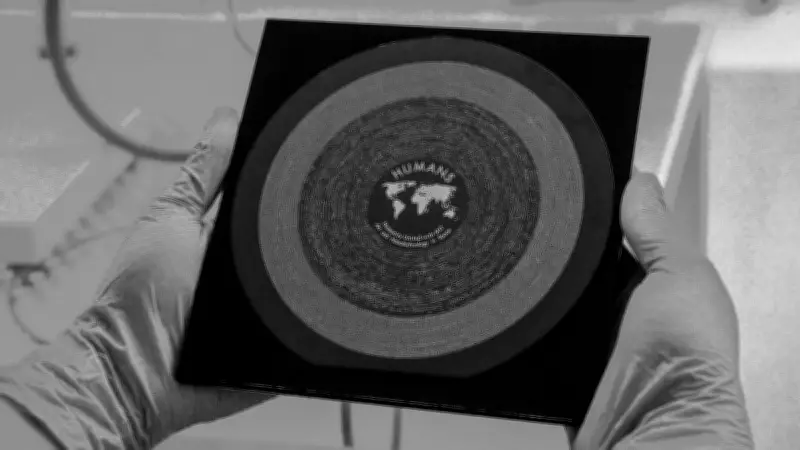
The HUMANS project represents significant technological advancement from its predecessor. Dr. Nasr collaborated with Massachusetts Institute of Technology researchers to develop a silicone nano wafer capable of carrying audio messages into space. This nanotechnology-powered record will launch on a special space mission commemorating Voyager's 50th anniversary next year, with audio subsequently broadcast into deep space.
Previous HUMANS project messages have traveled to the International Space Station and the moon, but this iteration represents the most ambitious cosmic dissemination to date. The messages will eventually degrade and become part of the universe's fundamental patterns, creating what Dr. Nasr describes as "really, deeply human" artifacts of our existence.
Universal Themes and Human Connection
Recorded messages consistently explore several universal themes according to project analysis:
- Love of family and friends
- Hope and future aspirations
- Cultural identity and belonging
- Everyday life on Earth
- Peace and unity among humans
- Existential questions about time and mortality
Lisa Havilah, CEO of the Powerhouse Museum, emphasizes the project's unifying power: "Even that word 'human' connects us deeply ... we are one—it shows the sameness of us all even in our extreme diversity."
Philosophical Implications and Cosmic Perspective
Dr. Nasr, who recorded her own message in Arabic, reflects on the project's deeper significance: "I think the act of thinking about this ... makes us more aware of how fragile and rare life on Earth is, even if we are alone. The silence of the universe kind of asks us more about who we are, when no one answers back."
Regarding the possibility of extraterrestrial life, she offers: "It would be really extraordinary if life only existed once. I think it's really hard to believe that we're the only experiment that life ever tried."
Her translated message captures the project's essence: "I would like the universe to remember that we carried contradictions within us while searching for meaning. That we were human beings who dreamed, made mistakes, loved, and created memories. That our story was not only about our achievements, but about the small moments between us."
As the February deadline approaches, this project represents not just technological achievement but profound human introspection—a chance to define our species' essence for cosmic consideration while reminding ourselves of our shared humanity during fragmented times.