
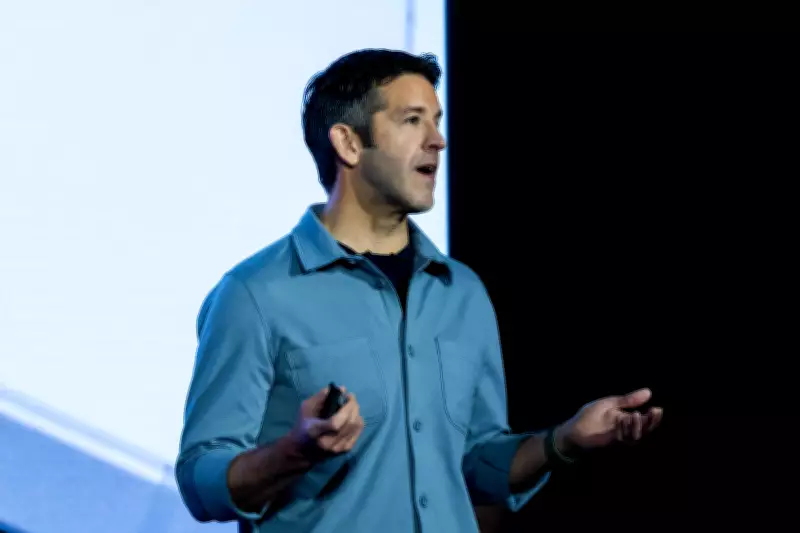
Apple Announces Historic CEO Transition: John Ternus to Succeed Tim Cook in September 2026
In a landmark announcement on Monday, Apple revealed that Tim Cook will step down as chief executive on September 1, 2026, ending a transformative fifteen-year tenure that saw the company's market value soar from $350 billion to an astonishing $4 trillion. The tech giant named John Ternus, its hardware engineering chief and a twenty-five-year company veteran, as Cook's successor in a carefully planned leadership transition.
The Cook Legacy: Building a Trillion-Dollar Empire
Tim Cook inherited Apple in 2011 following the death of legendary founder Steve Jobs, stepping into what former chief financial officer Peter Oppenheimer described as "the biggest shoes imaginable." During his remarkable tenure, Cook not only filled those shoes but expanded them dramatically, overseeing a more than ten-fold increase in market capitalization and quadrupling annual revenue from $108 billion to $416 billion.
Under Cook's leadership, Apple launched some of its most successful products, including the revolutionary AirPods and Apple Watch, while building a services division from scratch that now generates over $100 billion annually through offerings like Apple Pay, Apple Music, and Apple TV. The company announcement noted that Cook will transition to executive chairman, focusing on engagement with global policymakers—a reflection of how much of his tenure involved navigating complex relationships in Washington and Beijing.
The AI Challenge: Cook's Unfinished Business
Despite these extraordinary achievements, Cook leaves his successor with significant strategic challenges, particularly in artificial intelligence. Apple has notably trailed competitors like Microsoft, Alphabet, and Nvidia in AI development over the past two years, facing criticism after its WWDC 2025 event for AI demonstrations that failed to materialize for users as promised. Repeated delays in Siri's overhaul and a necessary partnership with Google to meet near-term expectations highlight the AI gap that accumulated during Cook's watch.
This strategic shortcoming represents perhaps the most pressing issue Ternus must address as he assumes leadership of the world's most valuable public company.
Meet John Ternus: The Hardware Veteran Taking the Helm
John Ternus brings substantial credibility to his new role, having joined Apple in 2001 and risen through the hardware engineering ranks. He led the company's major chip transformation and currently oversees the hardware responsible for the majority of Apple's revenue. Industry analysts view his appointment as signaling a renewed push into innovative hardware categories.
"His appointment signals a push into new hardware categories like foldable phones, smart glasses, and AI-powered devices," Gil Luria of DA Davidson told Reuters. Celebrated tech analyst Dan Ives endorsed Ternus as the right successor while acknowledging that "investors would have more questions than answers about the broader strategic direction."
Strategic Realignment: The Srouji Promotion
Perhaps more revealing than the CEO announcement itself was the simultaneous promotion of Johny Srouji to the newly created position of chief hardware officer. This move gives Srouji oversight of Apple Silicon, hardware engineering, and the complete chip roadmap under a single remit for the first time in over a decade.
Srouji built the neural engine inside every recent iPhone, iPad, and Mac and spearheaded the critical transition away from Intel processors. Creating this executive role alongside the CEO succession announcement clearly signals where Apple believes the next phase of technological competition will be decided—at the intersection of hardware and artificial intelligence.
Ternus and Srouji have collaborated for fifteen years and now occupy the top positions in Apple's organizational structure, suggesting a cohesive leadership team focused on hardware innovation.
The Road Ahead: WWDC 2026 and Beyond
John Ternus will have his first major public moment as CEO-designate at WWDC 2026 in June, three months before formally assuming leadership in September. Notably, Apple has referenced artificial intelligence explicitly in its transition communications for the first time, indicating this will be a central focus of Ternus's early tenure.
Even Sam Altman, founder and CEO of AI leader OpenAI, acknowledged the significance of this transition, posting on social media: "Tim Cook is a legend. I am very thankful for everything he has done and I am very thankful for Apple."
As Ternus prepares to lead Apple into its next chapter, he faces the dual challenge of maintaining the extraordinary financial performance Cook achieved while addressing the strategic gaps in artificial intelligence that developed during the same period. The September 2026 transition marks not just a change in leadership but potentially a fundamental shift in how Apple approaches technological innovation in the coming decade.




