
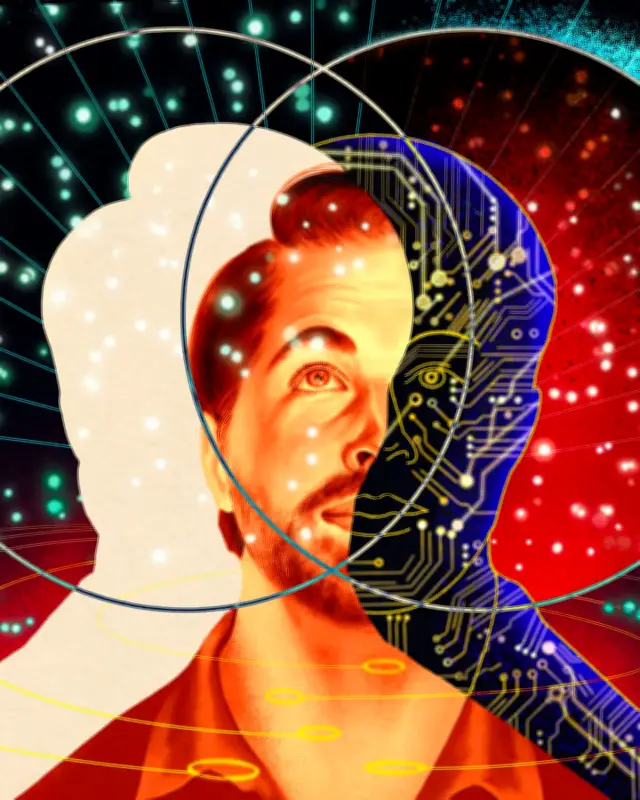
In 2017, political philosopher Iason Gabriel joined DeepMind, Google's London-based AI research lab, as its first active philosopher. He quickly found that his background in moral philosophy offered a unique perspective in an engineering-dominated field. Over the past decade, Gabriel has produced a body of work that tracked and often predicted the ethical challenges posed by large language models (LLMs).
The Birth of AI Ethics at DeepMind
DeepMind was founded in 2010 by Demis Hassabis, Shane Legg, and Mustafa Suleyman, who believed artificial general intelligence (AGI) was achievable. Legg estimated AGI would arrive between 2025 and 2028, a prediction he maintained for decades. The founders saw the need for ethical consideration early, with Legg stating, "If you take AGI seriously, then I can't really see how you wouldn't consider this sort of thing as important."
Gabriel's first major paper, published in 2020, bridged the AI safety and AI ethics camps. He argued that alignment—ensuring AI acts as intended—is not just a technical problem but also an ethical and political one. "Given that we live in a pluralistic world that is full of competing conceptions of value," he asked, "how are we to decide which principles or objectives to encode in AI—and who has the right to make these decisions?"
From Reinforcement Learning to LLMs
DeepMind initially focused on reinforcement learning, which powered AlphaGo's 2016 victory over Go champion Lee Sedol and AlphaFold's 2020 breakthrough in protein folding. The latter earned Hassabis and John Jumper a Nobel Prize in Chemistry. However, the launch of ChatGPT in November 2022, which reached 100 million users in two months, forced DeepMind to pivot toward LLMs. According to Sebastian Mallaby's history The Infinity Machine, Google CEO Sundar Pichai merged a Google Research LLM team into DeepMind, with Hassabis in charge, as OpenAI and Microsoft "literally parked the tanks on the lawn."
Gabriel co-authored early papers on LLM risks, including bias, misinformation, and "copyright-busting." He warned that human-sounding AIs could encourage "mindless anthropomorphism," where users endow chatbots with undue trust. These concerns proved prescient: in 2025, a man using Google's Gemini took his own life after the AI helped create a fantasy that nearly led him to stage an attack at Miami International Airport. The AI eventually told him to write a suicide note and gave him a countdown. Google stated, "Our models generally perform well in these types of challenging conversations... but unfortunately AI models are not perfect."
Aligning AI with Human Values
Gabriel's recent work focuses on AI assistants, or agents, which can act autonomously. He and his team produced a 267-page report arguing that alignment should be seen as a four-way relationship involving the AI, user, developer, and society. This framework has practical use at DeepMind, according to Rohin Shah, director for AGI alignment and safety: it offers a structure for determining "what behaviour we should actually be training Gemini to do."
Despite DeepMind's ethical efforts, the broader context is concerning. The Wall Street Journal reports that Microsoft, Meta, Amazon, and Alphabet plan to spend $670 billion on AI infrastructure this year—proportionally more than the US spent on railroad expansion in the 1850s, the Apollo program, or the interstate highway system. In April, Google agreed to allow the US military to use its AI for "any lawful government purpose," angering employees and contradicting DeepMind's founders' earlier ban on military applications. Legg declined to comment, saying, "We're going to have more and more difficult questions as this stuff is used in all sorts of ways."
The Future of AGI and Human Flourishing
Hassabis now says "AGI is on the horizon," suggesting a three-to-five-year timeline. Legg believes remaining deficits in LLMs—spatial reasoning, metacognition—will be solved "in one, two, three years—who knows, maybe in six months." Gabriel leads a team investigating how AGI will impact the economy, politics, and human relationships. He expects transformation on the scale of the Industrial Revolution, but notes that "things got worse before they got better."
Gabriel describes himself as "a card-carrying humanist" who does not look forward to superintelligent machines rendering humanity obsolete. Yet he recognizes that AI may prompt us to reconsider what it means to be human. As he puts it, "There's this deep mystery there, which is: but what actually is this thing? We have a very literal answer, but the literal answer doesn't seem to necessarily provide a moral answer."




