
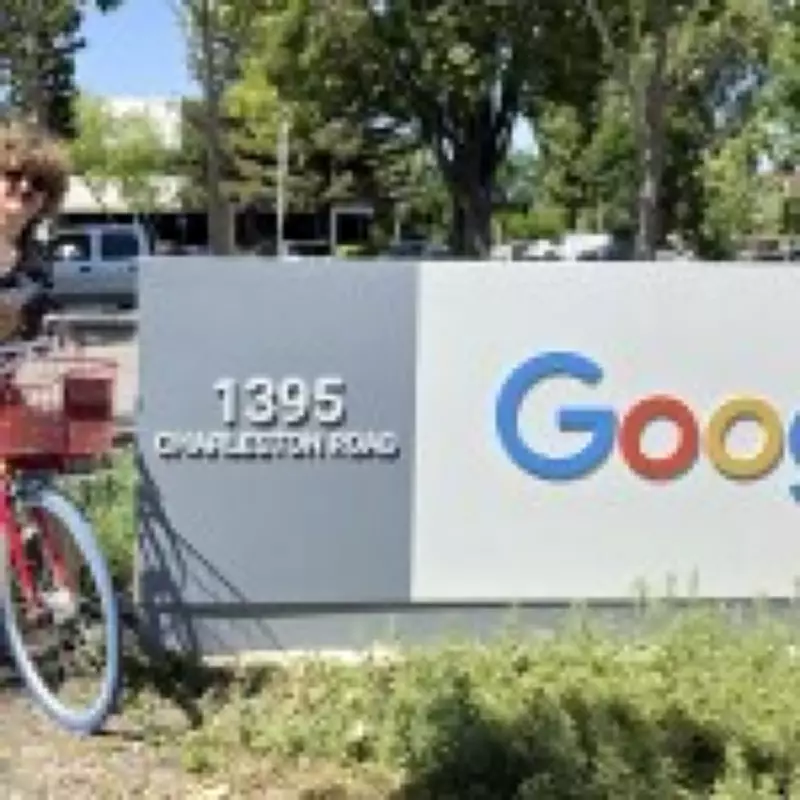
At Google's annual developer conference, Google I/O, held in Mountain View, California, the tech giant showcased groundbreaking advancements in artificial intelligence. Demis Hassabis, CEO of Google's AI lab DeepMind, declared that humanity is standing on the foothills of the singularity, the theoretical moment when AI surpasses human intelligence. This statement drew gasps from the audience, including Google's own product lead for science AI, Lizzie Dorfman.
What is the Singularity?
The singularity refers to the point when AI becomes smarter than humans, potentially allowing people to augment themselves with immense computational power. Dorfman explained that mathematically, singularity means a sudden explosion into infinity. It represents an inflection point where work that historically took years or decades could be completed in months or even shorter periods.
AI in Science: Accelerating Discovery
Dorfman, who has been with Google for nearly two decades, has witnessed AI's transformative impact on scientific research. Most science now involves coding tests on powerful computers, often using AI tools. She noted that scientists can now instruct AI tools to explore thousands of possibilities overnight, dramatically speeding up the slowest and most laborious parts of their work. This shift is expected to fundamentally boost productivity and outputs in science.
Major Announcements from Google I/O
Google unveiled several new products and features at the conference:
- AI-Powered Search: For the first time in 25 years, Google is overhauling its search bar. An intelligent search box will expand as users type, ask follow-up questions, and generate graphics for complex queries. This is powered by the new Gemini 3.5 Flash AI model.
- Android XR Smart Glasses: A new model of smart glasses includes a camera, microphone, and speakers. Users can ask Gemini about their surroundings or order coffee. In a live demo, the glasses translated Spanish to English in real-time, displaying holographic subtitles.
- Wing Drone Delivery: Google's parent company Alphabet demonstrated its drone delivery unit, Wing. Drones lowered packages with Google-branded badges. The company plans to expand Wing to more locations, including trials in Ireland and service for NHS hospitals.
Mapping the Brain with AI
Dorfman highlighted the challenge of mapping the human brain, which contains billions of nerve cells. While AI can struggle to generate accurate brain images, it offers powerful tools for neuroscience. Scientists have spent a decade mapping the brain of a fruit fly, but the human brain is far more complex. Understanding the brain's wiring could help treat neurodegenerative diseases like Alzheimer's and Parkinson's, as well as conditions like depression.
Dorfman has worked on technology to map structures at the nanoscale. The process involves fixing the brain in resin, slicing it thin, and imaging it with a microscope. The team then structures the data in three dimensions. Researchers aim to map the 75 million neurons of a mouse brain next, and eventually the 80 billion neurons of a human brain.
AI and Human Brain Similarities
Dorfman noted the irony that scientists use machines to understand what makes humans human. A study involving people with epilepsy showed that both humans and AI predict the next words in a podcast in similar ways. This suggests that the singularity may not be far off, opening up many more opportunities for AI-human collaboration.




