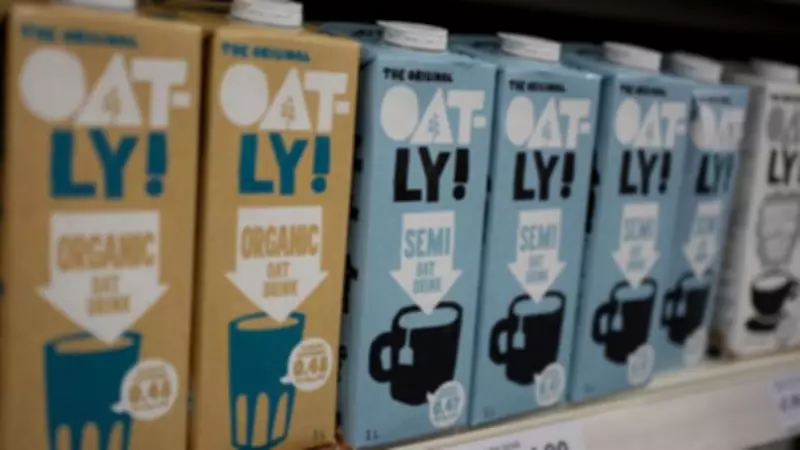
UK Supreme Court Delivers Final Verdict on Oat-Based 'Milk' Labeling
The UK Supreme Court has issued a definitive ruling that oat-based products cannot be marketed using the term "milk," bringing an end to a protracted legal dispute between Swedish oat drink company Oatly and Dairy UK, the trade association representing the British dairy industry. This landmark decision, handed down on Wednesday, 11 February 2026, reinforces strict labeling regulations for dairy alternatives.
Background of the Legal Battle
The conflict centered on Oatly's trademark for the phrase "Post Milk Generation," which Dairy UK challenged as invalid, arguing it misleadingly implied a connection to milk. The legal proceedings spanned several years, beginning with a 2023 High Court ruling that initially supported Oatly's challenge against the Intellectual Property Office's decision to invalidate the trademark. However, this was overturned by the Court of Appeal in 2024, leading Oatly to escalate the case to the Supreme Court in December of the following year.
During the Supreme Court hearing, Oatly's legal team contended that the trademark clearly indicated the absence of milk in their products, targeting a demographic of consumers moving away from traditional dairy. In contrast, Dairy UK's lawyers maintained that the trademark failed to explicitly state the products were milk-free, instead focusing on consumer identity.
Supreme Court's Unanimous Decision
In a unanimous ruling, five Supreme Court justices upheld the invalidity of the trademark. The court stated that the trademark did not clearly describe any characteristic of the products but rather ambiguously referred to younger consumers concerned about milk production and consumption. The ruling emphasized that the term "milk" and related designations are legally reserved for specific dairy products under UK law, preventing their use for plant-based alternatives.
Bryan Carroll, General Manager for Oatly UK & Ireland, expressed deep disappointment, criticizing the ruling for creating confusion and an uneven competitive landscape for plant-based products. He argued that this decision hampers consumer clarity and innovation in the food sector.
Implications for the Industry
This ruling sets a significant precedent for the labeling of plant-based products in the UK, potentially affecting other dairy alternatives such as almond or soy drinks. It underscores the ongoing tension between traditional dairy industries and the growing market for vegan and lactose-free options. Industry observers note that the decision may lead to stricter enforcement of labeling standards, impacting marketing strategies and consumer perceptions.
The case highlights the broader regulatory challenges facing food manufacturers as they navigate evolving consumer trends and legal frameworks. With plant-based diets gaining popularity, this ruling could influence future trademark disputes and labeling policies across Europe.