About a fifth of the world's oil and liquefied natural gas (LNG) passed through the Strait of Hormuz, a strip of sea less than 30 miles wide at its narrowest point, before it was effectively closed by the US-Israeli attack on Iran. This sent oil prices soaring and left an estimated 20,000 seafarers on 2,000 vessels stranded.
Their plight has highlighted the complex and dirty relationship between shipping and the fossil fuel industry. Shipping is one of the most polluting sectors, with most ship engines fuelled by heavy, carbon-intensive diesel, often called the dregs of the oil refining process. The sector produces about 3% of global greenhouse gases, a share expected to rise as trade globalises further.
But the relationship with oil goes deeper: vessels are not only dependent on bunker fuel, but shipping companies also rely heavily on fossil fuels as cargo. Marie Fricaudet of the Energy Institute at University College London noted that about 40% of the global fleet is used to transport fossil fuels, a trade that must be phased out to prevent severe climate impacts.
IMO Talks Under Pressure
At the International Maritime Organization (IMO) headquarters in London, two weeks of talks among governments on decarbonising shipping are at their midpoint. Insiders have told the Guardian that many countries have faced fierce pro-oil lobbying. Liberia, Panama, and Greece are among those that appear to have shifted from supporting strict greenhouse gas controls to attempting to scrap new regulations.
Cleaning up shipping is vital for the global shift from fossil fuels to a green economy. However, many shipping companies and countries with large fleets have a vested commercial interest in maintaining oil dependence, which can hinder greening efforts.
LNG's Vulnerable Position
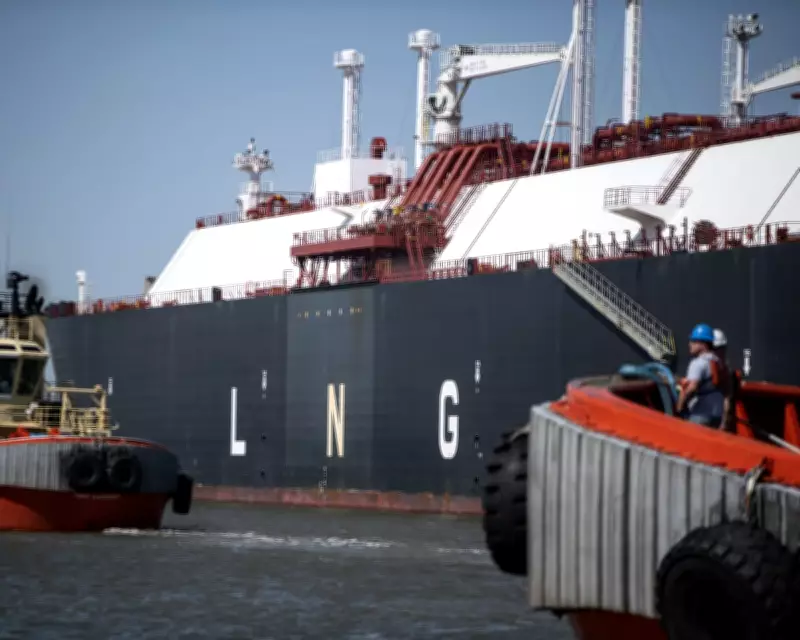
LNG, trade in which has been severely disrupted by the Hormuz closure, is one of the most costly fuels to move. It requires specially cooled containers and expensive vessels. Companies and countries have invested heavily in LNG infrastructure, partly in response to the 2022 oil crisis sparked by Russia's invasion of Ukraine. Before that, LNG benefited from the move away from coal.
Repeated oil crises have prompted many countries to consider renewables for long-term energy security. However, one person involved in the IMO talks said that many economies still have a high dependency on gas, making LNG look particularly risky in the mid-2030s.
Fricaudet agreed that among vessels most exposed to the transition, LNG tankers stand out. They represent a relatively new and capital-heavy segment with long operational lifespans and are expected to face oversupply under most 1.5C and 2C climate scenarios.
Influence of LNG Interests
Tristan Smith, a professor at UCL, pointed to the influence of LNG interests. The future demand for moving LNG between continents, and investments in ships and terminals, appear linked to pressure on IMO negotiations. Several countries with strong LNG interests disrupted last year's talks, including the US, Saudi Arabia, and Qatar. They were joined by Liberia and the Marshall Islands, whose flag registries correlate strongly with LNG exposure.
Smith noted that this group's stance differs markedly from other shipping industry actors taking a more progressive position, raising risks for a fair resolution of the IMO's debates.
Growing LNG Fleet
The LNG industry shows no sign of slowing its demand for new vessels. According to the International Gas Union (IGU), there are just over 750 LNG vessels globally, with 337 new ones on order. Ella Minty of the IGU said LNG will remain a critical fuel for global energy demand growth, especially in the developing world, and the vessel growth aligns with LNG expansion plans.
Carbon Levy Under Threat
IMO talks have been ongoing for over a decade. Last April, countries agreed to push for decarbonisation of maritime trade (the net zero framework) and impose a carbon levy on shipping, forcing companies to pay per tonne of greenhouse gas emitted. The levy would fund greener fleets using cleaner fuels or renewable energy and help developing countries. However, the US under Donald Trump began intimidating countries to change their minds.
By October, an interim meeting put the levy on ice for a year. Other countries have since proposed plans that would scrap the IMO's decarbonisation targets. No decision on the levy is expected until October.
A spokesperson for the International Chamber of Shipping said the industry supports the IMO's plans and is moving at speed on decarbonisation, often outpacing regulatory requirements. However, achieving a successful global transition depends on decisions by IMO member states.
Hope Remains
Civil society observers said many countries are holding firm despite pressure. Delaine McCullough of the Clean Shipping Coalition said member states worked constructively to seek resolutions and must hold the line against those looking to disrupt and delay.
Experts argue that the transition away from fossil fuels need not mean commercial disaster. Christiaan De Beukelaer of the University of Melbourne noted that other cargoes are available, such as grain and alternatives to liquids. Even without fossil energy, there will still be a need to transport energy across oceans using renewable electricity.
To decarbonise the global economy, sectors reliant on oil and gas must shift to electricity. This means vast demand for solar panels, wind turbines, heat pumps, batteries, and electric vehicles, many of which will travel by sea—though not via the Strait of Hormuz.