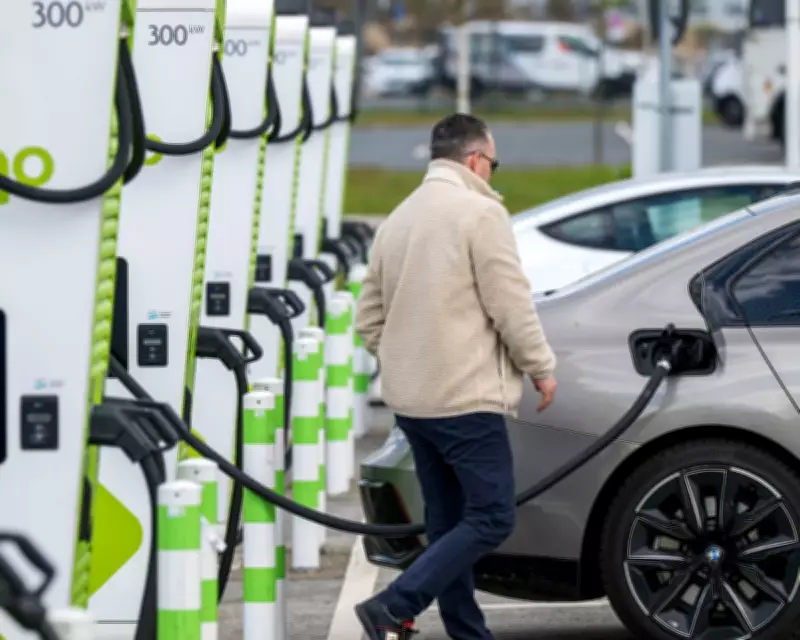
Interest in electric vehicles has skyrocketed across Europe following the outbreak of the Iran war, with new data showing a dramatic surge in sales as petrol and diesel costs climb. According to analysis by New AutoMotive and the trade body E-Mobility Europe, electric car sales soared by an impressive 51% in continental Europe during March alone.
March Registration Figures Reveal Significant Growth
The comprehensive analysis of national sales data across 15 European countries reveals that 224,000 new electric vehicles were registered in March. This brings the total for the first quarter of the year to 500,000 new EVs, representing a substantial 33.5% increase compared to the same period last year.
Since the conflict in Iran began in late February, European buyers have shown markedly increased interest in electric cars. The rising cost of traditional petrol has highlighted the economic advantage of cheaper power available from electric charging points, making EVs more attractive to cost-conscious consumers.
Nordic Countries Lead the Transition
Norway continues to dominate Europe's electric vehicle transition, with an astonishing 98% of all new cars sold in March being electric vehicles. Denmark followed closely with 76% of new car sales being EVs, while Finland recorded nearly 50% electric vehicle adoption.
The Nordic countries' rapid electrification progress has been facilitated by several key factors including higher average wages, generous government subsidies, and extensive charging infrastructure developed through substantial public investment.
Central and Southern Europe Show Strong Growth
While Western car manufacturers have recently shown signs of retreating from electric vehicle production amid concerns about waning demand and reduced tax incentives, the Iran war and subsequent fuel price increases appear to have revitalized consumer interest.
Germany, France, Spain, Italy, and Poland collectively recorded a 40% increase in electric vehicle uptake during the first quarter of this year. Italy, previously one of the slowest EU nations to embrace electric vehicles, posted a remarkable 65% year-on-year increase in March, though its overall market share remains modest at just 8.6% of total sales.
France's Incentive Program Drives Adoption
France experienced a 50% year-on-year increase in electric vehicle uptake, largely attributed to its comprehensive government incentive program. The French government offers up to €5,700 to low-income households toward electric vehicle purchases, with additional grants of €4,700 for middle-income buyers and €3,500 for other consumers.
The country has also implemented a social leasing scheme specifically designed for households with individual incomes below €16,300 who commute at least 15 kilometers to work. This initiative has made electric vehicles particularly appealing in rural areas where commuting distances are typically longer.
Industry and Energy Security Implications
Chris Heron, Secretary General of E-Mobility Europe, emphasized the broader significance of March's electric vehicle sales surge. "March's surge in electric car sales represents one of Europe's most substantial recent gains in energy security," Heron stated. "This comes at a time when oil dependence has become a genuine vulnerability for many nations."
The trade body calculates that the electric vehicle transition recorded so far this year has reduced annual fuel demand by the equivalent of 2 million barrels of oil annually, highlighting the growing impact on Europe's energy landscape.
Germany's Automotive Industry Responds
Germany recorded a 42% increase in electric vehicle sales during March, despite challenges from increasing competition from Chinese electric vehicle manufacturers. The German automotive trade body recently reported that restructuring efforts and new investments in the industry are yielding positive results, with every second electric car sold in Europe now manufactured in Germany.
The data covers 15 countries within the European Union and EFTA markets, providing a comprehensive picture of Europe's accelerating transition toward electric mobility as geopolitical events continue to influence consumer behavior and energy markets.