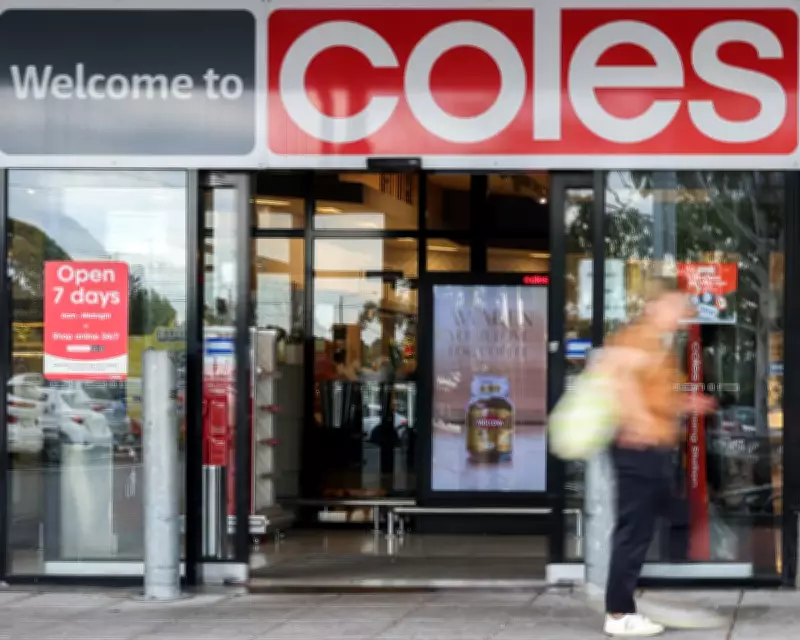
Coles' 'Down Down' Promotions Exposed as Price Increase Strategy in Federal Court
Recent federal court proceedings have revealed shocking details about Coles' controversial 'Down Down' promotions, with evidence suggesting these marketing campaigns were systematically used to implement price increases rather than genuine discounts. The case has exposed fundamental questions about supermarket advertising ethics and consumer trust in Australia's retail sector.
The Evidence: How 'Down Down' Became a Price Increase Mechanism
Court documents present a clear pattern of behavior that contradicts the promotional messaging. One particularly striking example involves Nature's Gift wet dog food. For nearly a year, Coles sold a 1.2kg loaf for $4. The price then suddenly increased by 50% to $6 for just seven days, before being reduced to $4.50 and labeled 'Down Down' - still 12.5% higher than the original price customers had paid for 296 of the previous 303 days.
According to legal submissions, this wasn't an isolated incident. Coles' lawyers admitted the more common pattern involved raising prices for six to twelve weeks, then partially reversing the increase while advertising 'Down Down' promotions. Evidence regarding deals with Arnott's confirmed this strategy was planned in advance as a systematic approach to raising prices without alarming consumers.
The Corporate Defense: Questioning Consumer Intelligence
In their defense, Coles presented a troubling argument: that consumers lack the capacity to understand pricing complexities. The supermarket giant claimed Woolworths' 'Prices Dropped' program - currently under separate ACCC investigation - employed even more deceptive practices. This defense raises fundamental questions about corporate responsibility and consumer protection in Australia's retail landscape.
Economist John Quiggin, who has been following the case closely, notes: "Most consumers understand that taking prices two steps up then moving them one step down still leaves them higher. The real question is why major corporations believe they can manipulate pricing in this manner without consequence."
The Broader Context: A Culture of Deceptive Marketing
The Coles case reflects a broader pattern in Australian retail and financial sectors. Banks spent years trying to recover from reputational damage following the financial services royal commission, yet supermarkets appear to be repeating similar mistakes. Neither Coles nor Woolworths has committed to comprehensive truthful advertising policies, despite both being established companies planning long-term market presence.
Several theories explain this persistent pattern. First, corporate decision-makers face intense short-term pressure, making ethical advertising commitments difficult to implement. Second, widespread consumer distrust creates a vicious cycle where no single company wants to be the first to adopt transparent practices. Third, some executives may genuinely believe consumers cannot discern deceptive pricing strategies.
The Digital Future: More Sophisticated Deception
While 'Down Down' promotions represent traditional retail trickery, the digital economy introduces far more sophisticated deception methods. Personalized pricing algorithms now enable sellers to determine maximum individual willingness to pay, targeting consumers at precisely the right psychological moment. These advanced systems make traditional promotional gimmicks seem almost quaint by comparison.
The only potential defense against such sophisticated manipulation may involve consumers developing their own AI agents to counter corporate algorithms - a technological arms race that raises serious questions about market fairness and consumer sovereignty.
The Path Forward: Rebuilding Consumer Trust
Despite the gloomy picture presented in court, opportunities exist for positive change. Comprehensive government regulation, combined with consumer education and corporate accountability, could begin rebuilding trust in retail pricing. The federal court case represents a crucial moment for Australia's supermarket sector to reconsider its approach to pricing transparency and advertising ethics.
As the digital economy evolves and pricing strategies become increasingly sophisticated, the fundamental question remains: will Australian retailers choose short-term profit through deception, or long-term success through genuine consumer trust? The Coles case suggests this question has never been more urgent for Australia's retail future.