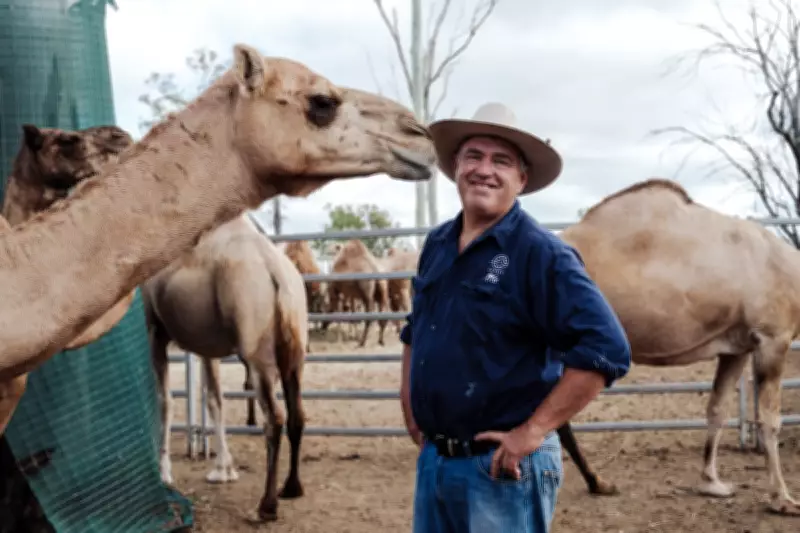
Australian Camel Milk Farm Pioneers New Dairy Industry with US Export Ambitions
In the lush pastures of Queensland's Scenic Rim, far from Australia's arid desert heartlands, Paul Martin operates one of the nation's first commercial camel dairies. His 130-hectare farm, located just an hour's drive from Brisbane, represents a unique fusion of ancient tradition and modern agricultural innovation.
From Feral Herds to Dairy Divas
Martin's star performer, Caroline, exemplifies the transformation occurring at this pioneering operation. Originally from Australia's Central Desert region, where approximately half a million feral camels roam wild, Caroline now produces more than double the milk of average wild-caught camels. This exceptional productivity makes her bloodline particularly valuable for building more productive herds in the coming decades.
"This is where the cow dairies started 200 years ago," Martin explains regarding the genetic selection process. "People might look back at this in 20 years' time when all the camels are producing 8 litres of milk."
The Psychology of Camel Milking
Unlike traditional dairy farming with cows, camel milking requires a completely different approach. Camels possess the unique ability to "hold their milk," meaning they must be coaxed rather than coerced into the milking process. Martin and his team have developed sophisticated techniques involving endorphin release, reward feeding, careful herd structure management, and keeping calves near the milking shed.
"Once you establish that connection with these animals, they're like grass-eating Labradors," Martin observes. "They could sit on your lap if they weren't so heavy."
Nutritional Advantages and Market Potential
Camel milk offers distinct nutritional benefits that have fueled its growing popularity. Unlike cow's milk, it lacks beta-lactoglobulin, the major allergen in traditional dairy products. This makes it more similar to human breastmilk and accessible to people with dairy allergies. The milk's natural homogenization allows it to freeze, thaw, and reconstitute exceptionally well, making international shipping feasible.
These unique properties have positioned camel milk as an emerging "superfood," attracting interest from wellness enthusiasts and those exploring gut health solutions. Simultaneously, the dairy serves ancient markets, providing a traditional staple for East African and Arab communities who have consumed camel milk for millennia.
Australia's Unique Position in Global Market
Martin believes Australia holds a distinctive advantage in developing this industry due to its substantial feral camel population. "That's where Australia has a unique advantage: we have the massive nucleus of a herd there," he notes, while acknowledging concerns about culling programs that reduced the feral population from approximately 600,000 to 300,000 between 2010 and 2013.
Dr. Carol Booth of the Invasive Species Council emphasizes that feral camels "inflict enormous damage" to desert ecosystems, Indigenous cultural sites, and remote communities. While commercial use might contribute to population control in targeted areas, she cautions that it cannot solve the broader ecological problems caused by these invasive animals.
Cultural Connections and Culinary Innovation
For Faysel Ahmed Selat, president of the Queensland African Communities Council, Martin's farm provides a vital cultural connection. Born in Somalia to a camel-owning family, Ahmed Selat explains that "Somali culture and camels are inseparable"—the animals represent cultural history, survival, and resilience.
Regular visits to the farm with friends to purchase milk and spend time with the camels make him "feel like I am at home," he shares. While traditional Somali preparations differ significantly from the camel milk cappuccinos, camel pies, and even camel vodka available at Martin's visitor center, Ahmed Selat appreciates the culinary creativity.
"Using traditional meat and milk in modern dishes can help bridge cultures and create new markets," he observes. "We see, in Australia and Somalia, an opportunity to connect the cultures and diversify diets and build sustainable industry."
Export Ambitions and Industry Growth
After a decade of supplying Australia's domestic camel milk market, Martin now sets his sights on international expansion. He plans to export 60,000 litres to the United States this year—the first shipment in what he envisions becoming a major new agricultural commodity for Australia.
"We've had the same sort of broadacre approach to food as the US, so our health issues are pretty similar," Martin explains regarding the American market potential. "They have the same dynamics of Somali and Arab communities as well—but they just have a lot more people."
As Martin's farm continues to bridge ancient traditions with modern agricultural practices, it represents both a promising new industry for Australia and a fascinating case study in cultural exchange through food innovation.