Tesco's Bilingual Blunder: Welsh Signs Appear in Cornish Supermarket
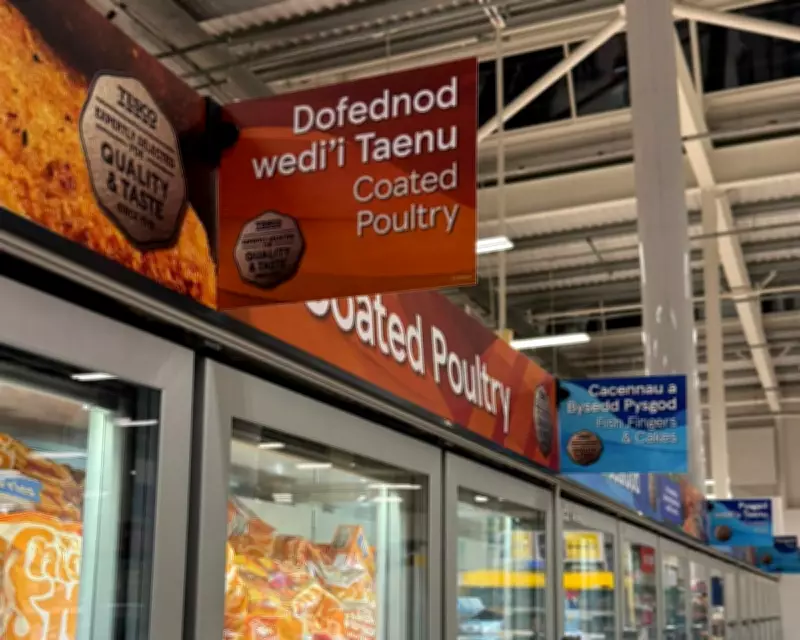
Tesco has issued an apology following an embarrassing linguistic mix-up at one of its Cornish stores, where bilingual signs were installed in Welsh rather than the local Cornish language. The error occurred at the Helston branch, located approximately 200 miles from south Wales, leaving shoppers perplexed by the unexpected use of Welsh terminology.
Celtic Confusion in the Aisles
Shoppers navigating the Helston Tesco were directed to sections labelled with Welsh words such as pysgod for fish and tatws melys for sweet potato, rather than their Cornish equivalents. While both languages share Celtic roots, the distinction is significant to local communities and language campaigners who have been working to revive and promote Cornish.
Cllr Loveday Jenkin, a prominent member of Mebyon Kernow, the political party advocating for greater Cornish self-government, expressed mixed feelings about the situation. "I was pleased Tesco had put up bilingual signs, but it would have been more exciting if they had been in Cornish rather than Welsh," she remarked. Jenkin, a fluent Kernewek (Cornish) speaker, visited the store to thank staff for their efforts while requesting correction to the appropriate Celtic language.
Growing Recognition of Cornish Language
This incident occurs at a particularly relevant moment for Cornish language promotion. In January, Kernewek received official recognition under part III of the European charter for regional or minority languages, granting it enhanced protection and status. Cornwall Council estimates there are approximately 500 advanced Cornish speakers and 2,000 individuals with basic proficiency.
Perran Moon, Labour MP for Camborne and Redruth, commented on the language's elevated status: "We are pleased that retailers are starting to use bilingual signage, however, clearly this mistake serves to highlight the importance of access to the Cornish language for those who want to use it."
Academic and Campaigner Perspectives
Garry Tregidga, co-director of the University of Exeter's Institute for Cornish Studies, described the situation as "obviously embarrassing for Tesco" but noted the positive intention behind the signage effort. "What is also positive is that this mistake was spotted. This is a sign of the increasing number of people who are using and recognising Cornish," he observed, offering assistance with creating accurate replacements.
From Wales, prominent language campaigner Ffred Ffransis expressed support for Cornish language promotion while highlighting parallel challenges in his own region. "Here in Wales, the campaign is to persuade major companies like Tesco, who impact heavily on everyday life, not to confine their use of Welsh to a one-off production of major signage," he stated, advocating for comprehensive bilingual implementation.
Resolution and Future Implications
The Welsh signs have now been removed from the Helston Tesco, with a spokesperson confirming: "We're sorry for this mistake and have removed these signs." It is understood that replacement signage in Cornish will be installed as soon as possible.
This incident underscores several important developments:
- The growing visibility and recognition of the Cornish language following its official status elevation
- The challenges retailers face when implementing bilingual signage across different regions
- The increasing public awareness and scrutiny of language representation in commercial spaces
- The ongoing efforts to preserve and promote minority languages within the UK
While Welsh remains more widely spoken in Wales than Cornish is in Cornwall, with the Welsh government aiming for one million speakers by 2050, this episode highlights the parallel journeys of Celtic language revitalisation across different British regions. The mistake, while embarrassing for the supermarket giant, has ultimately drawn attention to the importance of linguistic accuracy and cultural sensitivity in retail environments.