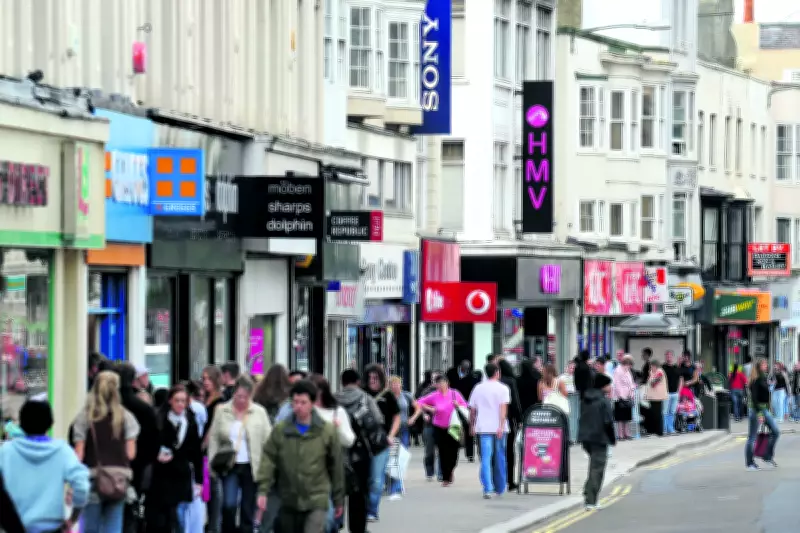
High Street Spending Gets Easter Boost Despite Economic Warnings
High street spending in March demonstrated surprising resilience, delivering what industry leaders called a "much-needed boost" to retailers across the United Kingdom. New research reveals that while consumers opened their wallets for Easter celebrations, underlying economic concerns continue to cast shadows over future spending patterns.
Retail Sales Show Strong Growth
According to comprehensive data from the British Retail Consortium (BRC), total retail sales increased by a substantial 3.6 percent compared to the same period last year. The month-over-month growth registered at 1.1 percent for March, surpassing the industry's long-term average performance metrics.
The early Easter holiday provided significant momentum to supermarket chains and various retail sectors. Food sales experienced particularly impressive growth, surging by 6.8 percent in the year leading up to March. Non-food sales, while more modest, still managed to exceed established long-term averages.
Consumer demand remained robust across several key categories including computers, toys, and homeware products. However, clothing and footwear retailers faced more challenging conditions, struggling to maintain similar momentum during the same period.
Travel Sector Experiences Decline
Separate research conducted by Barclays revealed a contrasting picture for the travel industry. Consumer card spending on travel declined by 3.3 percent year-on-year as international trips were increasingly swapped for domestic staycations within the UK.
Travel agencies, airlines, and public transport providers all experienced reduced demand as consumer appetite for international travel diminished significantly. Barclays researchers noted that numerous individuals reported cancelling or postponing their planned travel arrangements during this period.
The decline in travel spending appears directly connected to geopolitical tensions in the Middle East, with consumers expressing concerns about organizing trips to potentially unstable regions.
Mixed Consumer Confidence Indicators
Both the BRC and Barclays surveys indicated that consumer confidence experienced a noticeable dip during March. This decline was primarily attributed to growing concerns about the economic impact of ongoing conflicts, particularly the war in Iran and broader Middle Eastern instability.
BRC Chief Executive Helen Dickinson acknowledged the positive impact of Easter timing while issuing cautionary notes about future challenges. "Retailers hope that the Middle East ceasefire will bring lasting stability, but the outlook remains uncertain," Dickinson stated.
She further explained that supply chain disruptions have already occurred, with rising costs across multiple sectors including shipping, fertilizer, insurance, and commodities placing additional pressure on retailers already operating with thin margins.
Essential Spending Returns to Positive Territory
Barclays data revealed that spending on essential goods and services returned to positive growth for the first time since July of the previous year. This 0.9 percent year-on-year increase in consumer card spending was primarily driven by rising fuel prices affecting household budgets.
Karen Johnson, Head of Retail at Barclays, highlighted the complex relationship between consumer sentiment and actual spending behavior. "Cost-of-living concerns and economic uncertainty continue to weigh on confidence, prompting caution and a desire to cut back, but spending remains resilient across several categories," Johnson observed.
She specifically noted continued strength in clothing, entertainment, and digital content subscriptions, suggesting that consumers are carefully balancing financial management with spending on items they consider personally meaningful.
Future Outlook Remains Uncertain
Industry experts emphasize that while March provided welcome relief for retailers, the broader economic landscape presents ongoing challenges. The combination of geopolitical tensions, supply chain pressures, and persistent cost-of-living concerns creates what Johnson described as "an ongoing balancing act" for both consumers and retailers.
As consumers navigate these complex economic conditions, retailers are preparing for potentially turbulent months ahead. The delicate equilibrium between consumer confidence and actual spending patterns will likely determine the trajectory of high street performance throughout the remainder of the year.