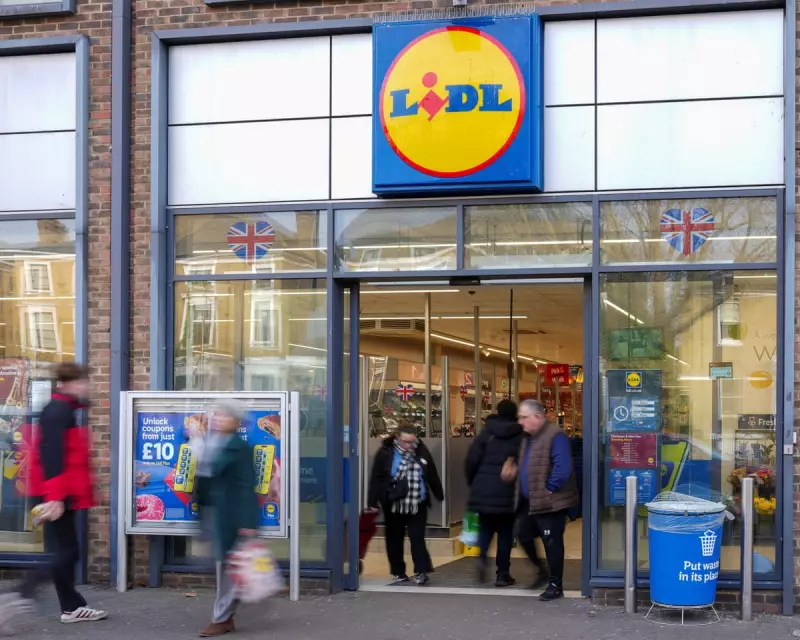
British shoppers turned decisively to discount supermarkets during the crucial Christmas trading period, handing Aldi and Lidl their largest-ever slice of the festive grocery market. New data reveals a clear shift in consumer behaviour as households grappled with ongoing cost-of-living pressures.
Discount Duo Seize Record Market Share
According to the latest figures from Worldpanel by Numerator, the German-owned discount chains collectively held a 16.8% share of the UK grocery market in the four weeks leading up to 28 December. This marks a significant increase from the 16.3% share they commanded during the same period the previous year.
Lidl emerged as the fastest-growing physical supermarket chain, with its rapid expansion positioning it less than one percentage point behind Morrisons. This means Lidl is now poised to overtake the struggling grocer to become the UK's fifth-largest supermarket. Meanwhile, Aldi, the UK's fourth-largest chain, is closing in on Asda, after Asda's sales fell by 4.2%, reducing its market share to 11.4%—just 1.3 percentage points ahead of Aldi.
A Christmas of 'Smart Savings' and Shifting Trends
Overall, shoppers spent £13.8 billion on take-home food during the four-week period, a year-on-year increase of 3.8%, equating to an average of £476 per person. However, this spending growth lagged behind grocery inflation, which eased to 4.3%, indicating that consumers actively sought to reduce their bills.
Fraser McKevitt, head of retail and consumer insight at Worldpanel by Numerator, described it as "a Christmas of smart savings and considered choices". Shoppers widely adopted strategies such as switching to supermarket own-label products, visiting discount chains more frequently, and simply buying fewer items.
Notably, premium own-label sales soared by 9%, exceeding £1 billion for the first time in December, with these products finding their way into a staggering 92% of shopping baskets. The highest spending was on fresh meat (£115m) and chilled snacks like finger food and dips (£80m).
Winners, Losers, and the Online Surge
While Aldi and Lidl celebrated record Christmas trading, Asda and the Co-operative Group saw both sales and market share decline. In contrast, the upmarket chain Waitrose posted a strong 4.5% sales rise in the three months to 29 December.
The online grocery sector also enjoyed robust growth, with sales increasing by 7.5% to capture a 12.2% share of the total market. Online specialist Ocado, which sells Marks & Spencer groceries, reported a remarkable 15% surge in sales, highlighting a divergence in spending power among UK households.
Grocery inflation was primarily driven by rising costs for chocolate, coffee, milk, and cream. A symbolic milestone was reached as the price of a traditional tub of chocolates topped £5 for the first time, even as average pack sizes shrank by 5%.
Tesco maintained its position as the UK's largest grocer, with sales up 4.3% giving it a 28.7% market share, ahead of Sainsbury's on 16.3%. Both retailers are set to provide their own Christmas trading updates later this week.