The Office Market Reset: Where True Value Now Resides
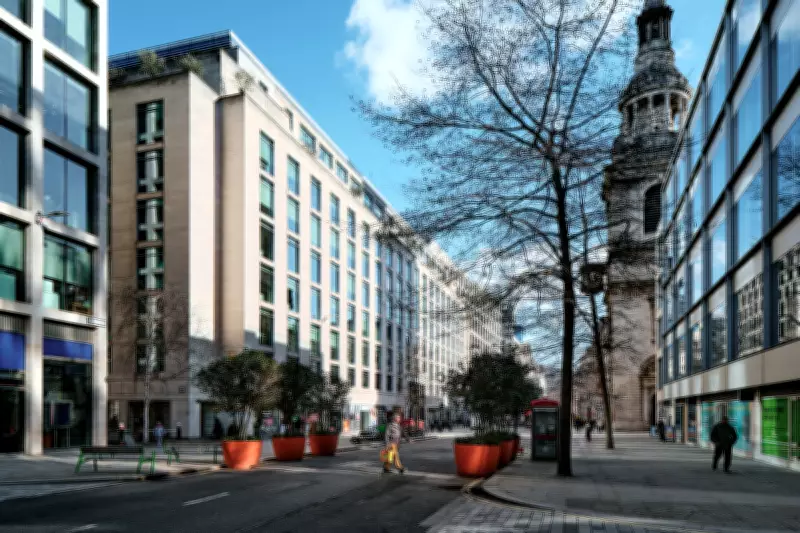
Wednesday 25 February 2026 12:53 pm. The next evolution in commercial real estate isn't about physical space. It's fundamentally about service delivery. By: Halkin. A man walks purposefully across Cheapside in London's financial district, symbolizing the changing rhythms of workplace expectations.
If 2026 indeed marks the year the office market undergoes a comprehensive reset, the crucial question becomes: where does genuine value actually originate in this new landscape?
Beyond Square Footage: The Operational Imperative
The answer no longer lies in mere square footage measurements. It resides in operational excellence. For decades, office buildings were treated as static, passive assets. The conventional model was straightforward: construct the property, secure tenants through leases, and collect predictable rental income. This approach functioned adequately during periods of inexpensive capital and less demanding occupants.

However, this traditional framework fails in today's market environment, where tenants increasingly expect exceptional experiences, genuine flexibility, and comprehensive services, all while investment returns face mounting pressure across the sector.
The Hospitality Transformation Begins
This is precisely where the significant shift toward hospitality principles truly commences. Occupiers are no longer selecting office spaces based solely on geographic location and technical specifications. They are increasingly choosing environments that feel carefully curated, professionally managed, and genuinely responsive to their needs.
Modern companies seek places that actively support their teams, authentically reflect their organizational culture, and systematically remove friction from the working day. This fundamental mindset aligns far more closely with hotel operations than with traditional real estate management practices.
The Central Role of Serviced and Flexible Offices
Serviced offices and flexible workspace solutions sit at the very center of this transformative shift. They represent not merely an alternative leasing structure but rather a comprehensive operating model. This approach treats the building as a living, breathing business entity rather than a passive container for tenants.
Revenue generation is no longer constrained to simple rent per square foot calculations. It becomes dynamically driven by building utilization rates, value-added services, tenant retention metrics, and brand development initiatives.
Creating Operational Value
This operational focus is where substantial value creation occurs. A well-managed flexible office facility generates income across multiple touchpoints: dedicated workspace, meeting rooms, event hosting, technology services, hospitality offerings, and strategic partnerships.
More importantly, such operations build daily engagement with their customer base. This consistent engagement translates into stickier occupancy patterns, faster leasing decisions, and greater pricing power over extended periods.
In a market where supply of truly high-quality space remains constrained, these operational advantages matter significantly.
Responding to Modern Demand Realities
Hospitality-led office environments also respond more effectively to the practical realities of contemporary business demand, as Halkin has experienced throughout their decade of operation. They have witnessed teams expand and contract dynamically. Working patterns have evolved substantially. The need for commitment flexibility has become paramount.
Traditional long-term leases struggle to accommodate these fluctuations without creating operational friction. Serviced office models are specifically designed for such adaptability. Halkin has observed the positive value-add this provides for end users and, consequently, for the building as an integrated whole.
Investor Perspective: A Fundamental Shift
From an investment standpoint, this represents a fundamental paradigm shift. Value creation no longer occurs solely through yield compression or basic rental growth projections. It is increasingly generated through demonstrable operational performance metrics.

Superior tenant experience leads directly to higher space utilization rates. Enhanced utilization drives stronger, more diversified income streams. More robust income generation ultimately supports and enhances overall property valuation.
This explains why the "operator" role is becoming equally important as the physical building itself in valuation assessments.
The Future Office Landscape
This transformation doesn't imply every office building will become fully serviced. However, it does signify that hospitality principles—service excellence, operational adaptability, curated experience, and brand development—are now central to office performance metrics.
Buildings that ignore this evolution will fall progressively further behind in the competitive landscape. Properties that actively embrace these principles will consistently outperform their peers.
The market reset currently underway extends beyond mere financial recalibration. It represents a profound cultural shift within commercial real estate. The future office is not merely a product organizations rent. It is becoming a comprehensive service they actively use.
In the upcoming market cycle, the ultimate winners won't simply own the best physical buildings. They will demonstrate excellence in how they operate and manage those buildings for maximum tenant satisfaction and investor returns.